Breakfast can get oddly complicated when two ideas collide: eat Mediterranean and eat more protein. One sounds like tomatoes, olive oil, fruit, whole grains and simple meals built around plants. The other often gets reduced to protein shakes, giant bowls of cottage cheese or counting grams before you've finished your coffee.
They don't have to compete. A Mediterranean-style eating pattern already includes useful protein sources such as beans and lentils, nuts and seeds, yogurt and other dairy foods, eggs, fish and smaller amounts of poultry. The practical goal is not to make breakfast as protein-heavy as possible. It is to build a satisfying morning meal around a clear protein source while keeping the plants, whole foods and flexibility that make Mediterranean-style eating useful.
The easiest way to make a Mediterranean-style breakfast higher in protein is to use a simple formula: one protein anchor + plants + something substantial + flavor. Once you know the formula, you can build dozens of breakfasts without collecting dozens of recipes.
What does a Mediterranean breakfast actually mean?
There is no single official Mediterranean breakfast. The region includes many countries and food traditions, and eating patterns vary within those countries too. The American Heart Association describes Mediterranean-style eating as a pattern that typically includes plenty of fruits, vegetables, grains, beans, nuts and seeds, with olive oil as a primary fat source and dairy, eggs, fish and poultry in low to moderate amounts. Harvard's Nutrition Source similarly emphasizes that it is a flexible eating pattern rather than a rigid menu.
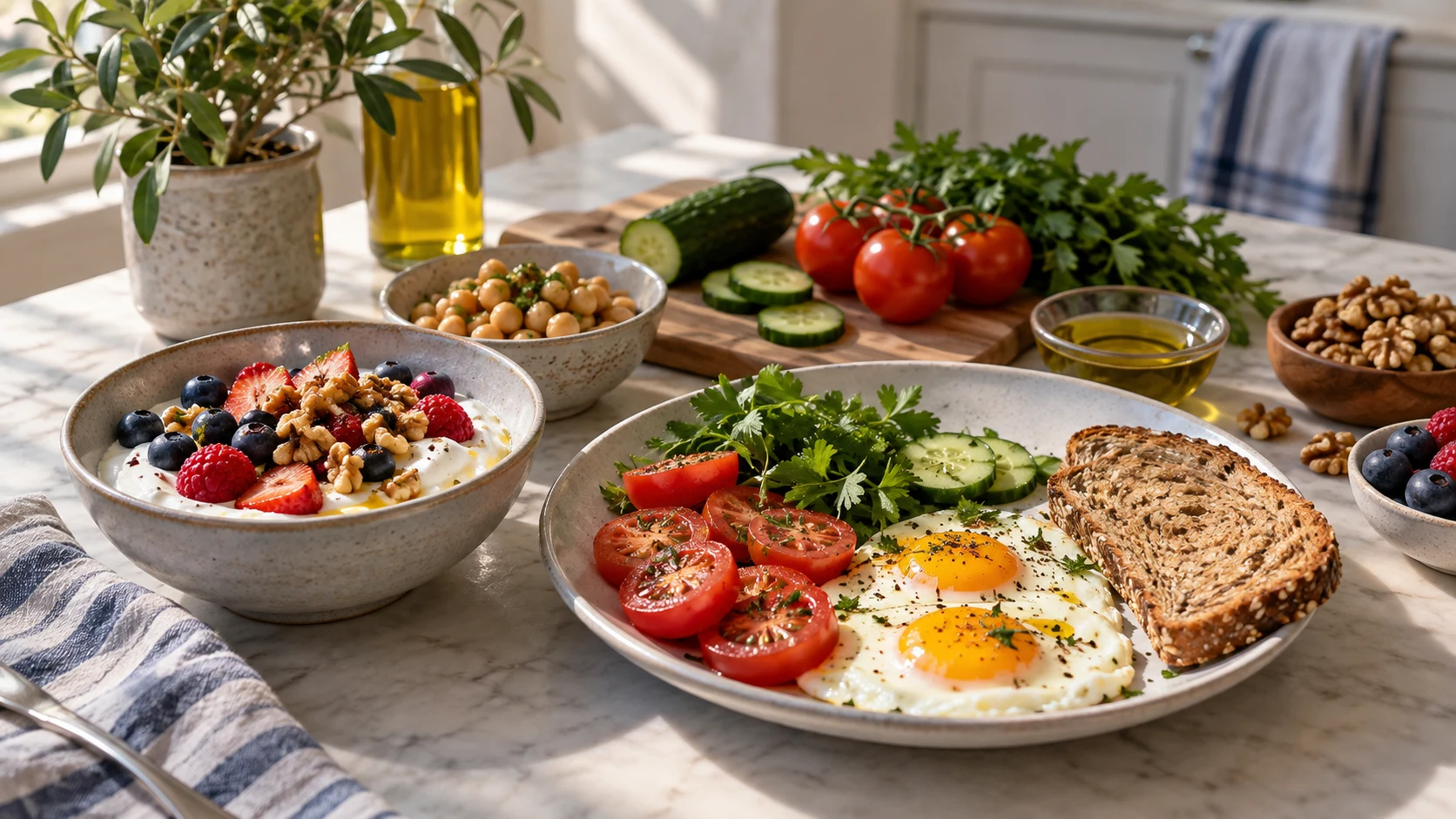
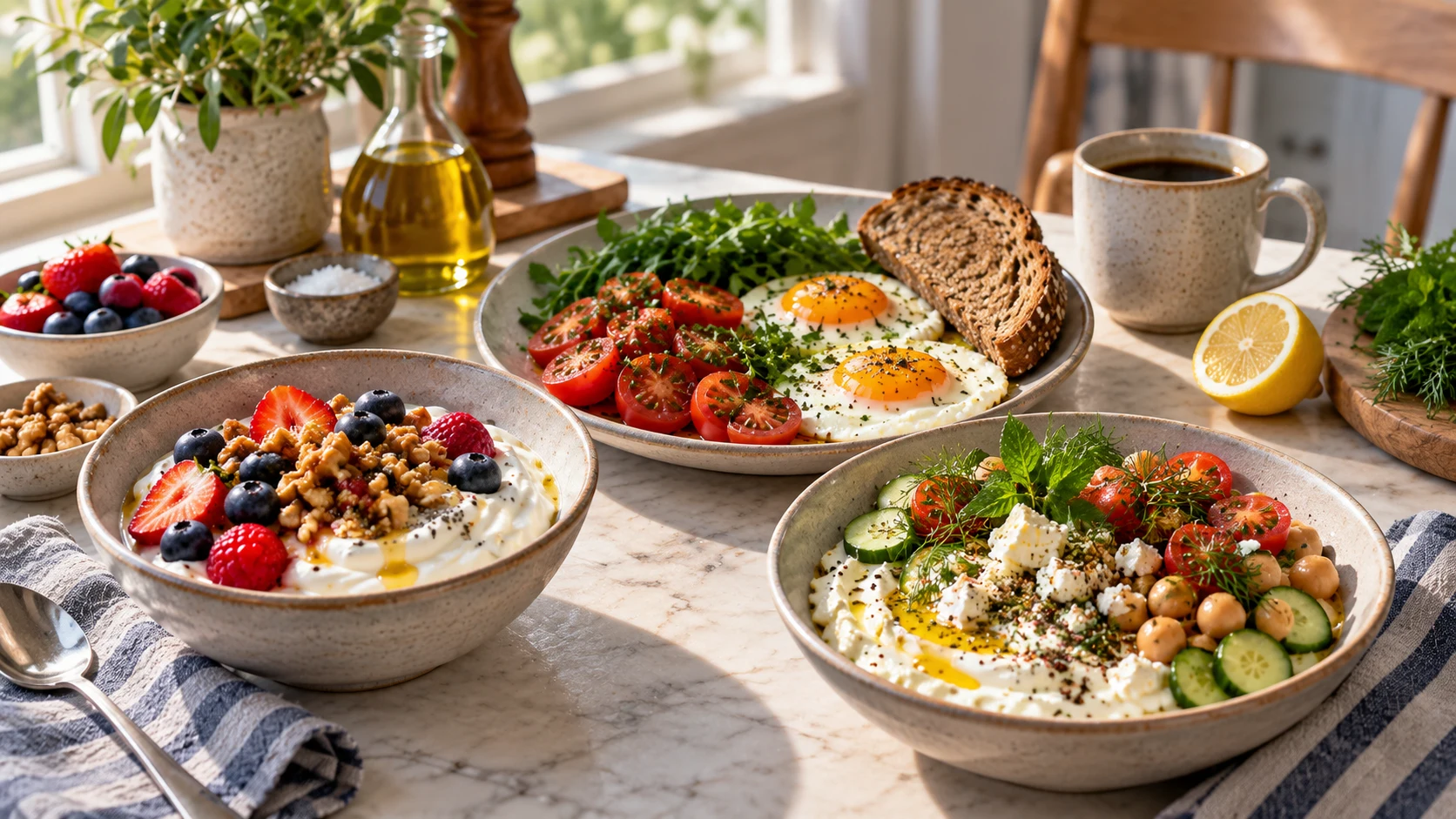
That matters at breakfast because it gives you room to work with the foods you actually like. Greek yogurt with berries and walnuts can fit. So can eggs with tomatoes and whole-grain toast. So can white beans mashed onto toast, a savory yogurt bowl with chickpeas, or leftover lentils warmed with an egg.
The pattern matters more than making breakfast look like a postcard from the Mediterranean.
The 4-part high-protein Mediterranean breakfast formula
Instead of starting with a list of “high-protein foods,” start with the structure of the whole meal.
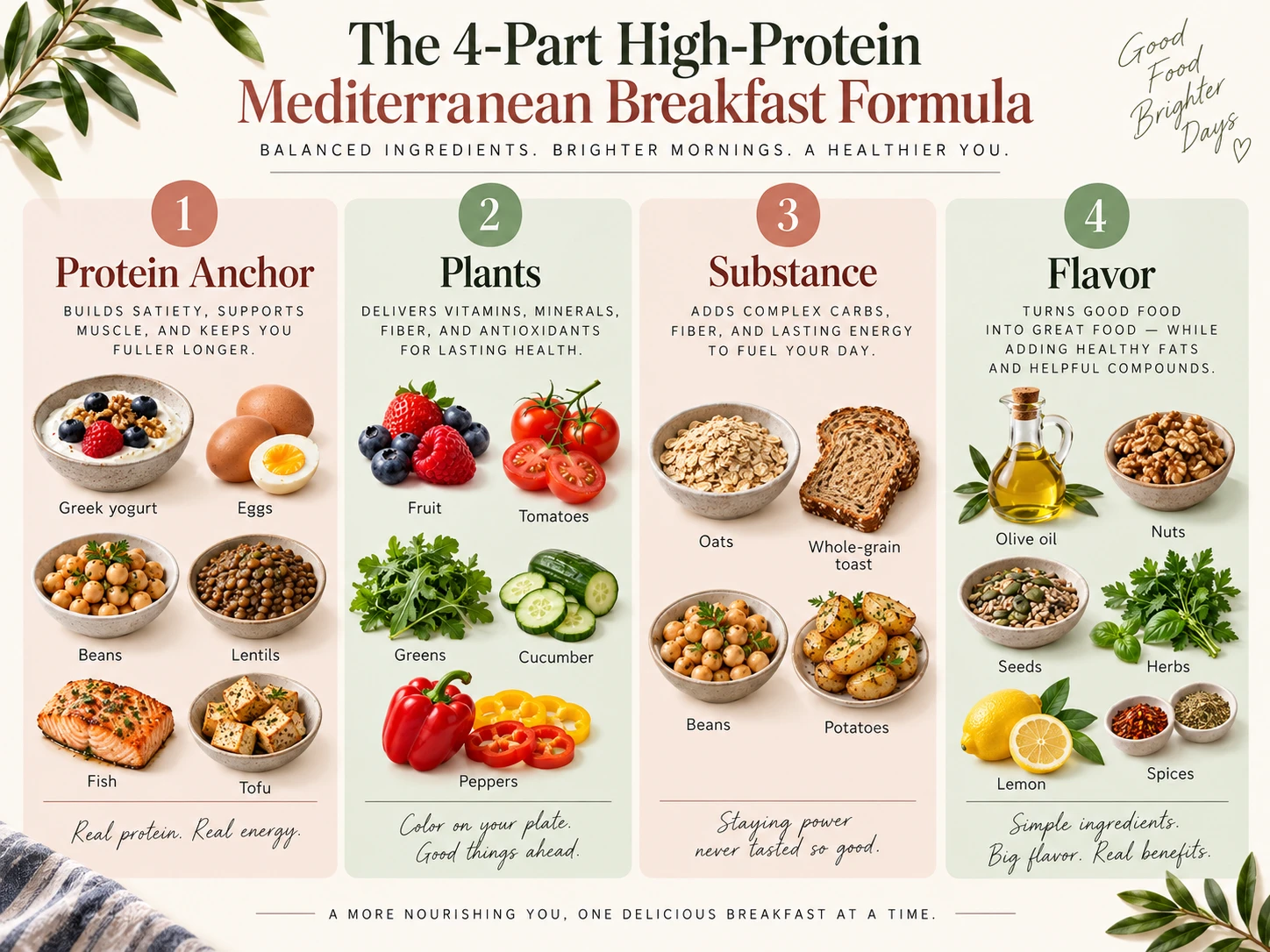
1. Choose a protein anchor first
The anchor is the ingredient doing most of the protein work. For breakfast, that might be Greek or strained yogurt, eggs, cottage cheese, beans, chickpeas, lentils, canned salmon, sardines, tuna or a soy food such as tofu. You can also layer smaller sources together rather than expecting one food to do everything.
2. Add plants on purpose
A “high-protein” label should not push fruit and vegetables out of the meal. Berries, tomatoes, cucumber, spinach, peppers, citrus and herbs all make breakfast more varied and more consistent with a plant-forward Mediterranean pattern.
3. Make it substantial enough for your morning
Two eggs or a small yogurt can be a useful protein source without necessarily being enough breakfast for you. Oats, whole-grain bread, potatoes, fruit, beans or another whole grain can turn the protein anchor into an actual meal. Appetite varies, so this is the part to scale up or down.
4. Finish with flavor and texture
Olive oil, walnuts, pistachios, seeds, tahini, lemon, black pepper, herbs and spices are small additions, but they are often what makes a repeatable breakfast feel like real food instead of a nutrition assignment.
12 high-protein Mediterranean breakfast ideas
Think of these as templates, not rigid recipes. Adjust portions to your appetite, dietary needs and schedule.
1. Greek yogurt, berries, walnuts and oats
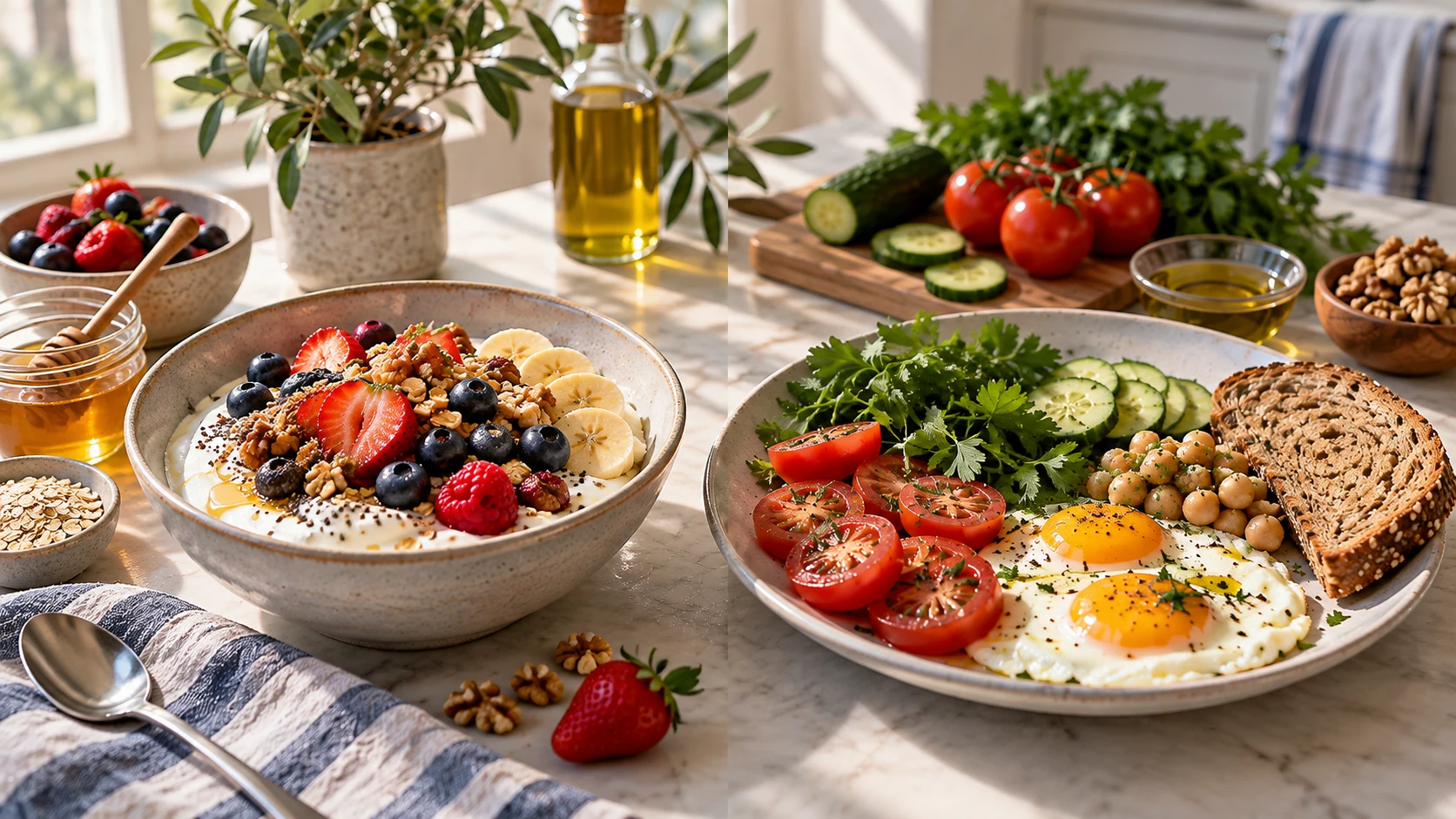
Start with thick plain Greek yogurt, then add berries, a spoonful of oats and chopped walnuts. Cinnamon works well; a small drizzle of honey is optional. The yogurt is the protein anchor, while fruit, oats and walnuts turn it into a more complete breakfast.
Frozen berries work perfectly well here. Keep berries, walnuts and oats in regular rotation and this becomes a two-minute breakfast rather than a “recipe.”
2. Eggs, tomatoes and whole-grain toast
Cook eggs the way you genuinely enjoy them—scrambled, poached, boiled or lightly fried in olive oil. Add sliced or cooked tomatoes and whole-grain toast. Herbs, black pepper or a little feta can change the flavor without changing the basic system.
3. Savory Greek yogurt bowl with cucumber, tomato and chickpeas
Spread thick yogurt in a bowl and add chopped cucumber, tomatoes, chickpeas, herbs, black pepper, olive oil and lemon. Yogurt and chickpeas share the protein work, while the vegetables keep the bowl fresh and substantial.
4. Chickpea and egg breakfast skillet
Warm chickpeas with tomatoes, spinach or peppers and a little olive oil. Add one or two eggs and cook until they are done the way you like. This is a good example of protein layering: legumes and eggs contribute together, so breakfast does not have to become egg-heavy.
5. Cottage cheese, fruit and pistachio bowl
If you prefer cottage cheese to yogurt, pair it with peaches, berries, pear or figs and finish with pistachios or walnuts. It is a simple way to create a sweet breakfast without relying on a packaged “high-protein” product.
6. White bean, tomato and olive oil toast
Lightly mash cooked white beans with lemon, black pepper and a little olive oil. Spread them over whole-grain toast and add sliced tomato. Herbs, arugula, feta or a boiled egg can be added when you want a larger breakfast.
7. A Mediterranean breakfast plate
Not every breakfast needs to become a bowl. Build a small plate with a protein anchor, sliced tomato and cucumber, whole-grain toast, fruit and one or two flavorful extras such as olives, hummus or a little cheese. The advantage is flexibility: the plate can be light or substantial without changing its basic structure.
8. Overnight oats with Greek yogurt
If you already like overnight oats, there is no reason to replace them. Strengthen the protein anchor by using Greek yogurt as part of the base, then add milk or fortified soy milk, fruit, cinnamon and seeds if you like. The useful principle is simple: upgrade the breakfast you already eat before inventing a completely new one.
9. Lentil breakfast bowl with egg and greens
Warm leftover lentils with greens and tomatoes, top with an egg, then finish with lemon, herbs or olive oil. This only feels unusual if you think breakfast must come from a special category of foods.
Do not cook a pot of lentils at 7 a.m. specifically for breakfast. Cook them for another meal and deliberately save a portion. One cooking task serving several meals is a much more realistic system.
10. Smoked salmon, tomato and yogurt toast
Spread thick plain yogurt or another suitable fresh cheese over whole-grain toast, then add smoked salmon, tomato or cucumber, herbs, lemon and black pepper. Because smoked salmon can be salty, treat it as one option in a varied rotation rather than the default every morning.
11. Vegetable omelet with beans on the side
Fill an omelet with spinach, peppers, mushrooms, tomatoes, onions or herbs and serve it with a small portion of beans and whole-grain toast. This is a useful way to make breakfast bigger without simply increasing the number of eggs.
12. Last night's Mediterranean dinner
If dinner left you with lentils, roasted vegetables, salmon, beans, whole grains or a vegetable frittata, you may already have breakfast. Reheat a portion and add an egg or yogurt if the meal needs a stronger protein anchor.
One of the easiest ways to make breakfast more substantial is to stop requiring it to look like conventional breakfast food.
Sweet or savory: which breakfast is better?
Neither. The more useful question is which approach makes it easier for you to build a satisfying breakfast consistently.
| If you prefer… | Start with… | Build around it with… |
|---|---|---|
| Sweet breakfasts | Greek yogurt or cottage cheese | Fruit, oats, nuts and seeds |
| Warm breakfasts | Eggs, lentils or beans | Vegetables, whole grains and olive oil |
| Fast breakfasts | Greek yogurt | Fruit plus nuts or oats |
| Portable breakfasts | Overnight oats with yogurt | Fruit and seeds |
| Plant-forward breakfasts | Beans, lentils or soy foods | Vegetables, grains, tahini or nuts |
How much protein should breakfast contain?
There is no single breakfast protein target that is right for every adult. Needs vary with body size, age, health status, pregnancy, physical activity and individual goals. For a general wellness breakfast, it is more useful to focus on the structure of the meal than to turn breakfast into a gram-counting competition.
Ask four practical questions instead:
- Does this breakfast contain a clear protein source?
- Is it enough food for my morning?
- Does it include plants, whole grains or other fiber-rich foods?
- Is it realistic enough that I would actually make it again?
If you have individualized protein requirements because of medical needs, pregnancy, older age or intensive athletic training, general breakfast templates may not be the right tool for setting your target.
Upgrade the breakfast you already eat
You may not need 12 new breakfasts. You may only need to fix one weak point in the one you already make.
If you eat oatmeal
Keep the oatmeal. Use Greek yogurt, dairy milk or fortified soy milk as part of the base, then add fruit and nuts or seeds.
If you eat toast
Keep the toast. Add a protein anchor such as eggs, white beans, yogurt-based spread or cottage cheese, then add tomato or fruit.
If you eat fruit
Keep the fruit. Pair it with yogurt, cottage cheese, nuts and seeds, or eggs on the side so the meal has more staying power.
If you eat eggs
You do not always need more eggs. Add beans, vegetables, whole-grain toast, fruit or yogurt so the meal becomes more varied rather than simply more protein-heavy.
Three breakfast levels for real life
A useful breakfast system has to work on more than your best-organized mornings.
Greek yogurt + berries + walnuts; cottage cheese + fruit; boiled eggs + toast; overnight oats already prepared.
Eggs + tomato + whole-grain toast; bean toast + fruit; savory yogurt + chickpeas + cucumber.
Vegetable omelet with beans; chickpea and egg skillet; a full Mediterranean breakfast plate.
A breakfast plan built only around your most motivated mornings is not a very good system. Having different effort levels lets the same eating pattern survive rushed days, low-energy days and slower weekends.
A realistic 7-day breakfast rotation
You do not need seven unrelated breakfasts. Repetition makes shopping easier and helps ingredients get used.
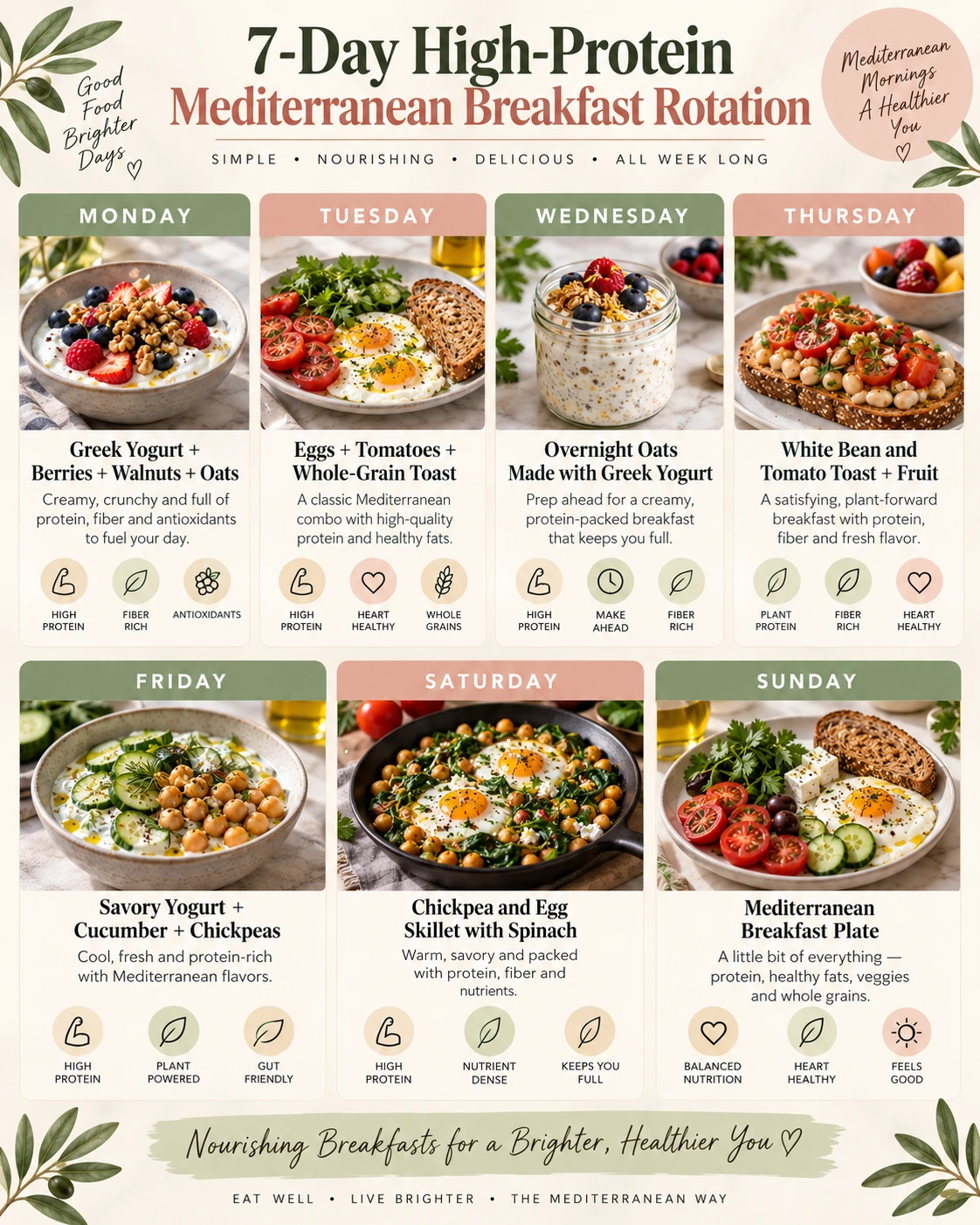
- Monday: Greek yogurt + berries + walnuts + oats
- Tuesday: Eggs + tomatoes + whole-grain toast
- Wednesday: Overnight oats made with Greek yogurt
- Thursday: White bean and tomato toast + fruit
- Friday: Savory yogurt + cucumber + chickpeas
- Saturday: Chickpea and egg skillet with spinach
- Sunday: Mediterranean breakfast plate
Notice how the ingredients repeat: yogurt, tomatoes, beans, berries, bread and herbs appear more than once. That is intentional. A practical eating system uses groceries up instead of demanding a new ingredient list every morning.
A simple grocery list for the week
You do not need everything below. Choose a few items from each group based on the breakfasts you actually plan to make.
- Greek yogurt
- Eggs
- Cottage cheese
- Chickpeas or white beans
- Lentils
- Canned fish
- Tomatoes
- Cucumber
- Spinach or greens
- Berries
- Apples, pears or seasonal fruit
- Lemons and herbs
- Whole-grain bread
- Oats
- Olive oil
- Walnuts or pistachios
- Seeds
- Spices
If you are starting from zero
Do not redesign breakfast for the entire month. Pick one breakfast you already eat and strengthen it.
If you currently eat toast and coffee, add an egg and tomato. If you currently eat oatmeal, make it with yogurt or milk and add nuts. If you currently eat fruit, pair it with Greek yogurt.
Repeat that until it feels automatic. Then add a second option. You do not need a complicated Sunday meal-prep routine to eat a better breakfast on Wednesday.
Frequently asked questions
Are eggs part of a Mediterranean-style diet?
They can be. Mediterranean-style patterns can include eggs alongside plant foods, dairy, fish and poultry. The broader pattern matters more than making every individual food pass a rigid “Mediterranean” test.
Is Greek yogurt a good Mediterranean breakfast?
Plain Greek or strained yogurt can be a useful breakfast base, especially when paired with fruit, whole grains, nuts or seeds.
Can a Mediterranean breakfast be high in protein without meat?
Yes. Yogurt, eggs, beans, lentils, nuts, seeds and soy foods give you many ways to build a protein-forward breakfast without relying on meat.
Do I need protein powder?
No. Protein powder can be convenient for some people, but it is not necessary for a protein-rich breakfast. Whole-food options can work very well.
Can Mediterranean breakfast be savory?
Absolutely. Eggs, vegetables, beans, lentils, yogurt, cheese, whole grains, olive oil and fish all lend themselves to savory breakfasts.
The simplest way to remember it
A high-protein Mediterranean breakfast does not need to look impressive. It needs a useful protein anchor, room for plants, enough substance for your appetite, and ingredients you can realistically keep eating.
Some mornings that means eggs, tomatoes and toast. Some mornings it means yogurt, berries and walnuts. Some mornings it means reheating last night's lentils.
The flexibility is the point. Mediterranean-style eating works best as a pattern you can adapt, not as a rigid breakfast rulebook.
Sources and further reading