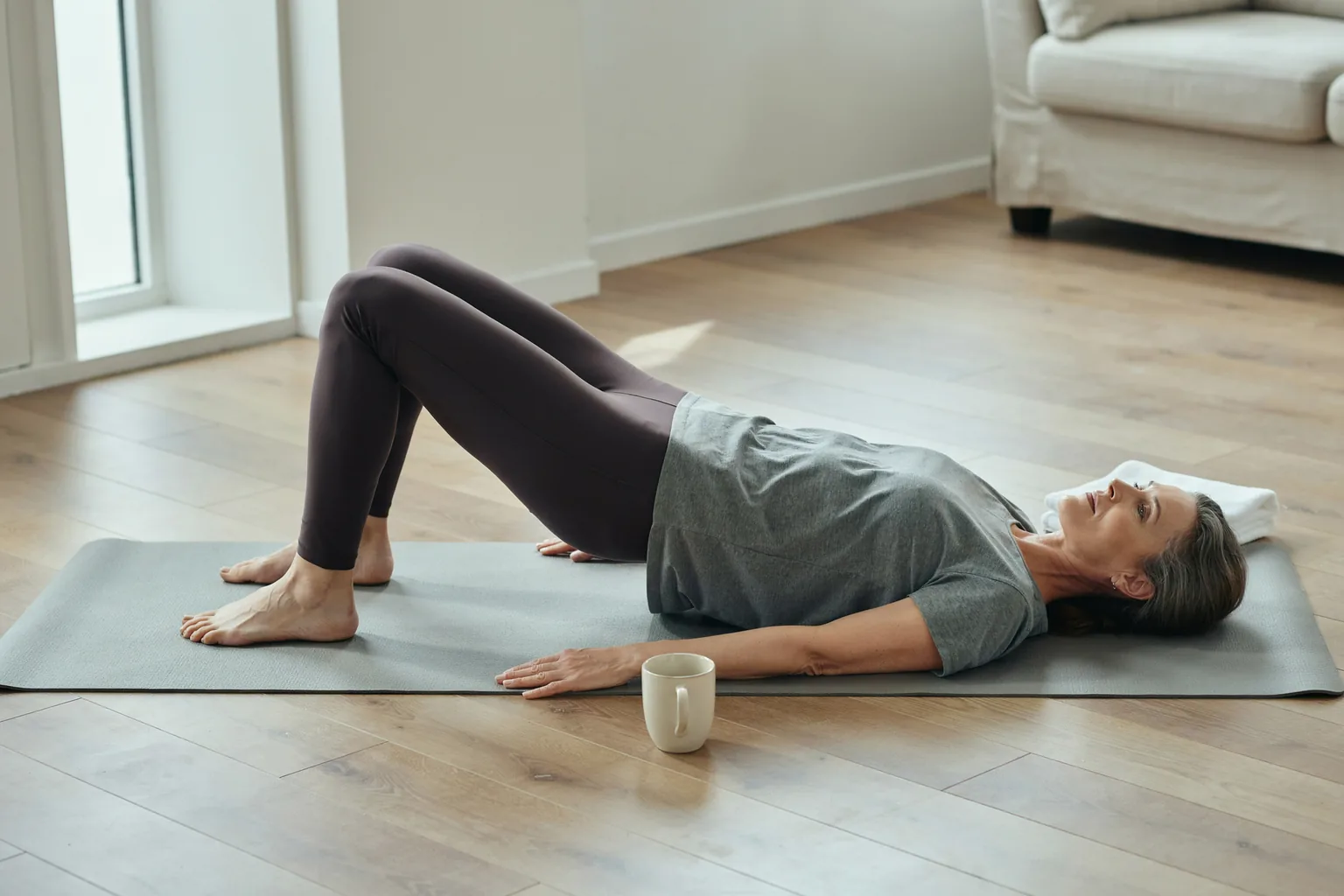

Stiffness usually builds quietly. Hours of sitting, cold mornings and years of doing the same few movements can leave your neck, hips and back feeling like they have less room to move than they used to. The good news is that you do not need a long stretching session or a flexible starting point to improve how your body feels.
This 10-minute routine uses eight gentle moves that work from your neck to your ankles. It comes with chair and wall options, clear timing and guidance on what should and should not hurt.
Warm up for 1 to 2 minutes, then do eight moves for about 45 to 60 seconds each, moving smoothly and holding only to a point of mild tension. Aim for at least 2 to 3 days a week, and do it daily if it feels good. Stop any move that causes sharp pain, tingling or numbness.
Mobility, stretching and flexibility: what is the difference?
The terms overlap. Flexibility usually refers to how far a muscle can lengthen. Mobility is broader: how well a joint moves through its range with control. In practice, a good routine for stiff beginners mixes both. It moves the joints gently first, then holds a few easy stretches.
Guidance based on the American College of Sports Medicine, summarized by Harvard Health, suggests that healthy adults do flexibility exercises for all the major muscle groups at least two to three times a week, and that spending about 60 seconds in total on each stretch is a good target. That can be one 30-second hold on each side or several shorter holds.
Before you begin
- Warm up first. Stretching cold muscles is less comfortable and less effective. A few minutes of easy walking or marching in place is enough.
- Move smoothly and do not bounce. Bouncing can strain muscles.
- Feel mild tension, not pain. A gentle pulling sensation is fine. Sharp, pinching or burning pain means ease off.
- Keep breathing. Slow breaths help you relax into a position.
- Have a chair and a wall nearby. They make every move easier and safer.
If you have a joint replacement, recent injury or surgery, osteoporosis, a spinal condition, severe balance problems or pain that is getting worse, ask a health care provider or physical therapist which moves are appropriate before starting. Stop and seek care for numbness, tingling, swelling or sudden pain.
The 10-minute routine
Start with 90 seconds of easy walking or marching in place, with a few arm swings, so your body is warm. Then work through these eight moves in order. The times include both sides where relevant.
| # | Move | Time | How to do it | Easier or harder |
|---|---|---|---|---|
| 1 | Shoulder rolls and chin tucks | 45 sec | Roll your shoulders back in slow circles, then gently glide your chin straight back as if making a soft double chin. | Easier: smaller circles. Harder: add slow arm circles. |
| 2 | Standing cat-cow | 60 sec | Hands on your thighs or a counter. Round your back and tuck your chin, then lift your chest and look slightly up. | Easier: do it seated. Harder: do it on hands and knees. |
| 3 | Seated twist | 60 sec (30 per side) | Sit tall in a chair, place your hands on opposite shoulders and rotate your upper body gently to one side, then the other. | Easier: smaller turn. Harder: hold the end position for 3 breaths. |
| 4 | Standing hip circles | 45 sec | Hands on hips or a counter, draw slow circles with your pelvis. Reverse direction halfway. | Easier: smaller circles. Harder: slow the pace and make them larger. |
| 5 | Hip flexor stretch | 60 sec (30 per side) | Stand in a short lunge position, back heel lifted. Tuck your tailbone slightly and shift forward until you feel a stretch at the front of the back hip. | Easier: hold a counter and take a smaller step. Harder: lower into a half-kneeling position with a cushion under your knee. |
| 6 | Seated hamstring stretch | 60 sec (30 per side) | Sit at the edge of a chair, extend one leg with the heel down and lean forward from the hips with a long back. | Easier: bend the knee slightly. Harder: flex your toes toward you. |
| 7 | Wall calf stretch and ankle circles | 60 sec | Hands on a wall, step one foot back with the heel down and lean in. Then lift one foot and draw slow ankle circles. | Easier: shorter step. Harder: bend the back knee slightly to reach a lower calf. |
| 8 | Overhead reach with side bend | 45 sec | Reach both arms overhead, then lean gently to one side and the other, keeping your hips level. | Easier: one arm at a time. Harder: hold each side for 3 breaths. |
Finish with three slow breaths and a short easy walk. Total time: about 10 minutes.
The shorter version: 5 moves in about 6 minutes
If your first attempt feels like too much, do moves 1, 2, 4, 6 and 8 with the same timing. Add the remaining three once the shorter version feels easy.
The chair-only version
You can do the whole routine with a sturdy chair: shoulder rolls, seated cat-cow, seated twist, seated hip circles (small circles with your knee), seated hamstring stretch, seated ankle circles and an overhead reach. It is a good option for mornings when you feel especially stiff or on days you have limited space.
When to do it
| If your day looks like… | Try… |
|---|---|
| Stiff mornings | Do the routine after a glass of water and a few minutes of walking, once your body has warmed up. |
| A long stretch at a desk | Use it as a midday reset, or choose 3 or 4 moves for a 4-minute break. |
| Regular walks | Do the routine right after your walk, when your muscles are warm. See our simple walking routine. |
| Evenings after a busy day | Choose slow moves such as the twist, hamstring stretch and side bend, and keep the pace relaxed. |
A simple two-week start
| Week | Plan |
|---|---|
| 1 | The 5-move version, 3 days this week, with a day between. |
| 2 | The full 8-move version, 3 to 4 days this week. Add a fifth day if it feels good. |
After two weeks, most people can keep the full routine as a daily reset or use it on the days they do not do other exercise. If you want a slower, longer session, our guide to yoga for beginners is a good next step.
Common mistakes
Stretching cold. Warm up first. Bouncing to go deeper, which can strain muscles. Holding your breath. If you cannot breathe steadily, back off. Pushing into pain because it feels like it should hurt. Comparing yourself to photos of flexible people. Progress here is often measured by ease of daily movement, like reaching a high shelf or getting out of a car more comfortably.
Mobility is one piece of a full routine
Mobility work helps you move comfortably, but it does not replace walking or strength training. The CDC recommends adults get at least 150 minutes of moderate-intensity activity a week and muscle-strengthening activity on at least 2 days a week. Add short strength sessions such as our 10-minute home workouts, and see our weekly fitness plan guide for how to fit everything into a realistic week.
FAQ
How often should I do a mobility routine?
How long should I hold each stretch?
Should I do mobility work in the morning or at night?
What if a move hurts?
Sources and further reading