Ten minutes is short enough to fit between a work call and dinner, and long enough to do something useful. The three routines below need no equipment, a few feet of floor space and a sturdy chair or kitchen counter. Each one is built from four simple movements with an easier and a harder version, so you can start where you are and progress without guessing.
Do each routine as 4 exercises × 40 seconds of work, 20 seconds of rest, 2 rounds, with a 1-minute warm-up and a 1-minute cool-down. That is exactly 10 minutes. Start with the easier version of every move and add difficulty only when the routine feels comfortable for a full week.
Do 10-minute workouts count?
Yes. The CDC says adults need at least 150 minutes of moderate-intensity activity a week plus muscle-strengthening activity on at least 2 days, and that you don't have to do it all at once. Activity can be broken into smaller chunks across the week. Three brisk 10-minute sessions still add up to 30 minutes.
What a short routine cannot do is replace everything else. Think of it as a dependable base: easy to repeat, hard to skip and a good way to build the habit before you add longer walks or a gym membership. For the bigger picture, see our weekly fitness plan guide.
Before you start
- Clear a 6-by-6-foot space and wear supportive shoes on hard floors, or go barefoot on a mat if you prefer and your feet feel stable.
- Keep a chair or counter within reach. You will use it for balance and for easier versions.
- Use the talk test. During the cardio routine you should be able to talk but not sing. If you can only say a few words, slow down.
- Expect effort, not pain. Muscles feeling tired is normal. Sharp, pinching or joint pain is a reason to stop that move.
If you have a heart condition, are pregnant, are recovering from an injury or surgery, or have not been active for a long time, check with your health care provider before starting a new routine. Stop and seek medical help for chest pain, dizziness or unusual shortness of breath.
The 1-minute warm-up
Spend 60 seconds marching in place, rolling your shoulders backward and forward, and making a few gentle hip circles. You are raising your body temperature and rehearsing the movements you are about to do, not stretching to the limit.
Routine A: Low-impact cardio starter
This is the routine for days you want to feel warmed up and a little breathless without jumping. Aim for a moderate effort, around a 5 or 6 on a 0-to-10 scale.
| Move | How to do it | Easier | Harder |
|---|---|---|---|
| March with arm swings | Lift your knees to a comfortable height and swing opposite arms. | Slow the pace; hold a counter. | High knees, faster arms. |
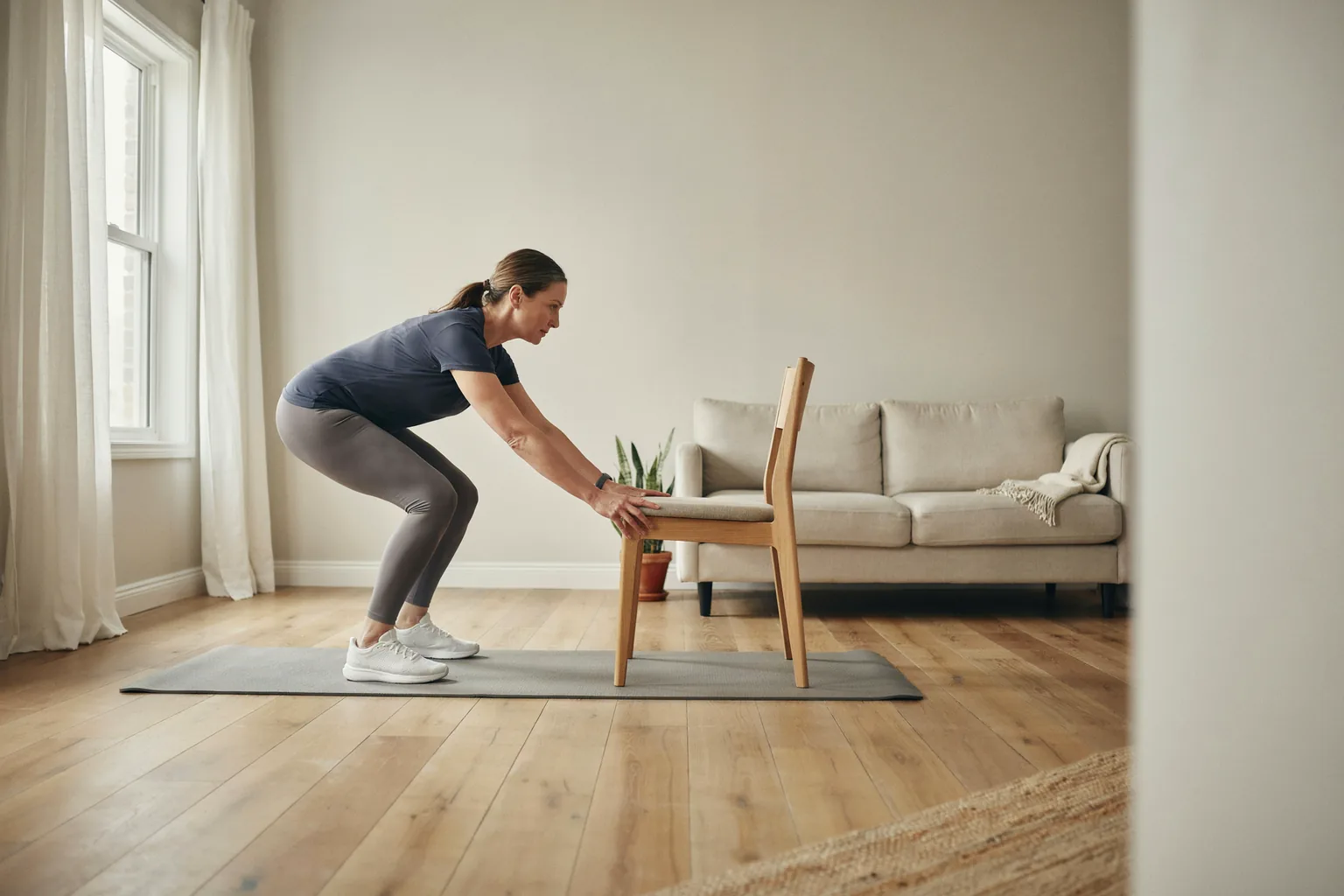
| Squat to a chair | Sit back toward the chair, tap it lightly and stand up. | Use a higher seat or push off your thighs. | Pause for 2 seconds just above the seat. |
| Step jacks | Step one foot out as you raise both arms, then switch sides. | Keep arms low. | Turn them into jumping jacks. |
| Skater steps | Step wide to one side, sweep the other leg behind you, then reverse. | Take smaller steps. | Add a small hop between sides. |
Routine B: Bodyweight strength basics
This routine works your legs, chest, back and hips. Go slowly enough that each repetition looks the same as the last. The point is control, not speed.
| Move | How to do it | Easier | Harder |
|---|---|---|---|
| Sit-to-stand | Stand up from a chair without using your hands, then sit down slowly. | Use your hands for a push. | Take 3 seconds to lower. |
| Counter push-up | Hands on the counter, body in a straight line, bend elbows at about 45 degrees. | Use a wall. | Lower the surface to a sturdy bench or stair. |
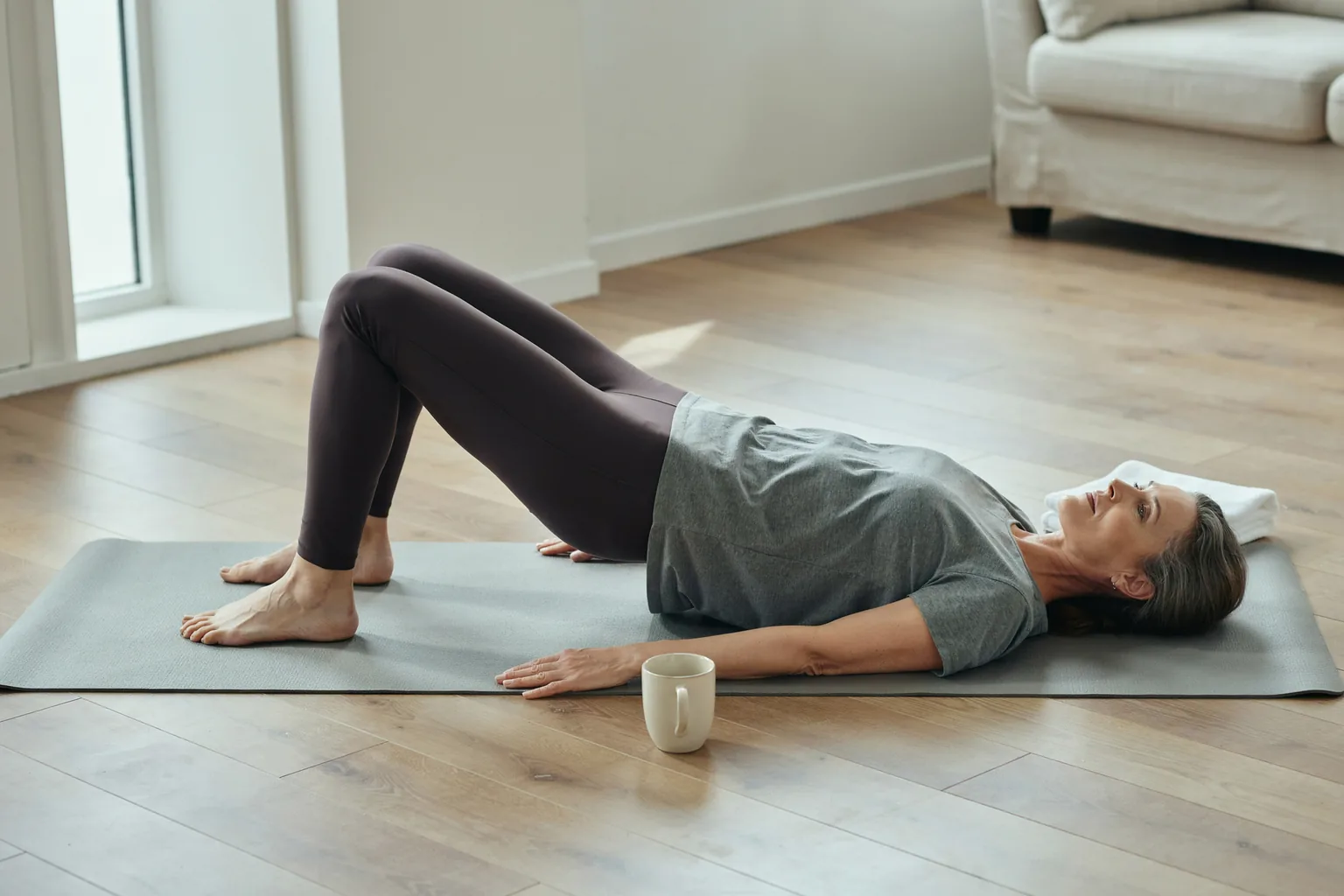
| Glute bridge | Lie on your back, knees bent, and lift your hips until your body forms a line from shoulders to knees. | Smaller lift. | Hold the top for 2 seconds. |
| Bird dog | On hands and knees, reach one arm forward and the opposite leg back. | Reach only your legs. | Pause and draw an elbow to a knee. |

Routine C: Core and balance
Core work here means keeping your trunk steady, not doing endless crunches. These moves train the muscles that support your back and help with balance in daily life.
| Move | How to do it | Easier | Harder |
|---|---|---|---|
| Dead bug | On your back with knees above hips, lower one heel toward the floor while keeping your lower back gently pressed down. | Move only your legs, keep arms still. | Extend the opposite arm overhead. |
| Incline plank | Forearms on the counter, body in a straight line, breathe steadily. | Stand closer to the counter. | Move to the floor on your knees, then your toes. |
| Side-lying leg lift | Lie on one side and lift your top leg a few inches, keeping your toes forward. | Bend the bottom knee for support. | Add a 2-second hold at the top. |
| Single-leg stand | Stand near the counter and lift one foot an inch. Switch legs halfway through the interval. | Keep fingertips on the counter. | Close your eyes briefly, still near the counter. |
The 1-minute cool-down
Walk slowly for 30 seconds, then take three long breaths with your arms low. If your calves or hips feel tight, hold a gentle stretch that does not hurt for 20 to 30 seconds.
A simple week using all three routines
| Day | Plan |
|---|---|
| Monday | Routine A (cardio starter) |
| Tuesday | Easy walk of 10 to 20 minutes, or rest |
| Wednesday | Routine B (strength basics) |
| Thursday | Rest or gentle stretching |
| Friday | Routine C (core and balance) |
| Saturday | Routine A or a longer walk |
| Sunday | Rest |
Routine B is your strength session; doing it twice a week, such as Wednesday and Saturday, gets you to the CDC's minimum of 2 days. Swap Saturday's cardio for a second Routine B if that fits your week better.
How to progress after two to four weeks
- Add a third round to bring the routine to about 14 minutes.
- Lengthen the work interval to 45 seconds with 15 seconds of rest.
- Move up one difficulty step on a single exercise, not all four at once.
- Add a short walk before or after, since walking pairs well with strength work.
If you want heavier resistance later, our guides to resistance band workouts and beginner strength training are logical next steps.
Common mistakes to avoid
Rushing. Fast, sloppy repetitions shift the work to your joints. Holding your breath. Exhale on the effort. Skipping the easier version. It is not a lesser workout; it is the version that lets you repeat the routine tomorrow. Doing all three routines every day. Your muscles need at least a day between strength sessions.
FAQ
Can I do a 10-minute workout every day?
What if I can't get down on the floor?
Do I need a warm-up for such a short workout?
How will I know it's getting easier?
Sources and further reading