"Core" gets used as a synonym for abs, but it is more useful to think of it as the group of muscles that stabilize your trunk: the deep abdominal muscles, the obliques, the muscles along your spine and the ones around your hips. They help you stand, twist, carry and keep your balance. Training them does not require hundreds of crunches. A few well-chosen exercises, done slowly, do more.
This guide gives you six beginner core exercises with clear steps, two short workouts built from them and a four-week progression.
Do Workout A twice a week and add Workout B once a week after the first two weeks. Focus on steady breathing and control. If your lower back or neck takes over, use the easier version.
What "building your core" actually means
A strong core is less about how your midsection looks and more about how well it resists unwanted movement. When you carry a bag on one side, reach for something on a shelf or step off a curb, your core is what keeps your torso stable while your arms and legs move.
That is why the best beginner exercises are ones where the trunk stays still while your limbs move (dead bug, bird dog), or where you hold a position (plank, side plank). It is also why core work pairs well with the full-body basics in our beginner strength guide.
Before you begin
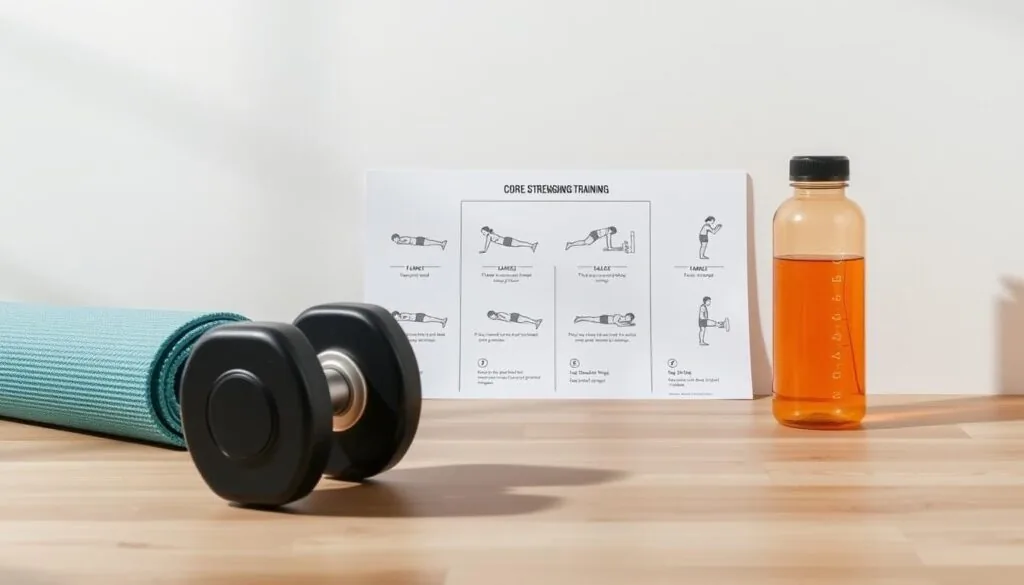
- Equipment: a mat or a carpeted floor, and a chair or counter for easier versions. A light dumbbell or water bottle is optional.
- Breathing: exhale on the effort and never hold your breath.
- Feel it in the right place: the work should be in your abdomen and trunk. Pain in your lower back, neck or hip is a signal to adjust or stop.
If you are pregnant or postpartum, have a hernia, recent abdominal surgery, diastasis recti or ongoing back pain, ask your health care provider or a physical therapist which core exercises are appropriate before starting.
Six beginner core exercises
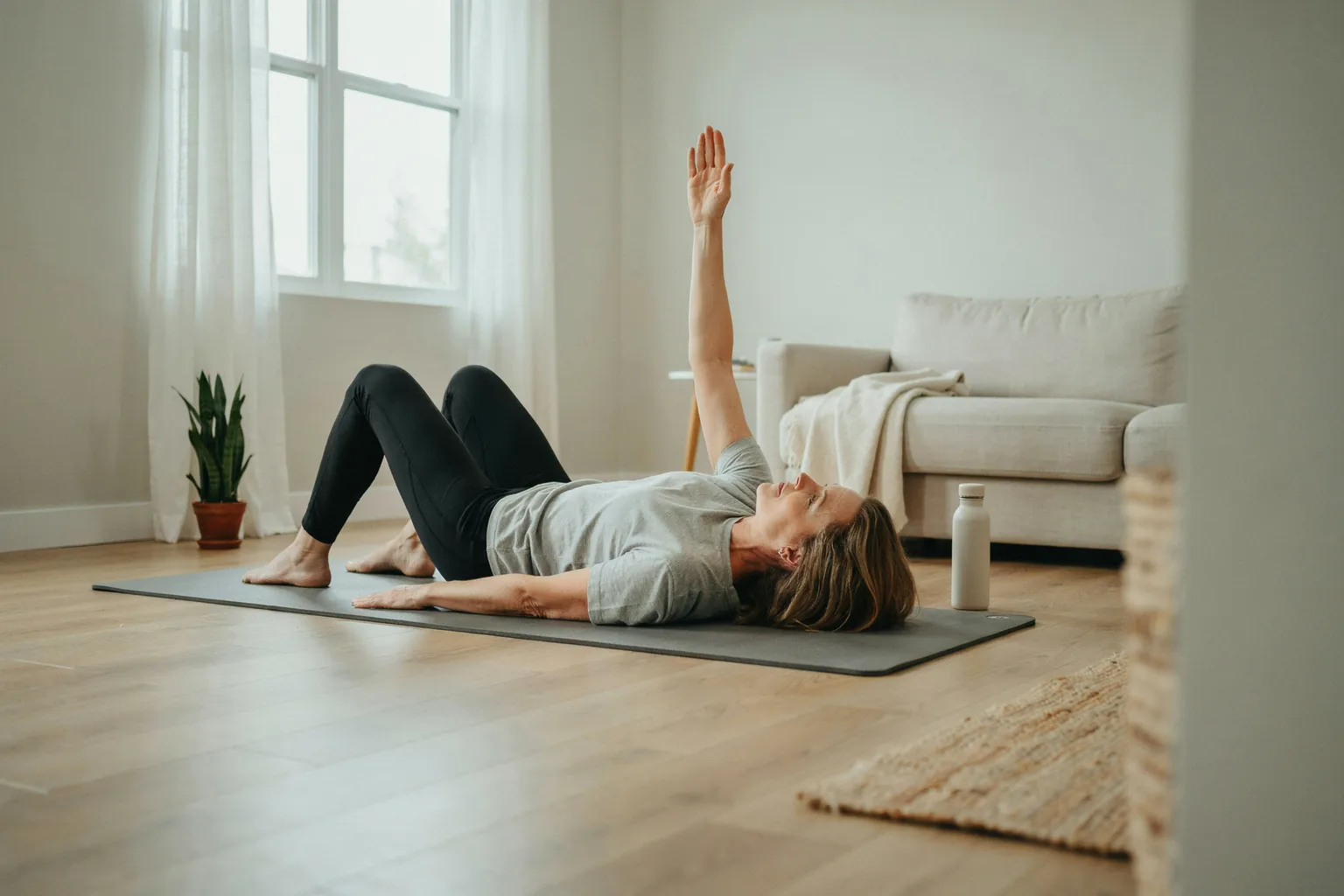
1. Dead bug
Steps: Lie on your back with knees bent above your hips and arms pointing at the ceiling. Gently press your lower back toward the floor. Lower one heel toward the floor, then bring it back and switch sides.
Easier: Move only your legs and keep the other foot on the floor. Harder: Extend the opposite arm overhead as the leg lowers.
2. Bird dog
Steps: Start on hands and knees with a flat back. Reach one arm forward and the opposite leg back, hold for a second and return.
Easier: Lift only a leg. Harder: Pause for 3 seconds and draw the elbow to the knee under your body.
3. Forearm or incline plank
Steps: Place forearms on the floor or a counter, body in a straight line from head to heels (or knees), and keep breathing.
Easier: Use a counter or knees. Harder: Hold on the floor on your toes.
4. Side plank (on knees to start)
Steps: Lie on your side with knees bent and forearm under your shoulder. Lift your hips until your body forms a line from knees to shoulders.
Easier: Keep the lift small. Harder: Straighten your legs and stack your feet.
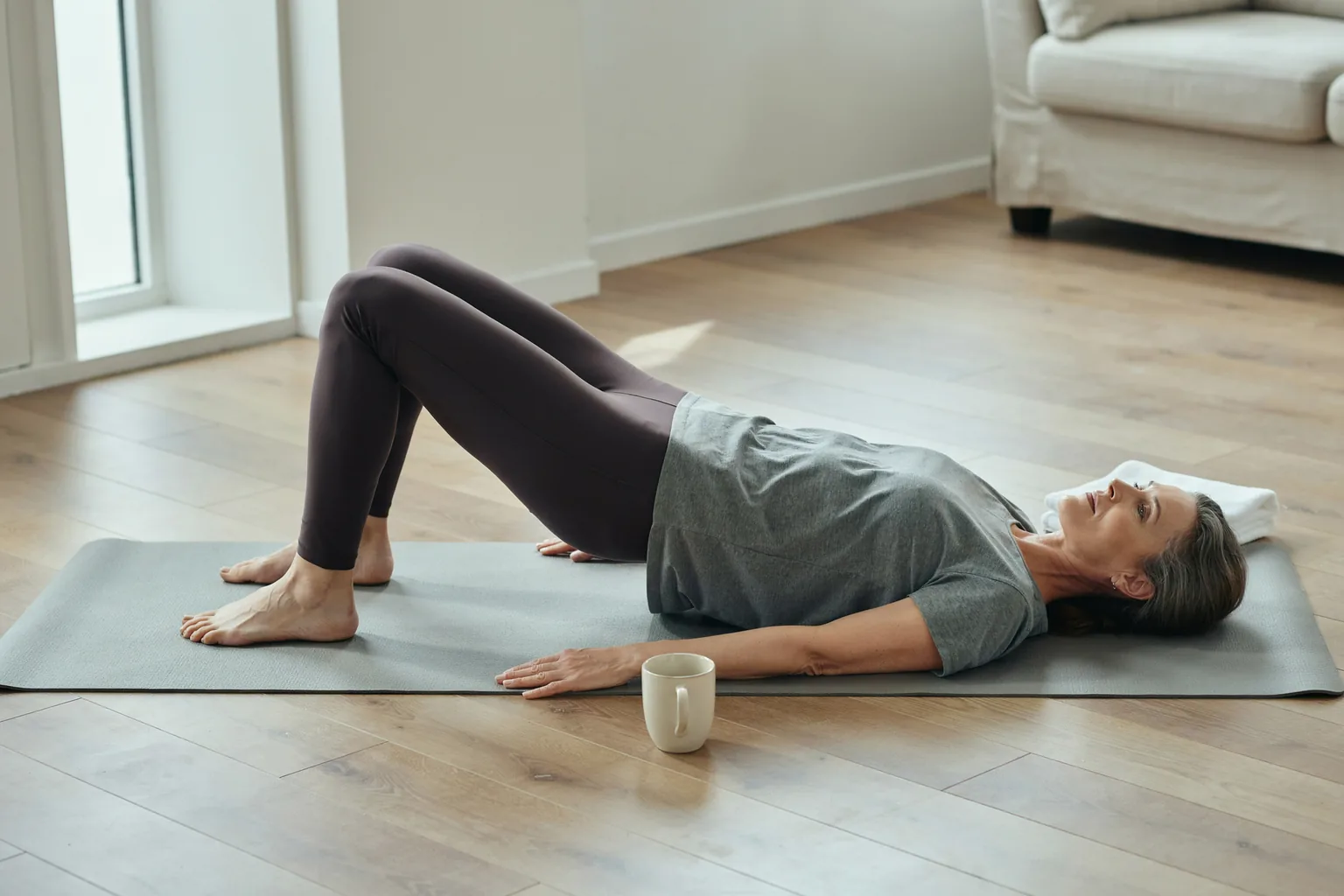
5. Glute bridge
Steps: Lie on your back with knees bent and feet flat. Push through your heels and lift your hips until your body makes a line from shoulders to knees, then lower slowly.
Easier: Lift only a few inches. Harder: Hold at the top or lift one foot.
6. Suitcase carry
Steps: Hold a light dumbbell or full water jug in one hand and walk 20 steps upright without leaning toward the weight. Switch hands.
Easier: Use a lighter object. Harder: Add a longer walk or a heavier weight.
Two workouts you can repeat
| Workout A: Floor core (about 12 minutes) | Sets and reps |
|---|---|
| Dead bug | 2 sets of 6 per side |
| Bird dog | 2 sets of 6 per side |
| Forearm or incline plank | 2 holds of 15 to 30 seconds |
| Glute bridge | 2 sets of 10 |
| Workout B: Core plus carry (about 15 minutes) | Sets and reps |
|---|---|
| Side plank (knees) | 2 holds of 10 to 20 seconds per side |
| Suitcase carry | 2 walks of 20 steps per side |
| Dead bug | 2 sets of 8 per side |
| Sit-to-stand from a chair | 2 sets of 8 to 10 |
Rest 30 to 60 seconds between sets. These count toward the CDC's recommendation of muscle-strengthening activity on at least 2 days a week, though for all major muscle groups you should also include legs, back, chest and shoulders. The 10-minute home workouts pair well with them.
A four-week progression
| Week | Plan |
|---|---|
| 1 | Workout A, 1 set of each. Focus on form and breathing. |
| 2 | Workout A, 2 sets, twice this week. |
| 3 | Workout A twice, plus Workout B once. |
| 4 | Add 2 to 5 seconds to each hold, or move one exercise to its harder version. |
Change only one variable at a time: longer holds, more repetitions or a harder version. If you feel unusually sore, repeat the previous week.
Common mistakes
Pulling on your neck during crunches; you do not need them for these workouts. Letting your lower back arch in planks and dead bugs; shorten the hold or use the easier version. Rushing. Slow control is the point. Training core every day. Muscles need recovery, and two to three sessions a week are enough to start.
FAQ
How often should a beginner train core?
Are crunches necessary?
Will core exercises reduce belly fat?
Do I need equipment?
Sources and further reading