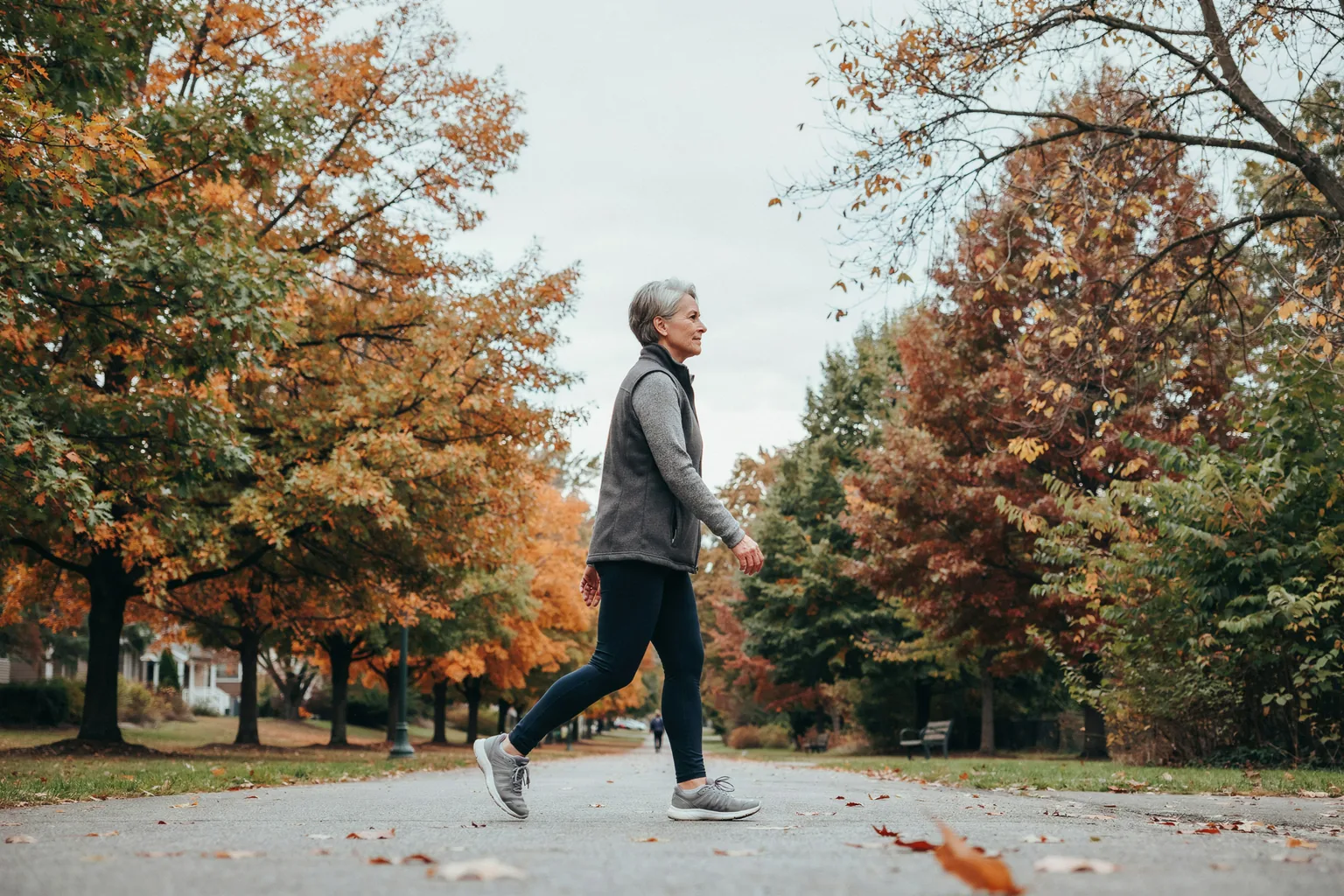
Walking is one of the few forms of exercise that needs no equipment, no membership and no learning curve. What most beginners actually lack is not motivation but a plan: how long to go, how fast, how often and what to do when the weather or a busy day gets in the way.
This guide gives you a routine you can repeat. It covers what a single walk looks like, how to judge your pace without a device, a two-week starter schedule and practical fixes for the problems beginners run into most.
Walk 10 to 20 minutes, 3 to 5 days a week, using a 3-part structure: an easy 3-minute start, a steady walk at a pace where you can talk but not sing, and an easy 2-minute finish. Add about 5 minutes to one walk each week if it feels comfortable.
What counts as a walking routine?
For general health, the CDC recommends that adults get at least 150 minutes of moderate-intensity activity a week, and it notes that this can be broken up, for example 30 minutes a day on 5 days. Brisk walking is a common way to reach that level. The CDC also states that any amount of physical activity has some health benefits, so a beginner routine does not need to start at 30 minutes.
If you are currently walking very little, 10 minutes a day is a real improvement and a sensible place to begin. You can build from there.
Before you start: shoes, route and safety
Choose shoes that fit your walk
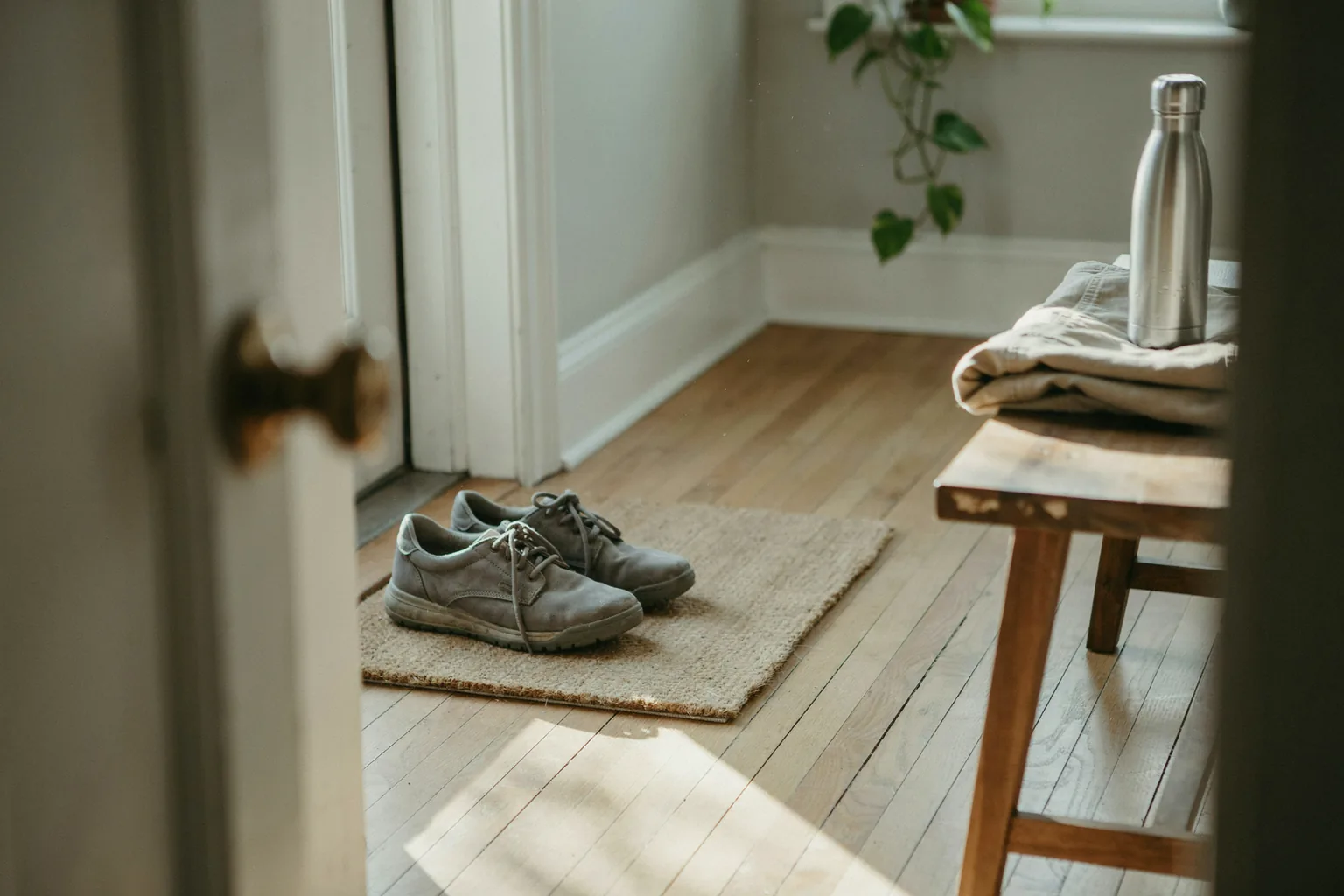
You do not need specialty gear, but your shoes should feel comfortable from the first minute. Look for a snug heel, enough room for your toes and cushioning that is not worn flat. If your usual sneakers are several years old or the soles are visibly worn, they are worth replacing before you increase your time.
Pick a route you will actually use
- Start flat. A neighborhood loop, a park path or a school track is easier to pace than hills.
- Choose a route with a shortcut. A loop where you can turn back early makes a hard day easier to finish.
- Prefer sidewalks and paths with light. If you walk before sunrise or after dark, wear something reflective and carry your phone.
The CDC advises talking to a health care provider before starting if you have a chronic condition such as heart disease, arthritis or diabetes, or before vigorous activity if you have been inactive. For a gentle beginner walk, stop and seek medical help for chest pain, dizziness or unusual shortness of breath. Drink water on longer or warmer walks and use sunscreen in sunny weather.
The walk itself: a simple three-part structure
Every walk in this routine follows the same pattern. Repeating it helps your body warm up gradually and end without stiffness.
| Part | Time | What to do |
|---|---|---|
| 1. Easy start | 3 minutes | Walk slowly, swing your arms loosely and let your breathing settle. |
| 2. Steady walk | 5 to 15 minutes | Pick up the pace to a level where you can talk but not sing. |
| 3. Easy finish | 2 to 3 minutes | Slow down gradually, then stretch your calves for 20 to 30 seconds per side if you like. |
A 10-minute walk is therefore about 3 minutes easy, 5 minutes steady and 2 minutes easy. A 20-minute walk keeps the same start and finish and lengthens the middle.
How fast is fast enough? Use the talk test
You do not need a fitness tracker to judge your effort. The CDC describes the talk test: at moderate intensity, you can talk but not sing; at vigorous intensity, you can say only a few words before pausing for a breath. It also uses a 0-to-10 effort scale, where moderate intensity is about a 5 or 6.
- Too easy: you could sing without difficulty. Speed up slightly.
- Just right: you can hold a conversation in full sentences, but you are aware of your breathing.
- Too hard: you can only say a few words at a time. Slow down until you can talk again.
Your ideal pace will change as you get fitter, and it will vary with hills, heat and how tired you are. Use the talk test each time instead of aiming for a fixed speed.
Your first two weeks
This schedule is deliberately gentle. It ends with about 75 minutes of walking in week 2, which is a solid base for building toward the CDC's 150-minute target.
| Day | Week 1 | Week 2 |
|---|---|---|
| Monday | 10-minute walk | 15-minute walk |
| Tuesday | Rest or a short stroll | Rest or a short stroll |
| Wednesday | 10-minute walk | 15-minute walk |
| Thursday | Rest | 10-minute walk |
| Friday | 10-minute walk | 15-minute walk |
| Saturday | Optional 15-minute walk | 20-minute walk |
| Sunday | Rest | Rest |
Decide in advance what counts on a bad day: a 5-minute walk around the block. Doing the minimum keeps the habit alive, and it often turns into a full walk once you are outside.
Find the walking style that fits your day
The best routine is the one that fits the time you already have. Use this table to choose.
| If your day looks like… | Try… |
|---|---|
| Busy mornings | A 10-minute walk after breakfast, or during your commute (get off one stop early, or park farther away). |
| A desk job | A lunch-break walk, or a 5-minute walk every couple of hours. |
| Tired evenings | An easy 10-minute walk after dinner, which many people find more relaxing than intense exercise. |
| Long phone calls | Walk while you talk. It counts, and it makes the call feel shorter. |
| Bad weather | A treadmill, a mall or a large store, or marching in place indoors. See our home cardio ideas for low-impact options. |
| A need for company | A walking partner, a neighbor, a family member or your dog. |
Four habits that help you stick with it
Anchor the walk to something you already do
"After I drop the kids off, I walk for 10 minutes" is easier to remember than "I'll walk sometime today." Attach the walk to a habit that already happens at the same time each day.
Make the walk the easy option
Leave your shoes by the door, and keep a lightweight jacket or a rain layer nearby. The fewer steps between you and the sidewalk, the fewer chances to talk yourself out of it.
Track minutes, not perfection
A wall calendar with a checkmark for each walk works fine. Minutes are easier to count than steps and do not depend on a device, but use whichever you will actually check.
Plan for the days you miss
If you skip a day, resume at the next planned walk. Do not try to make it up by doubling the next one. If you miss more than a week, repeat the last week you did comfortably rather than jumping ahead.
Troubleshooting common beginner problems
| Problem | What to try |
|---|---|
| Sore shins or calves | Shorten the walk, slow your pace, choose softer surfaces such as a path or track and check that your shoes are not worn out. Persistent or sharp pain is a reason to rest and get it checked. |
| Blisters | Try moisture-wicking socks and make sure your shoes fit well. Stop and treat a hot spot before it becomes a blister. |
| Out of breath quickly | Slow down until you can talk in short sentences, and break the steady part into two shorter chunks with an easy minute in between. |
| Boredom | Change your route, walk with someone, or listen to a podcast or audiobook. Keep one ear free if you walk near traffic. |
| Knee or hip discomfort | Try flatter routes, shorter walks and a slower pace. If pain continues, ask a health care provider or physical therapist. |
| Not enough time | Split the walk into two or three 5- to 10-minute pieces across the day. The CDC notes activity can be broken up. |
Where walking fits in a bigger routine
Walking is a strong base, but it is not the only thing that keeps your body working well. The CDC recommends muscle-strengthening activity on at least 2 days a week for adults. When your walks feel comfortable, add short strength sessions such as our 10-minute home workouts or the beginner core and strength routine. To see how walking, strength and rest can fit into a full week, use our weekly fitness plan guide, and for help choosing a target, try how to set realistic fitness goals.
FAQ
How long should a beginner walk each day?
Is it better to walk fast or slow?
Do I need to track my steps?
What if I have joint pain or another health condition?
Sources and further reading