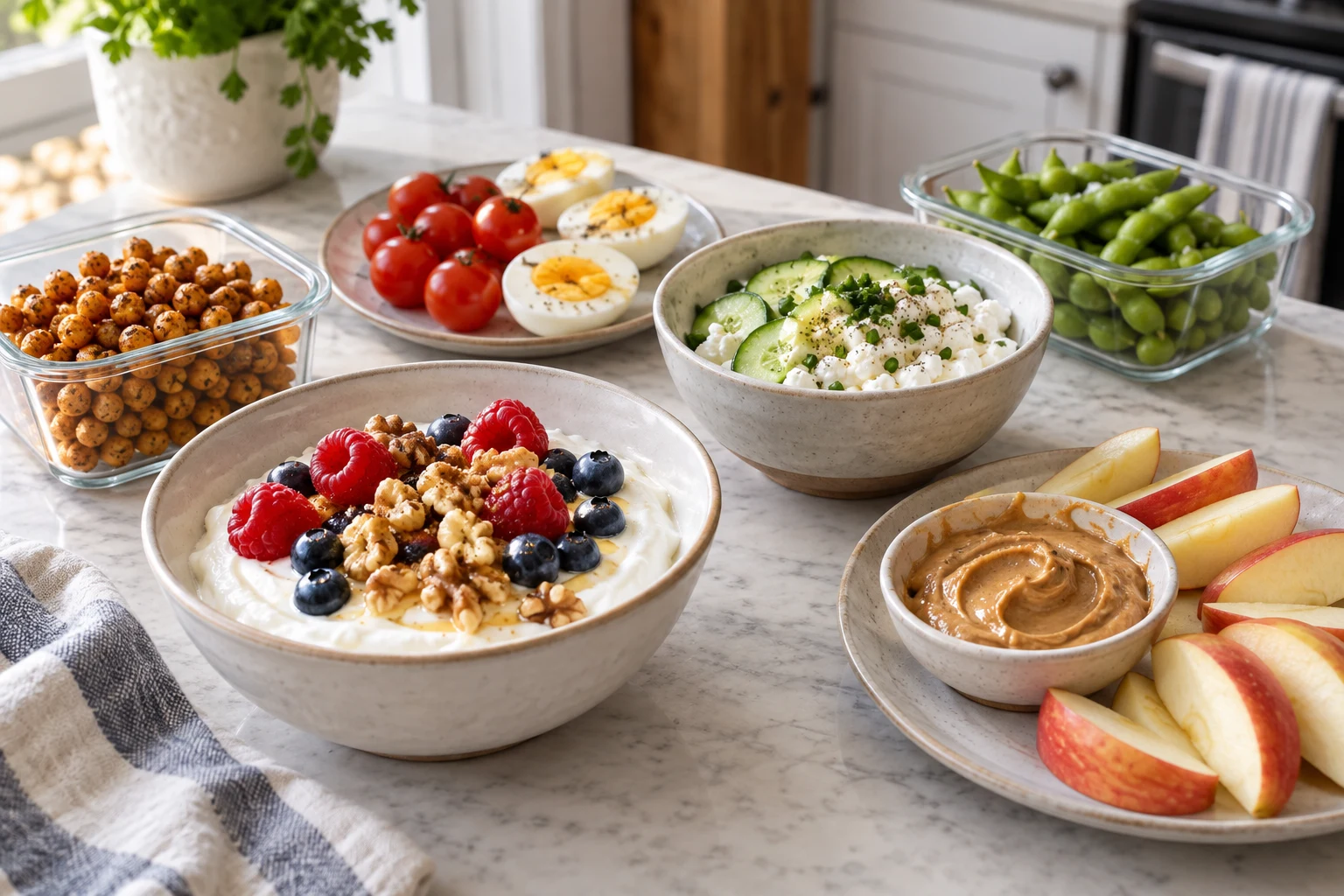
A high-protein snack can be useful when there is a long gap between meals, your lunch was lighter than expected or you need something portable after work. But “high protein” on the front of a package does not automatically mean the snack will feel satisfying—or that you need a snack at all.
The most useful approach is to start with a clear protein source, then add fruit, vegetables, whole grains or another ingredient that contributes fiber, volume, texture or flavor. That turns a single food into a snack that feels more complete without becoming a second lunch.
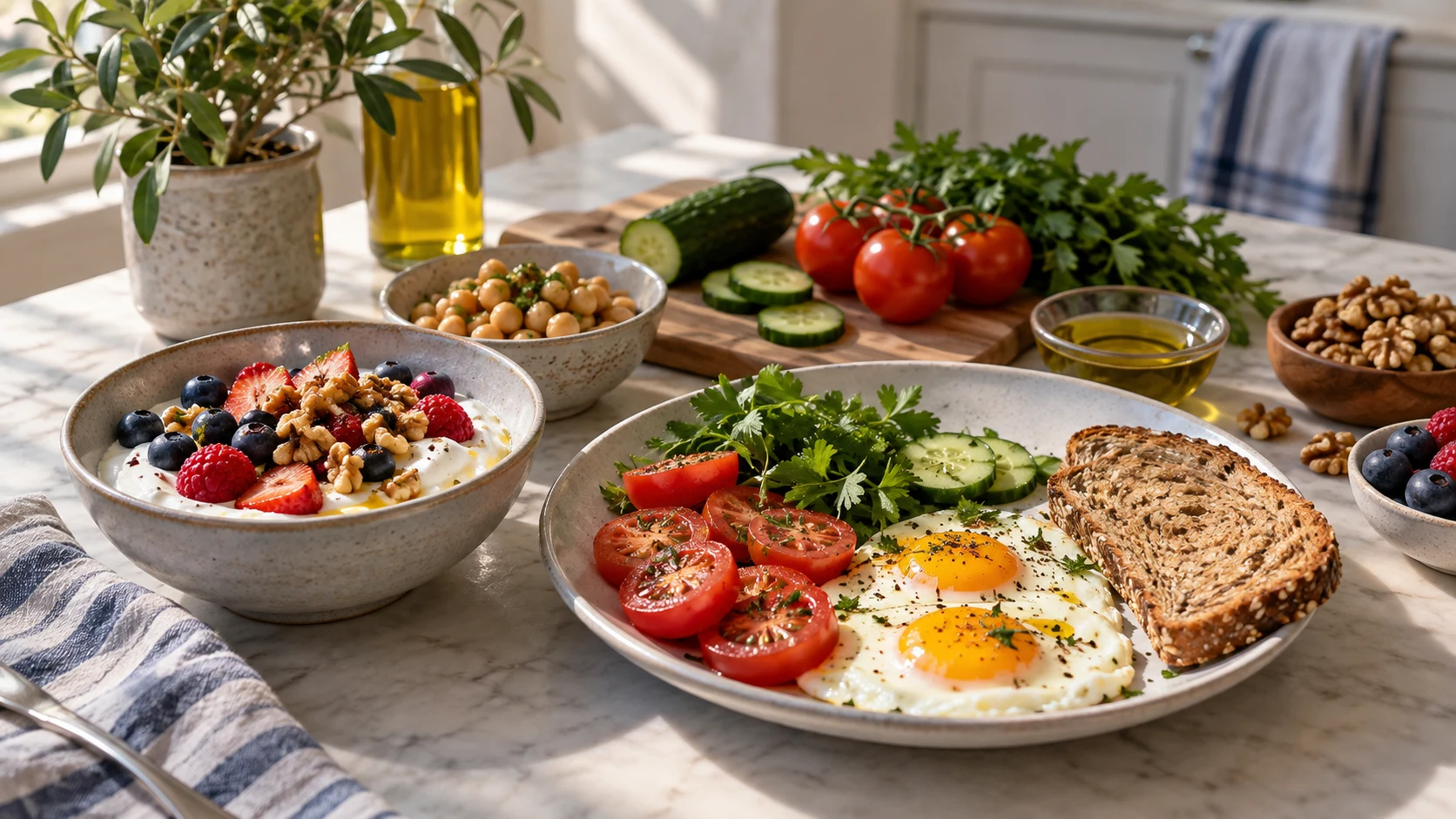
Use this formula: protein anchor + produce or a fiber-rich food + enough volume for your appetite. Examples include Greek yogurt with berries, eggs with tomatoes, edamame with fruit, or hummus with vegetables and whole-grain crackers.
What makes a snack satisfying?
Protein can contribute to fullness, but it is not a guarantee that one snack will keep every person satisfied for the same amount of time. Research reviews suggest that higher-protein foods or meals can increase short-term fullness, while also noting that study conditions vary and long-term findings are less certain.
A practical snack also needs to match the situation. A small yogurt may be enough when dinner is an hour away. If your next meal is four hours away, you may need yogurt plus fruit, oats or nuts. Appetite, activity, meal size and individual needs all matter.
The USDA's MyPlate protein foods guidance includes seafood, meat, poultry, eggs, beans, peas, lentils, nuts, seeds and soy foods. Dairy foods such as yogurt and cottage cheese can also contribute protein. Variety is more useful than building every snack around the same product.
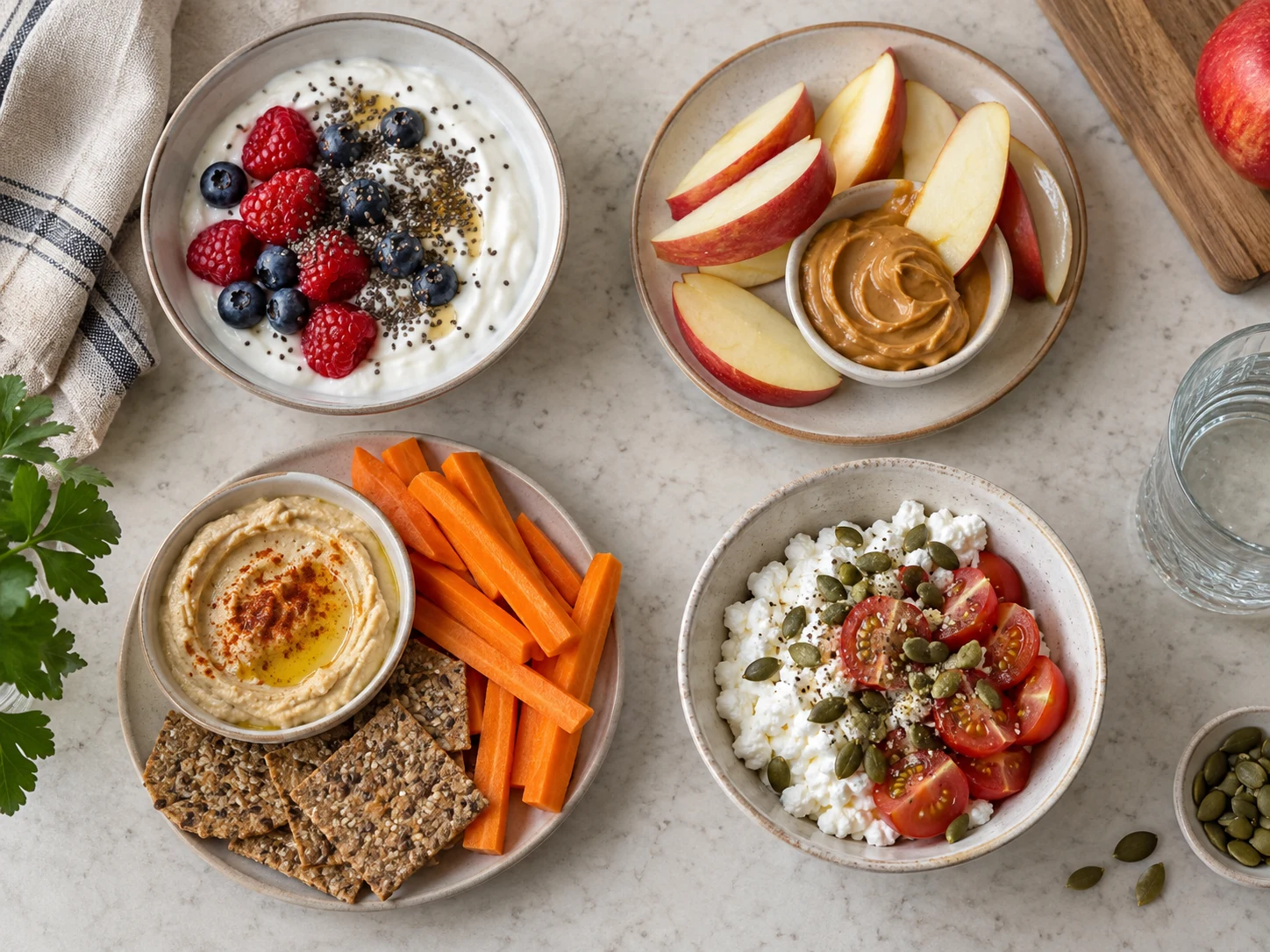
The three-part high-protein snack formula
You do not have to include all three parts every time. Edamame and beans contribute both protein and fiber. Nuts provide protein along with fat and texture. The formula is a troubleshooting tool: if your usual snack leaves you hungry quickly, look for the missing piece.
20 high-protein snacks that actually feel like food
1. Greek yogurt, berries and walnuts
Use plain Greek yogurt as the protein anchor, then add fresh or frozen berries and chopped walnuts. Cinnamon or a small drizzle of honey can change the flavor without requiring a flavored yogurt.
2. Cottage cheese, tomatoes and pumpkin seeds
Top cottage cheese with cherry tomatoes, black pepper, herbs and pumpkin seeds. Add whole-grain crackers if you need a more substantial snack.
3. Apple slices with peanut butter
An apple brings crunch and fiber while peanut butter adds protein, fat and staying power. Portion the peanut butter into a small bowl instead of trying to dip directly into the jar.
4. Eggs with tomatoes or fruit
Keep hard-boiled eggs in the refrigerator for a quick option. Pair them with cherry tomatoes, sliced peppers or a piece of fruit rather than eating the eggs alone.
5. Shelled edamame with sea salt and lemon
Frozen shelled edamame can be microwaved in minutes. Finish it with lemon, black pepper, chili flakes or a small pinch of salt.
6. Hummus, vegetables and whole-grain crackers
Hummus alone is easy to overestimate as a high-protein food, so build the snack intentionally. Use a useful portion of hummus with carrots, cucumber or peppers and add whole-grain crackers when needed.
7. Tuna and white bean cucumber cups
Mix canned tuna with mashed white beans, lemon and herbs, then spoon it onto cucumber slices or whole-grain crackers. This works well when you have a small amount of tuna left from lunch.
8. Roasted chickpeas and fruit
Roasted chickpeas are portable and crunchy. Pair them with an apple, orange or grapes to make the snack feel less dry and more complete.
9. Plain yogurt with oats and chia seeds
Stir a spoonful of oats and chia seeds into thick yogurt. Add fruit for sweetness and let the mixture sit briefly if you prefer softer oats.
10. Turkey roll-ups with cucumber
Roll sliced cooked turkey around cucumber strips or a small amount of cheese. Choose less-processed leftover poultry when available, and compare sodium when buying deli meat.
11. Tofu bites with a simple dipping sauce
Bake or air-fry cubes of seasoned tofu and refrigerate them for several days. Serve with cucumber and a yogurt-herb, peanut or soy-ginger dip.
12. Cheese, pear and pistachios
Pair a modest portion of cheese with pear slices and pistachios. The combination offers more texture and variety than cheese by itself.
13. Smoked salmon on whole-grain crispbread
Spread plain yogurt or fresh cheese over crispbread, then add smoked salmon, cucumber, lemon and dill. Because smoked fish can be salty, rotate it with other protein sources.
14. Black bean salsa cup
Combine black beans with corn, tomatoes, lime and cilantro. Eat it with pepper strips or a small portion of whole-grain tortilla chips.
15. Kefir or drinkable yogurt with fruit
A drinkable option can be convenient, but liquids may not feel as satisfying to everyone as a snack you chew. Pair plain kefir with fruit or a small handful of nuts and see which format works better for you.
16. Lupini beans with vegetables
Rinsed lupini beans make a firm, portable snack with tomatoes or cucumber. Check the sodium label and rinse brined beans before eating.
17. Chia pudding made with Greek yogurt
Make chia pudding with milk, then strengthen the protein anchor by folding in Greek yogurt. Top with berries or chopped fruit.
18. Leftover chicken with hummus
A few slices of leftover chicken, vegetables and hummus create a quick snack plate. This is especially useful on active days when a small piece of fruit will not bridge the gap to dinner.
19. Nut and seed mix with dried fruit
Combine almonds, pistachios and pumpkin seeds with a smaller amount of unsweetened dried fruit. Nuts and seeds are energy-dense, so portion the mixture before putting the container on your desk.
20. Mini bean and cheese quesadilla
Spread mashed beans over half of a small whole-grain tortilla, add a little cheese, fold and warm it in a skillet. Cut it into wedges and serve with salsa.
Choose the right snack for the situation
| If you need… | Start with… | Try… |
|---|---|---|
| A two-minute snack | Ready-to-eat protein | Greek yogurt, berries and walnuts |
| Something portable | A dry or sealed option | Roasted chickpeas plus fruit |
| A larger afternoon snack | Protein + produce + whole grain | Eggs, tomatoes and crackers |
| A plant-based option | Beans, soy, nuts or seeds | Edamame with fruit |
| A savory desk snack | Protein + crunchy vegetables | Hummus, peppers and crackers |
Portable snacks for work, school or travel
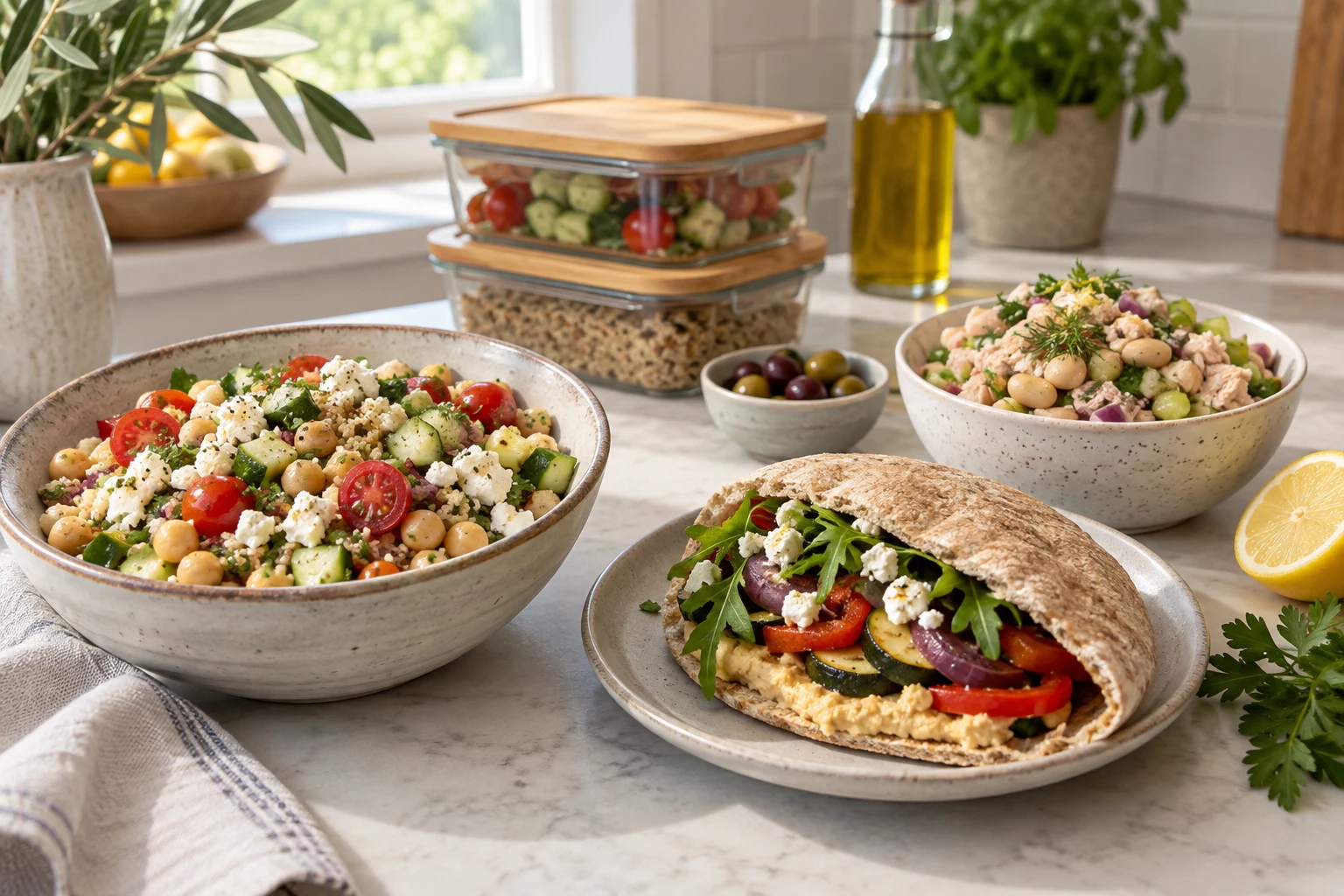
Portability changes which snack is practical. Pack wet ingredients in leakproof containers and keep refrigerated foods cold. Useful combinations include:
- Two hard-boiled eggs, cherry tomatoes and whole-grain crackers
- Greek yogurt, berries and a separate container of nuts
- Edamame, an orange and pumpkin seeds
- Hummus, carrots and seeded crackers
- Roasted chickpeas, an apple and a cheese stick
- Tuna and white bean salad with cucumber slices
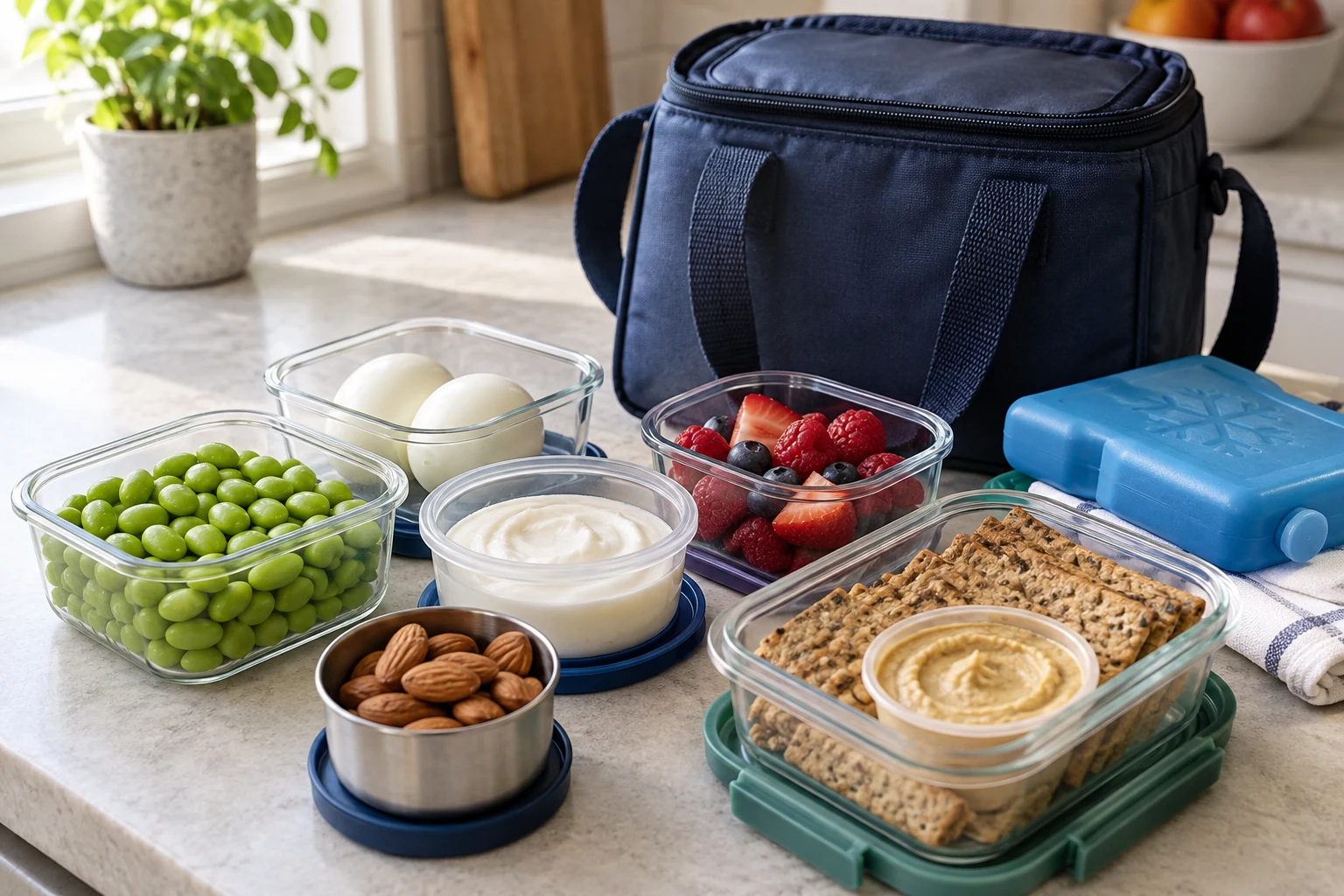
If a snack contains yogurt, eggs, cheese, cooked meat, fish, tofu or another perishable food, use a refrigerator or an insulated bag with a cold source. Do not let convenience override basic food-safety practices.
Store-bought snacks: what to check
A packaged snack can be convenient, but the marketing on the front is not enough information. Turn the package around and consider:
- Protein source: Is it coming from yogurt, milk, soy, nuts, seeds, beans, eggs or another recognizable ingredient?
- Serving size: Does the listed serving match the amount you will realistically eat?
- Added sugar: Compare similar products rather than assuming every protein snack is low in added sugar.
- Sodium: Jerky, deli meat, cheese, flavored beans and packaged snack mixes can vary considerably.
- Fiber and produce: If the product has little of either, add fruit, vegetables or whole-grain crackers.
You do not need the product with the largest protein number. Choose something that fits the rest of your eating pattern, preferences and actual hunger.
A simple prep routine for the week
Spend 20 to 30 minutes preparing a small snack system rather than seven finished snack boxes:
- Boil several eggs or bake a tray of tofu cubes.
- Wash sturdy fruit and vegetables.
- Portion nuts, roasted chickpeas or crackers.
- Divide hummus or yogurt dip into small containers.
- Keep two no-prep backups, such as yogurt and edamame, available.
Freshness varies by food. Prepare only what you can store safely and will genuinely eat. A small midweek refresh is often more realistic than assembling a full week of cut produce on Sunday.
Common mistakes
Choosing protein without enough food
A cheese stick or small yogurt contains protein, but it may not be enough for a long afternoon. Add fruit, vegetables, oats or whole-grain crackers when your appetite calls for more.
Treating every snack as mandatory
You do not need to snack simply because it is 3 p.m. Use hunger, meal timing and your schedule as the guide.
Chasing the highest protein number
More is not automatically better. General snack ideas cannot determine an individualized protein target, and a snack can be satisfying without resembling a protein supplement.
Relying only on bars and shakes
Packaged products can be useful, but ordinary foods often provide more texture, variety and opportunities to include fruit, vegetables, whole grains, nuts or legumes.
Frequently asked questions
How much protein should a snack have?
There is no universal number for every person or every snack. Needs vary with age, body size, health status, pregnancy, activity and the rest of the day's food. Focus first on including a meaningful protein source and enough total food for the gap you need to bridge.
What are good vegetarian high-protein snacks?
Greek yogurt, cottage cheese, eggs, edamame, tofu, beans, lentils, hummus, nuts and seeds all provide options. Vegans can build snacks around soy foods, beans, peas, lentils, nuts and seeds.
Are nuts a high-protein snack?
Nuts contribute protein, but they are not as protein-dense as some dairy, egg, soy, fish or poultry options. They work well as part of a pairing, such as yogurt with walnuts or fruit with peanut butter.
Do I need protein powder?
No. Protein powder can be convenient, but it is not required for a protein-forward snack. Whole-food options can work very well.
What is the easiest high-protein snack?
The easiest option is the one you will keep available. For many people that means plain Greek yogurt, hard-boiled eggs, cottage cheese, edamame, hummus or a portion of nuts paired with fruit or vegetables.
The simplest way to build a better snack
Pick one protein anchor you like. Add produce or a fiber-rich food. Scale the portion to your appetite and the time until your next meal.
That can be as simple as yogurt and berries, eggs and tomatoes, edamame and fruit, or hummus with vegetables and crackers. The point is not to turn snack time into a nutrition calculation. It is to keep a few reliable combinations available so you can eat something useful when you are genuinely hungry.
Sources and further reading