
If you've ever found yourself eating past fullness because the food was there, or avoiding entire food groups because they felt "dangerous," or feeling guilty after a meal you enjoyed, you're not alone. For so many women, food has become tangled up with stress, control, worthiness, and a thousand unspoken rules about what you "should" or "shouldn't" eat.
A healthy relationship with food doesn't mean eating perfectly or never having cravings or always stopping at the exact moment you're satisfied. It means eating without constant mental negotiation, trusting your body's signals, and letting food be nourishing and enjoyable without all the emotional weight.
This isn't about another diet or meal plan. It's about unlearning the patterns that turned eating into a source of stress instead of pleasure, and rebuilding a relationship with food that feels calm, flexible, and rooted in self-trust.
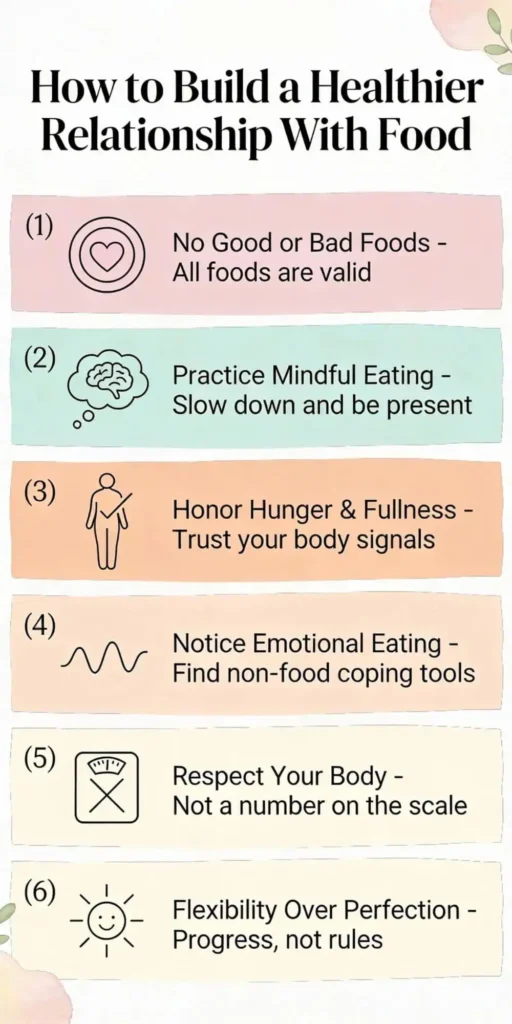
What a Healthy Relationship With Food Actually Looks Like
A positive relationship with food means you give yourself unconditional permission to eat the foods you enjoy, without labeling them as "good" or "bad." You listen to and respect your body's natural hunger cues, eating when you're hungry and stopping when you're comfortably full—not stuffed, not starving.
It means no foods are off-limits, and you don't obsess over the number on the scale or let the opinions of others dictate which foods you eat. You don't punish yourself with exercise after eating something indulgent, and you don't eat in secret or feel shame around your food choices.
This relationship includes relaxed eating, choosing preferences over rigid positions, and practicing balance and flexibility in your eating habits. These principles help you feel more at peace with food and recognize patterns that aren't serving you.
Signs of a healthy food relationship:
- You eat a variety of foods without strict rules or elimination.
- You can enjoy treats without guilt or the need to "make up for it."
- You honor your hunger and fullness without ignoring or overriding them.
- You eat for nourishment and pleasure, not punishment or control.
- Food doesn't occupy constant mental space or create anxiety.
Practice Mindful and Intuitive Eating

Mindful eating and intuitive eating are two evidence-based approaches that help you reconnect with your body's natural wisdom about food. While they overlap, they serve slightly different purposes.
Mindful eating encourages you to be fully present during meals, paying close attention to hunger and satiety signals. It involves taking time with each bite, acknowledging the texture and flavor of food, and removing distractions like screens or stressful conversations. This practice helps counter patterns of overeating or restrictive dieting by bringing awareness to the eating experience itself.
Intuitive eating goes a step further by integrating instinct, emotion, and rational thought to guide your food choices. It rejects the diet mentality entirely and accepts all foods as valid options, focusing instead on your body's internal cues like hunger, fullness, mood, and satisfaction. The 10 principles of intuitive eating start with rejecting the "good foods, bad foods" binary that leads to restriction and guilt.
Research shows that both practices can help you better understand your hunger and fullness signals, reduce emotional eating, and improve mental well-being and body image. Over time, practicing intuitive eating actually leads to improved diet quality, not worse—despite fears that it might lead to "unhealthy" choices.
How to practice mindful eating:
- Eat without distractions—put your phone away, turn off the TV.
- Take smaller bites and chew slowly, noticing taste and texture.
- Pause mid-meal to check in with your fullness level.
- Ask yourself: Am I eating because I'm physically hungry, or for another reason?
Stop Labeling Foods as "Good" or "Bad"
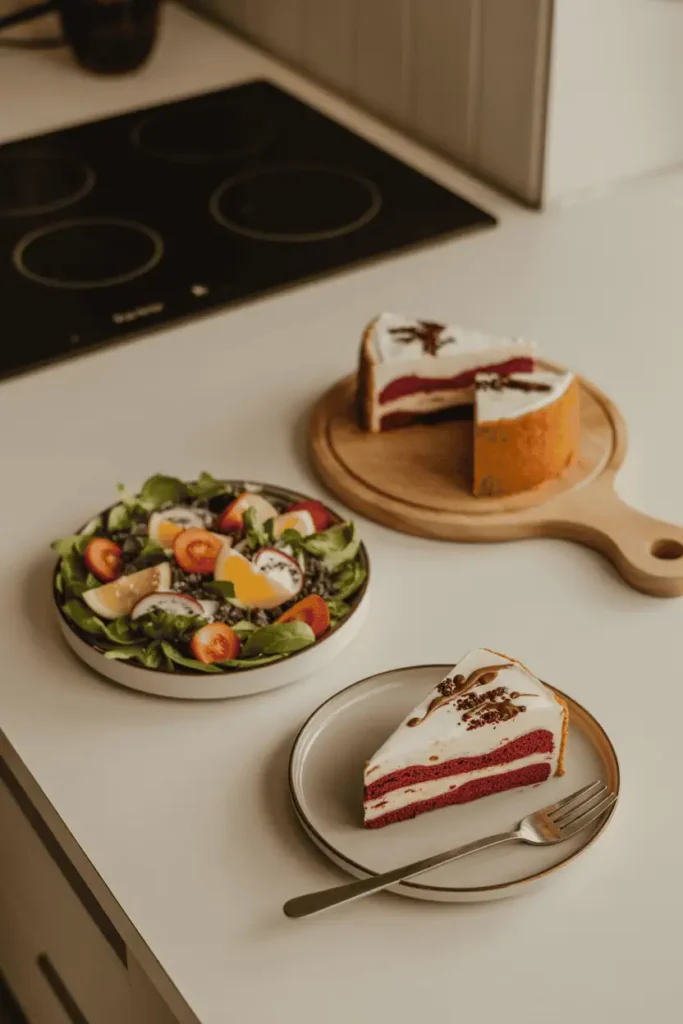
When you label certain foods as "bad" or think of them as "cheat meals," you give those foods power and create a scarcity mindset around them. This often leads to a restrict-binge cycle: you avoid the food for as long as you can, then when you finally allow yourself to have it, you eat past fullness because your brain believes it's a rare opportunity.
Encouraging all foods into your diet and eating according to how you feel—rather than rigid rules—helps normalize these foods. Over time, you'll find that you don't feel guilty having them anymore, and your cravings often reduce or disappear because the food no longer feels forbidden.
This doesn't mean you'll eat cake for every meal. It means cake becomes a neutral option, not a moral failing or a reward you have to earn. When all foods are allowed, you can make choices based on what sounds good, what your body needs, and what truly satisfies you—not based on fear or restriction.
Reframing food language:
- Instead of "I was bad today," try "I ate foods I enjoyed today."
- Instead of "I need to earn this dessert," try "I'm choosing to have dessert because I want it."
- Instead of "This is a cheat meal," try "This is part of my flexible eating pattern."
- Instead of "I can't have that," try "I can have that if I want it."
Understand the Link Between Stress and Emotional Eating

Stress has a powerful impact on eating behaviors, and for many people, it leads to increased caloric intake, particularly of foods rich in fat, sugar, or salt. Research shows a strong correlation between perceived stress and emotional eating, where dietary intake responds to emotions rather than physiological hunger.
During the COVID-19 pandemic, studies found that nearly 64% of participants who displayed perceived stress were emotional eaters, and stress levels were directly associated with higher emotional eating scores. This matters because eating in response to emotions—rather than hunger—can create long-term problems related to unhealthy diet patterns, weight gain, and cardio-metabolic diseases.
Emotional eating isn't a character flaw; it's a behavioral mechanism your brain uses to cope with difficult feelings. The key to changing it isn't more willpower or restriction—it's addressing the underlying stress and developing alternative coping strategies that don't involve food.
Non-food ways to manage stress and emotions:
- Take a short walk or do gentle stretching to move the energy in your body.
- Call a friend or write in a journal to process what you're feeling.
- Practice deep breathing or a five-minute meditation to calm your nervous system.
- Engage in a creative activity like drawing, music, or crafting that brings you into the present moment.
Honor Your Hunger and Respect Your Fullness
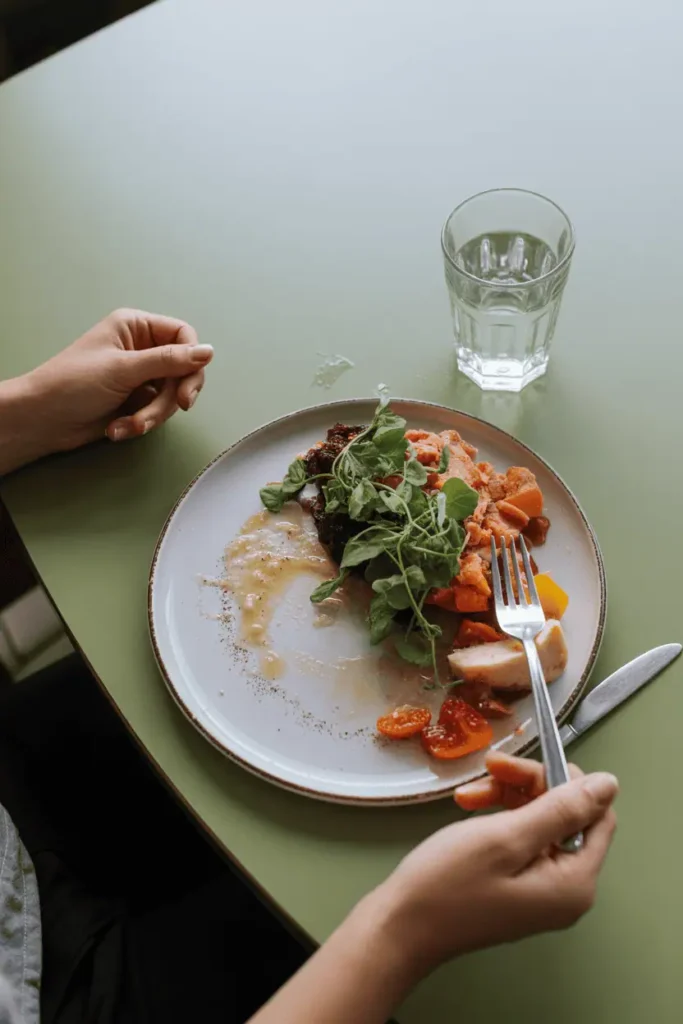
One of the foundational principles of a healthy food relationship is listening to your body's natural hunger and fullness cues. This might sound simple, but years of dieting, ignoring hunger to "be good," or eating past fullness because food was there can disconnect you from these signals.
Honoring your hunger means eating when you feel physically hungry, not waiting until you're ravenous and desperate. When you let yourself get too hungry, you're more likely to overeat because your body goes into survival mode. Respecting your fullness means pausing during meals to notice how your body feels, and stopping when you're comfortably satisfied—not stuffed, not still hungry.
This takes practice, especially if you've spent years overriding these signals. Start by rating your hunger on a scale of 1 to 10 before eating, and check in again halfway through your meal. The goal isn't perfection; it's reconnection.
Questions to rebuild hunger and fullness awareness:
- What does hunger feel like in my body? (Stomach rumbling, low energy, difficulty concentrating)
- What does comfortable fullness feel like? (No longer hungry, satisfied, energized)
- Am I eating because my body needs food, or because it's a certain time of day?
- Am I still hungry, or am I eating because the food is in front of me?
Make Peace With Your Body

It's nearly impossible to build a healthy relationship with food when you're at war with your body. Body image struggles and food struggles are deeply intertwined, and healing one often requires addressing the other.
Intuitive eating principles emphasize respecting your body and recognizing that bodies come in all shapes and sizes—and all of them deserve to be nourished with kindness. Studies show that intuitive and mindful eating are linked to enhanced body image, self-acceptance, and reduced instances of disordered eating and depressive symptoms.
Making peace with your body doesn't mean you have to love every part of it every day. It means treating it with respect, speaking to it with compassion, and recognizing that your worth isn't determined by your size or shape. When you stop trying to punish your body into submission through food restriction, you create space for a more peaceful, trusting relationship with both your body and food.
Body respect practices:
- Notice when you're engaging in negative self-talk and gently redirect it.
- Focus on what your body allows you to do, not just how it looks.
- Unfollow social media accounts that make you feel worse about your body.
- Wear clothes that fit and feel comfortable now, not clothes you're "saving" for later.
Build Joyful, Flexible Eating Patterns

A healthy relationship with food includes enjoyment, not just discipline. Research shows that eating meals together at the table with people you love—rather than in front of screens—creates lasting positive associations with food and improves overall well-being.
Flexibility is just as important as consistency. Some days you'll eat more, some days less. Some meals will be perfectly balanced, others will be whatever you can manage. Both are okay. The goal is a pattern of eating that supports your energy, mood, and health over time—not perfection at every meal.
Balancing protein throughout the day can help with blood sugar stability, curbing hunger, and sustained energy, but this doesn't have to be rigid. The focus is on overall patterns, not individual meals or days.
How to bring more joy and flexibility into eating:
- Cook or eat with people you enjoy when possible.
- Try new foods or recipes without pressure to like everything.
- Allow yourself to eat foods you love without attaching guilt or rules.
- Let go of the idea that every meal has to be "optimal" or "clean."
- Give yourself permission to change your plans based on how you feel.
A Gentle Reminder
Healing your relationship with food takes time, patience, and a lot of self-compassion. You're unlearning years of diet culture messaging, societal pressure, and internalized rules about what you "should" do with your body and your plate.
You won't do it perfectly, and that's the point. A healthy relationship with food isn't about flawless eating—it's about trust, flexibility, and letting food be one part of your life instead of the thing that controls it.
Some days you'll eat mindfully and honor your hunger beautifully. Other days you'll eat in front of the TV or have dessert for dinner, and that's okay too. What matters is the overall pattern, the kindness you bring to yourself, and the slow, steady rebuilding of trust with your body.
You deserve to eat without guilt, move without punishment, and take up space without apology. Food is meant to nourish you, sustain you, and bring you pleasure—not to be another thing you have to earn or get "right."