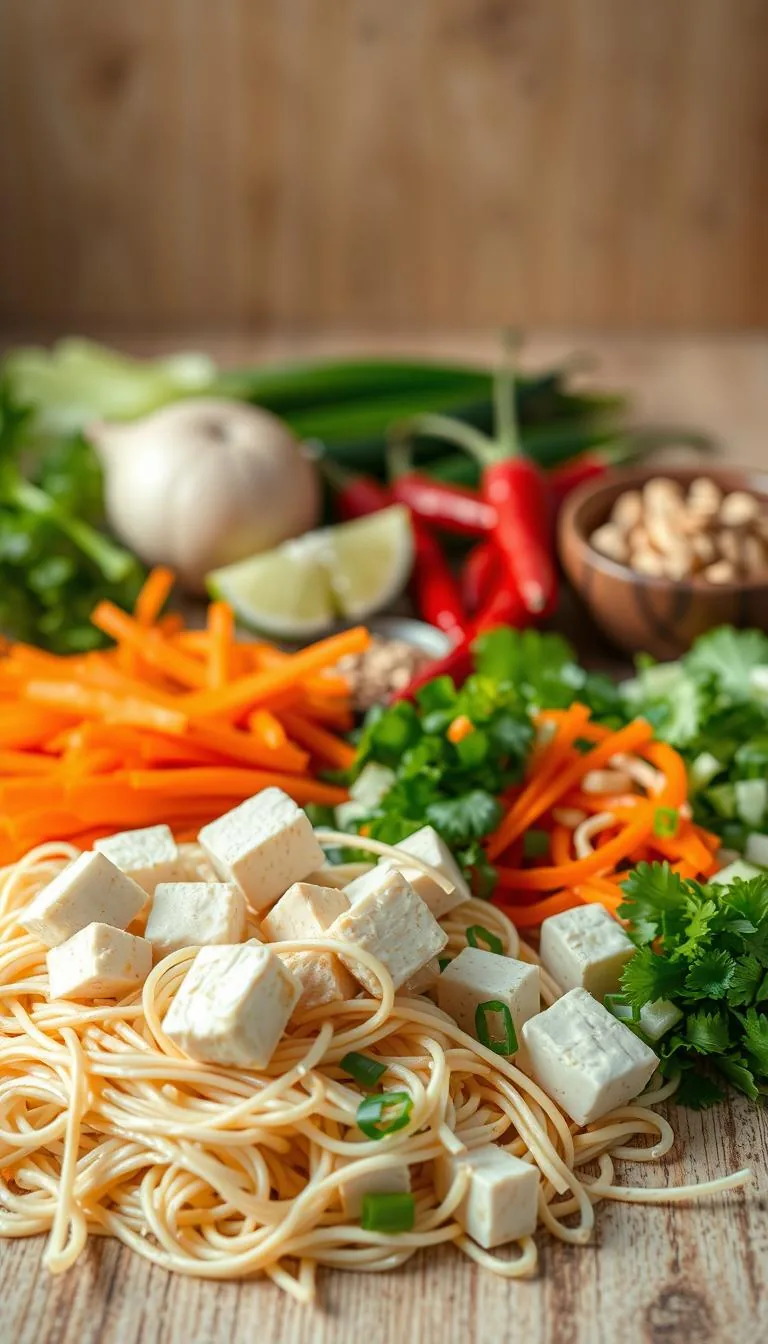
Welcome to our culinary journey. We're excited to share a simple yet flavorful Tofu Pad Thai recipe perfect for weeknights!
This popular dish from Thai cuisine is not only delicious but also easy to make. We'll guide you through its history, ingredients, and step-by-step preparation.
You'll love how this vegan Pad Thai recipe comes together. It's sure to become a favorite in your kitchen!
Key Takeaways
- Easy-to-follow recipe for a classic dish
- Simple ingredients for a flavorful meal
- Perfect for weeknights or special occasions
- Vegan-friendly and adaptable to dietary needs
- A delicious introduction to Thai cuisine
- Step-by-step guide for a stress-free cooking experience
The History and Origins of Pad Thai
Exploring Pad Thai's history is a journey into Thai identity. You might be surprised to learn it wasn't always a staple. Let's dive into its origins and rise to fame.
Thailand's National Dish
Pad Thai was introduced in the 1930s as part of a national identity campaign by the Thai government! It was promoted to unify the country and create a sense of nationalism. It's a clever mix of Chinese and Thai flavors, with a sweet, sour, and savory sauce that tantalizes the taste buds. The government's efforts were successful, and Pad Thai quickly became a beloved dish across Thailand.
Today, Pad Thai is more than just a popular street food; it's a symbol of Thai culture and cuisine. You'll find it on menus from street stalls to high-end restaurants, and it's often served at social gatherings and celebrations.
How Pad Thai Became Popular Worldwide
So, how did Pad Thai make its way from Thailand to the rest of the world? The dish gained international popularity in the mid-20th century, as Thai immigrants brought their culinary traditions with them. As global travel and cultural exchange increased, Pad Thai became a staple in many international cuisines.
| Year | Event | Impact on Pad Thai |
|---|---|---|
| 1930s | Introduction of Pad Thai | Became Thailand's national dish |
| 1950s-60s | Thai immigration | Introduced Pad Thai to new countries |
| 1980s-90s | Globalization and cultural exchange | Pad Thai gained worldwide popularity |
Pad Thai's history is as rich and complex as its flavors! From its origins as a national identity campaign to its current status as a global culinary phenomenon, Pad Thai continues to captivate food lovers around the world.
Essential Ingredients for Authentic Tofu Pad Thai
Now that we've explored Pad Thai's rich history, let's look at the key ingredients. The right mix of ingredients is vital for a memorable Tofu Pad Thai.
Rice Noodles: Types and Selection
Rice noodles are Pad Thai's core. It's important to pick the right type. You'll want thin, dried rice stick noodles, also known as "rice vermicelli" or "Pad Thai noodles." Make sure they're made from 100% rice flour for the best taste and texture.
When choosing noodles, think about their width and texture. Thinner noodles cook faster and mix well with other ingredients.
Tofu: Preparation and Varieties
Tofu is a key protein in Tofu Pad Thai. Use firm or extra-firm tofu for the best results. It should hold its shape well during stir-frying.
Press and drain the tofu before cutting it into small cubes or strips. Some recipes suggest marinating the tofu for extra flavor. Try different tofu types, like silken or smoked tofu, to find your favorite.
Sauce Components and Flavor Profile
The Pad Thai sauce is a mix of sweet, sour, salty, and umami flavors. It includes tamarind paste, fish sauce (or vegan alternatives), palm sugar, and lime juice. Some recipes add soy sauce, oyster sauce (or mushroom sauce for vegans), and chili peppers for more depth.
Getting the flavors right is key for an authentic Pad Thai taste.
Fresh Ingredients and Possible Substitutions
Fresh ingredients like bean sprouts, carrots, green onions, and peanuts add crunch and freshness. You can also add other veggies like bell peppers or mushrooms. For protein, try cooked chicken, shrimp, or more tofu.
Feel free to customize the recipe with your favorite ingredients or dietary needs.
Kitchen Equipment You'll Need
Before we start making Tofu Pad Thai, let's look at the kitchen tools you'll need. The right tools make cooking easier and help your dish taste great.
Wok vs. Frying Pan Debate
Choosing between a wok or frying pan for Tofu Pad Thai depends on your preference. A wok is great for stir-frying because of its shape. It cooks ingredients quickly. A frying pan is a good choice if you don't have a wok. It's familiar and works well too. It's all about what you prefer!
Other Essential Tools
You'll also need some other tools for Tofu Pad Thai. A cutting board is for chopping veggies, and a sharp knife for clean cuts. You'll also need measuring cups and spoons for the sauce. And don't forget a spatula for stirring and serving.
Setting Up Your Workspace for Efficiency
To cook better, set up your workspace well. Put your ingredients and tools where you can easily reach them. This way, you can focus on cooking and enjoy it more.
| Equipment | Purpose |
|---|---|
| Wok or Frying Pan | Main cooking vessel for stir-frying |
| Cutting Board | Chopping vegetables and ingredients |
| Sharp Knife | Precise cutting of ingredients |
| Measuring Cups and Spoons | Accurate measurement of sauce ingredients |
| Spatula | Stirring and serving the dish |
Preparing Your Ingredients
Getting your ingredients ready is key to making tasty Tofu Pad Thai. We'll show you how to do it right. This step makes your dish taste great and cooking easier and fun.
Proper Tofu Preparation Techniques
Preparing tofu is essential for a good Tofu Pad Thai. Start by pressing out extra moisture. This helps the tofu brown and soak up flavors better. Wrap the tofu in a towel or paper towels and press it for 15 minutes.
After pressing, cut the tofu into small pieces. You can coat it with cornstarch and spices for a crispy outside.
Tip: Use extra-firm tofu for Pad Thai. It stays firm during stir-frying.
Vegetable Preparation and Cutting Styles
Cutting your vegetables right is important for Tofu Pad Thai. Cut them into even pieces so they cook evenly. Use a mandoline or sharp knife for carrots, bell peppers, and bean sprouts.
Make the vegetables thin and easy to stir-fry. This helps them cook quickly.
- Carrots: Julienne or thinly slice
- Bell Peppers: Thinly slice or cut into strips
- Bean Sprouts: Trim the ends
Make-Ahead Preparation Tips
Prep your ingredients ahead of time for a stress-free cooking experience. Cut your vegetables and tofu a day before. Store them in airtight containers in the fridge.
You can also make the Pad Thai sauce ahead. Store it in the fridge for up to a week. Just stir it well before using.
By preparing your ingredients with care, you'll be well on your way to creating a delicious and authentic Tofu Pad Thai that will impress your family and friends!
The Ultimate Tofu Pad Thai Recipe: Step-by-Step Guide
Get ready to cook up a storm with our ultimate Tofu Pad Thai recipe. This step-by-step guide makes this Thai classic easy for everyone. You'll learn to make a delicious, authentic Tofu Pad Thai that rivals your favorite Thai restaurant.
Step1: Soaking and Preparing the Rice Noodles
First, let's start with the rice noodles, a key part of Pad Thai. Soak them in water until they're soft but not mushy. This usually takes 5-7 minutes in warm water. After soaking, drain the noodles and set them aside, ready for the final stir-fry.
Step2: Creating the Signature Pad Thai Sauce
The sauce is what gives Pad Thai its unique flavor. You'll need tamarind paste, fish sauce (or vegan alternative), palm sugar, and lime juice. Mix these ingredients together until the sugar is dissolved. The result should be a sweet, sour, and savory flavor. Adjust the sauce to your taste by adding more lime juice for acidity or sugar for sweetness.
Step3: Cooking the Tofu to Perfection
Cooking the tofu correctly is key. Cut the tofu into bite-sized pieces and pan-fry until golden on all sides. This step adds texture and ensures the tofu absorbs the flavors. For an extra crispy exterior, lightly coat the tofu with cornstarch before frying.
Step4: Combining All Elements in the Wok
Now, it's time to bring everything together in the wok. Start by stir-frying the aromatics (garlic and shallots), followed by the tofu, and then add the prepared noodles. Pour in the Pad Thai sauce and stir-fry until the noodles are well coated. Add bean sprouts and peanuts, stir-frying for another minute.
| Ingredient | Quantity | Preparation |
|---|---|---|
| Rice Noodles | 1 cup | Soaked and drained |
| Tofu | 1 block | Cubed and pan-fried |
| Pad Thai Sauce | 1/2 cup | Mixed and adjusted to taste |
With these steps, you're well on your way to creating an authentic Tofu Pad Thai. Enjoy the process and the delicious outcome!
Common Mistakes to Avoid When Making Tofu Pad Thai
Even with a great recipe, mistakes can happen when cooking Tofu Pad Thai. But don't worry, we've got you covered! To make a truly exceptional dish, it's essential to avoid common pitfalls. These can affect the texture, flavor, and overall quality of your Pad Thai.
Noodle Texture Issues and Solutions
One of the most common mistakes is ending up with noodles that are either too mushy or too hard. To achieve the perfect texture, soak your rice noodles in water for the right amount of time. Not too long, not too short! Typically, 5-7 minutes is ideal. If you're using a specific brand, follow their instructions. You can also test the noodles by tasting them; they should be slightly firm in the center.
Tip: If you find your noodles are too sticky, try adding a small amount of oil to prevent them from clumping together!
Balancing Flavors Properly
Pad Thai is all about balancing sweet, sour, salty, and umami flavors. A common mistake is overdoing it with the sauce, making the dish too sweet or too salty. Taste as you go and adjust the seasoning. Remember, you can always add more sauce, but it's harder to remove excess sauce from the dish.
Balance is key! Make sure to taste and adjust the flavors to your liking. Don't be afraid to add a squeeze of fresh lime juice to brighten up the dish.
Timing and Heat Management
Cooking Tofu Pad Thai requires quick thinking and action! To avoid overcooking your ingredients, manage your heat and timing carefully. Cook your ingredients in batches if necessary, and stir-fry them quickly over high heat. This will help preserve the texture and color of your vegetables and tofu.
By avoiding these common mistakes, you'll be well on your way to making a delicious Tofu Pad Thai. It'll impress your friends and family!
Delicious Variations of Tofu Pad Thai
Pad Thai can be made in many ways, from gluten-free to vegan. You can change it to fit your diet and taste. This makes it a great choice for any meal.
Gluten-Free Adaptations
To make Pad Thai gluten-free, focus on the soy sauce. It usually has gluten. Use gluten-free soy sauce or tamari instead. Also, make sure your noodles are gluten-free rice noodles. Always check the packaging.
Vegan Modifications
Pad Thai is vegan-friendly, but some recipes have egg. To make it vegan, skip the egg or use a tofu scramble. Make sure your tamarind paste and soy sauce are vegan, as some brands use animal products.
Regional Thai Variations
Thailand has many Pad Thai versions. Southern Thailand's might be spicier or use different chilies. Trying these can add new flavors and authenticity.
Fusion Pad Thai Inspirations
Try a fusion Pad Thai. Add Korean chili flakes (gochugaru) for spice or use shrimp or chicken for variety. The goal is to find your favorite mix.
| Variation | Key Ingredient Change | Flavor Profile |
|---|---|---|
| Gluten-Free | Gluten-free soy sauce | Similar to traditional, with a focus on tamarind |
| Vegan | Omit egg or use tofu scramble | Retains the umami and sweetness |
| Regional Thai | Regional chilies or spices | Varied, potentially spicier or more complex |
| Fusion | Added proteins or spices (e.g., gochugaru) | Innovative, potentially spicier or more robust |
Exploring these variations keeps Pad Thai exciting and personal. It's great for dietary needs or just trying something new. Pad Thai's versatility makes it a favorite dish to come back to.
Nutritional Benefits of Tofu Pad Thai
Tofu Pad Thai is not just tasty, but also full of nutrients! It has a good mix of macronutrients, making it a healthy meal choice.
Protein Content and Balanced Macronutrients
Tofu Pad Thai is rich in protein, thanks to tofu and sometimes peanuts or chicken. A serving has about 20 grams of protein. It also has carbs from rice noodles and fats from peanuts or oil.
Calorie Breakdown and Dietary Considerations
A serving of Tofu Pad Thai has 400 to 600 calories. This is a moderate amount, fitting many diets. But, watch out for sodium from soy sauce and seasonings.
Making Your Pad Thai Healthier
To make Pad Thai healthier, use less oil and add more veggies. Choose brown rice noodles over white. Adding more tofu or lean proteins boosts nutrition without losing flavor.
Serving, Storage, and Reheating Your Tofu Pad Thai
Now that you've learned to make Tofu Pad Thai, let's talk about serving, storing, and reheating it. Serving your Pad Thai with the right garnishes and sides can make it even better.
Traditional Garnishes and Accompaniments
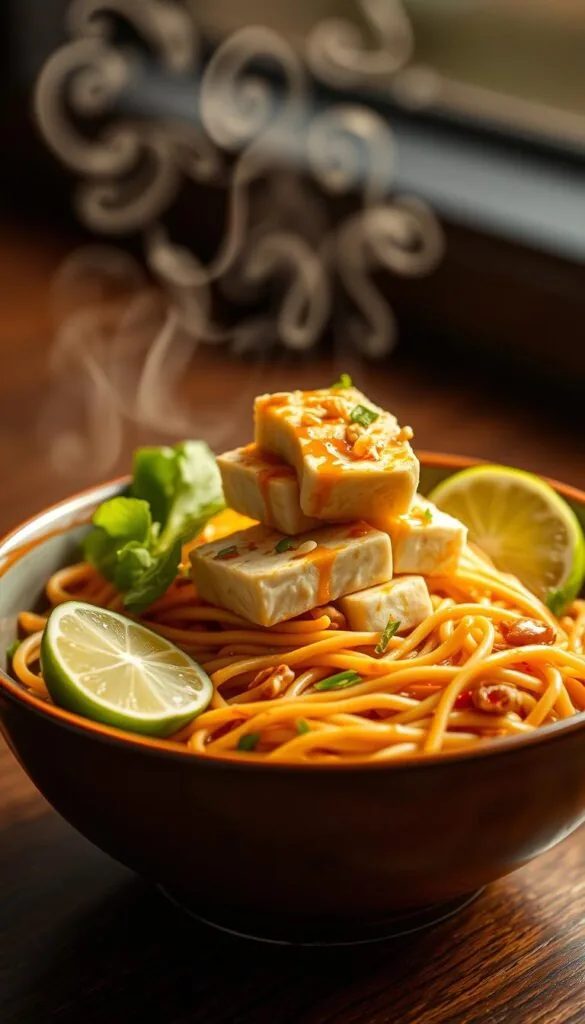
For Pad Thai, use fresh bean sprouts, chopped peanuts, and lime wedges as garnishes. You can also add sliced chili peppers or sesame seeds for extra taste and texture. Serving it with cucumber slices or a green salad can add to its rich flavors.
Proper Storage Techniques
To keep your leftover Pad Thai fresh, store it in an airtight container in the fridge within two hours. Store the noodles and sauce together. If you worry about the noodles getting soggy, store the sauce separately and mix it when reheating.
Reheating Without Losing Texture and Flavor
To reheat your Pad Thai, use a wok or large skillet over medium-high heat. Add a bit of oil to prevent sticking. Then, add the noodles and sauce. Stir-fry until it's hot, adding water if the sauce is too thick. This way, you keep the texture and flavor of your Pad Thai.
Conclusion
We've explored Tofu Pad Thai's rich history and how to make it. Now, you can cook authentic Thai dishes at home. This guide has everything you need to get started.
Tofu Pad Thai is more than food; it's an experience. It combines stir-fried noodles, savory sauce, and fresh veggies with tofu. This mix is a true delight. As you try different versions, you'll love Thai cooking even more.
Whether you're a pro chef or just starting, dive into Thai cuisine. Its bold flavors and vibrant ingredients will spark your creativity. So, start cooking and enjoy the flavors!