You know that moment when you open your pantry looking for something healthy to make for dinner, and instead you're met with a jumble of half-empty boxes, expired cans you forgot you had, and snacks you didn't even remember buying? It's overwhelming. And before you know it, you've ordered takeout or grabbed whatever's easiest—even if it's not what you really wanted.
The truth is, your kitchen is more than just a place where you cook. It quietly shapes your habits, your stress levels, and even the types of foods you reach for when you're tired or emotional. A cluttered, chaotic space doesn't just make cooking harder—it can nudge you toward mindless snacking and quick fixes that don't leave you feeling your best. When your environment is noisy and disorganized, your eating habits often end up the same way.
Creating a calmer, more intentional kitchen is not about perfection or quitting all your favorite foods. It’s about setting up your space so that the healthier choices feel easier, more natural, and way less exhausting to make day after day.
Why Kitchen Clutter Affects Your Food Choices
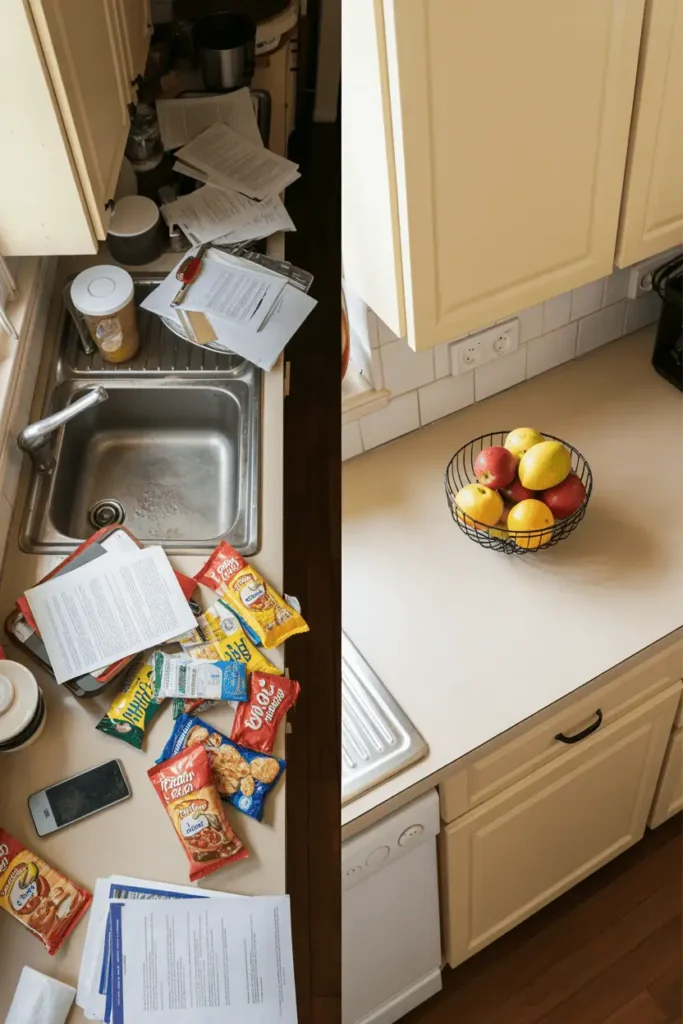
A messy kitchen doesn’t just “look bad”—it changes how you feel and what you do. When every surface is covered and every cupboard is stuffed, your brain has more visual information to process. That background stress makes it harder to plan, focus, and make thoughtful choices about what to eat. You may notice you feel scattered the moment you walk into the room, even if you’re not fully aware of why.
Research has shown that people tend to eat more when they’re in a chaotic, cluttered environment compared with a calm, organized one. In stressful spaces, it’s easier to reach for quick comfort: the cookies on the counter, the chips at eye level, the leftover candy in the bowl. Over time, those small, automatic decisions add up and can shape your overall eating pattern.
There’s also a practical side. When your pantry and fridge are cluttered, it’s easy to lose track of what you actually have. Fresh produce gets buried in the back until it goes bad. Healthy staples like beans, lentils, or whole grains hide behind old boxes. Meanwhile, the ultra-convenient, less nourishing options are front and center. You’re not “failing” at healthy eating—it’s just that your environment is quietly steering you in a different direction.
How an Organized Kitchen Changes Things
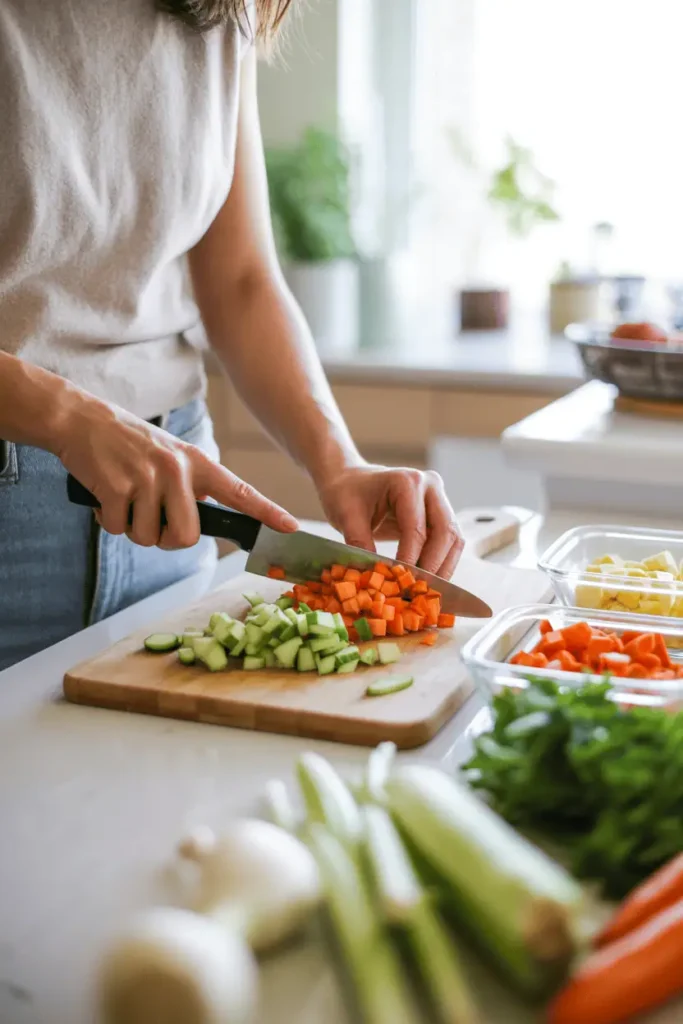
Organizing your kitchen doesn’t magically turn you into someone who loves cooking every night, but it does remove a lot of friction. When you can see what you have and easily get to it, making a meal or even putting together a snack feels less like a big production and more like a normal part of your day.
An orderly kitchen:
- Makes decisions easier. You’re not wasting energy hunting for a pan, wondering if you have rice, or digging through three drawers for a spatula.
- Reduces that “I can’t deal with this” feeling that leads straight to takeout apps.
- Helps you feel more in control, which naturally supports more intentional choices—whether that’s a home-cooked dinner or just adding a side salad to the frozen pizza.
A supportive kitchen is not the same thing as a photo-ready kitchen. You don’t need matching containers, an enormous pantry, or trendy labels. What you need is a space that works for your real life: your schedule, your budget, your energy level, and the way you actually cook and eat—not the way you wish you did.
Step 1: Reset Your Mindset
Before you touch a single drawer, it helps to start with your mindset. Decluttering can stir up guilt, “shoulds,” and old stories—about money, waste, body image, or perfection.
Here are a few gentle reminders as you go:
- You are not your clutter. A messy kitchen doesn’t say anything about your worth or your ability to take care of yourself.
- You’re allowed to let things go, even if you spent money on them. Keeping foods you don’t like or tools you never use doesn’t get that money back; it just keeps you stuck.
- Progress matters more than perfection. A slightly more spacious counter is still a win. A pantry where you can see 70% of what’s in there is still progress.
If you tend to be hard on yourself, you might even pause and decide on a simple phrase to return to, like: “I’m doing this to make life easier for future me.” Let that guide your decisions instead of blame or pressure.
Step 2: Clear Your Countertops
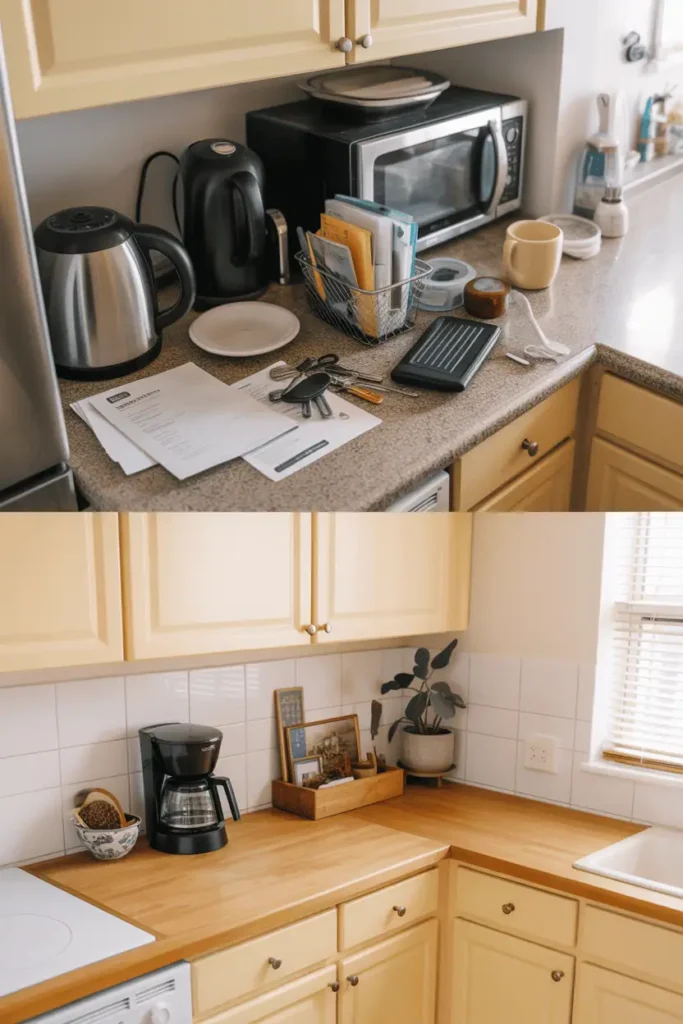
Counter space is your kitchen’s breathing room. When it’s covered in mail, appliances, snacks, and random stuff that never found a proper home, cooking becomes a balancing act.
Pick one section of the counter and work in small zones rather than trying to clear everything at once.
- Remove anything that doesn’t belong in the kitchen: papers, toys, tools, receipts, random gadgets.
- Look at each appliance and ask: How often do I actually use this? Daily or a few times a week? It can stay out. Once a week or less? It might be better off in a cabinet.
- Designate one clear zone as your “prep space”—a place where you can comfortably chop vegetables, assemble lunches, or mix a salad without having to move a pile of stuff first.
Even a single clear corner can make cooking feel surprisingly more possible. When you see that empty workspace, your brain registers: “I could actually make something here.”
Step 3: Simplify Your Pantry
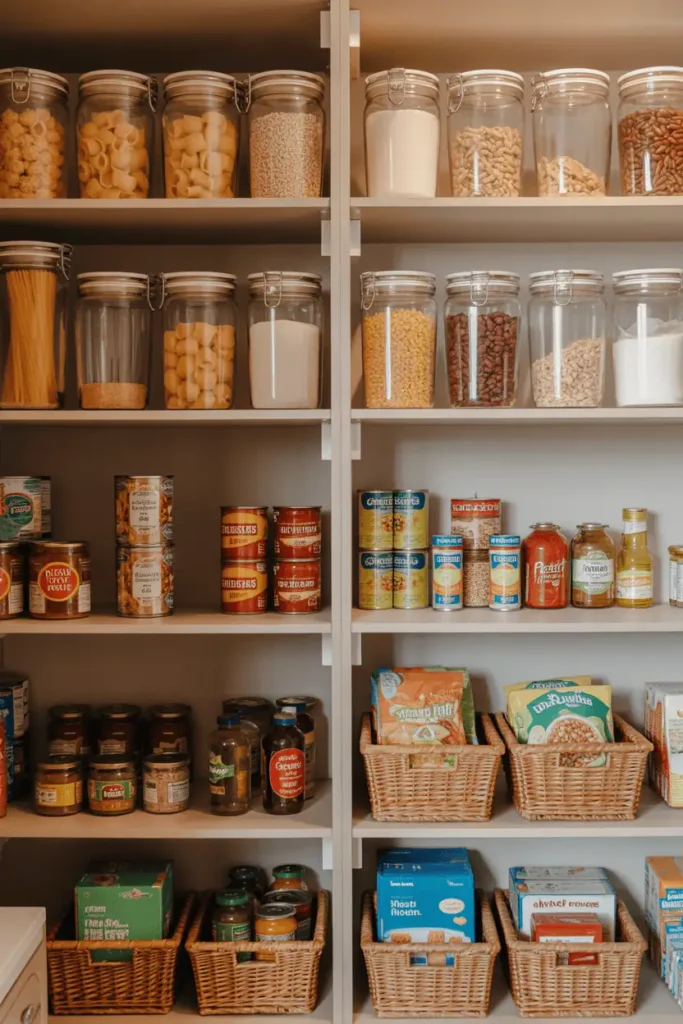
The pantry is where a lot of kitchen stress quietly lives. It’s also where many of your everyday decisions come from: what you can throw together in ten minutes, what you snack on, what you reach for when you’re too tired to think.
Take it step by step:
- Empty one shelf at a time. Don’t dump the whole pantry unless you have the time and energy to deal with it. Pull everything off a single shelf and give it a quick wipe.
- Check dates without obsessing. Toss anything clearly expired or stale. For borderline items, ask yourself honestly: “Am I ever actually going to use this?” If not, let it go.
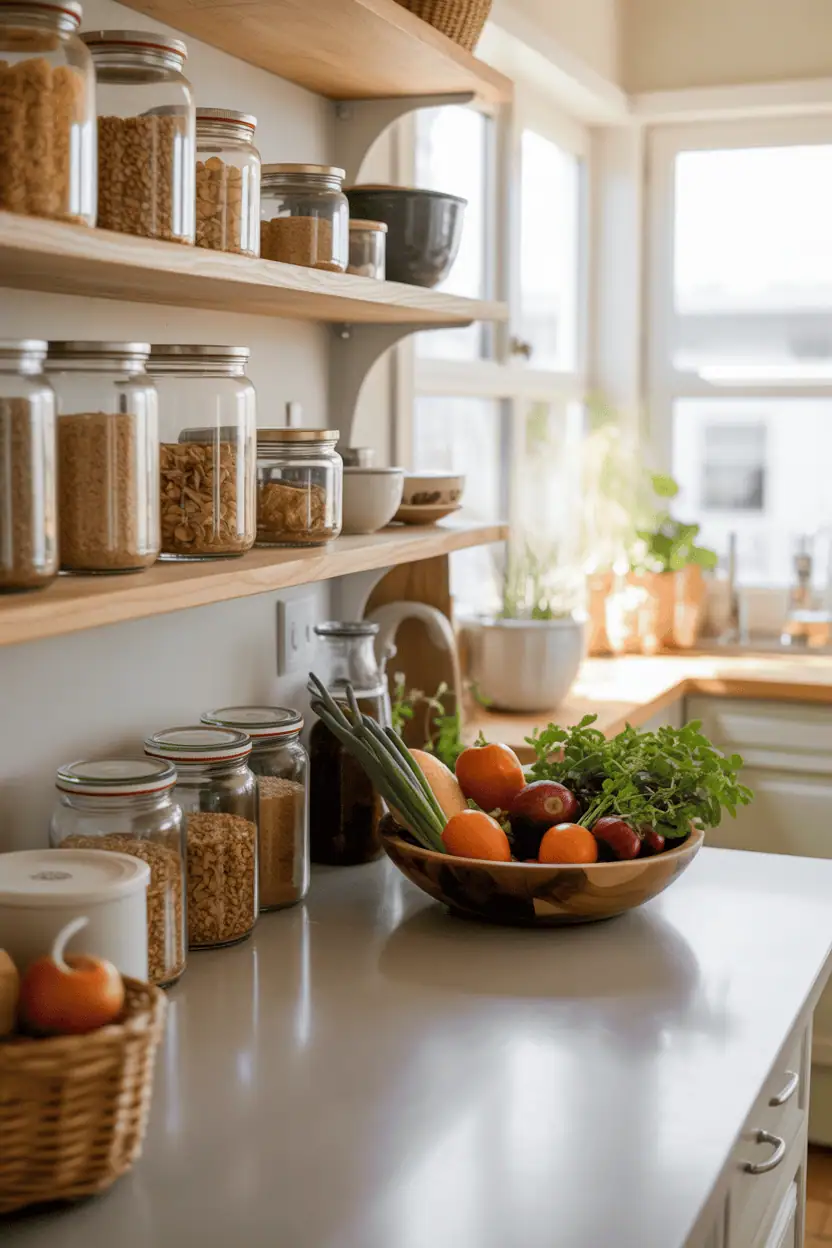
- Group similar foods together. Put all grains in one area (rice, pasta, quinoa), all canned goods in another, all breakfast items together, and so on. This makes it easier to see what you have at a glance.
- Create a “use me first” spot. Dedicate one small bin or section for items that are open or close to their date. Glance at this area when you’re planning meals for the week.
As you reorganize, place the foods you’d like to eat more often—whole grains, beans, nuts, seeds, canned tomatoes, soups, spices—right at eye level. Put treats and more processed snacks a little higher or lower, so you have to make a conscious choice to reach for them rather than grabbing them automatically.
Step 4: Refresh Your Fridge
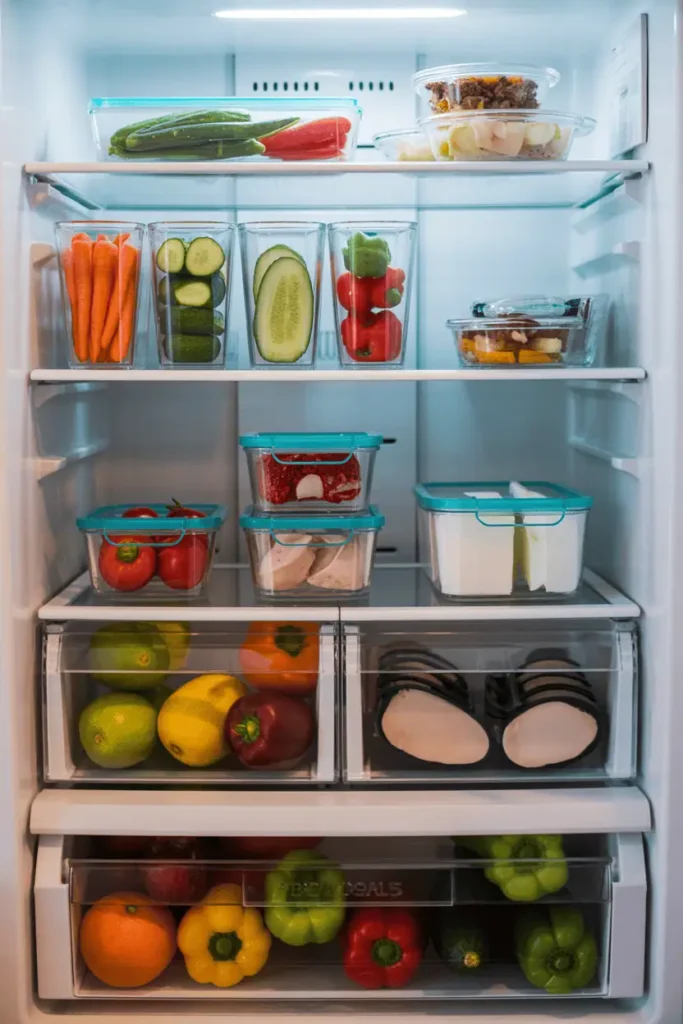
The fridge can feel like a black hole where produce goes to be forgotten. A little structure changes that.
- Start with a quick purge. Toss anything clearly spoiled or that you know no one is going to eat.
- Assign each shelf a loose purpose: leftovers, ready-to-eat snacks, raw ingredients, condiments, drinks.
- Store washed, cut vegetables in clear containers at eye level if possible: carrot sticks, sliced bell peppers, cucumber rounds, washed lettuce. When you’re hungry and tired, you’re far more likely to grab what you can see and eat quickly.
- Keep proteins you plan to use within the next few days in a “priority” spot. If you see the chicken or tofu you bought, you’re more likely to cook it instead of forgetting it until it’s too late.
You don’t have to meal prep every single item to benefit from this. Even washing grapes, chopping one or two veggies, or making a big batch of cooked grains for the week can make healthier choices feel more effortless.
Step 5: Make Your Tools Work for You
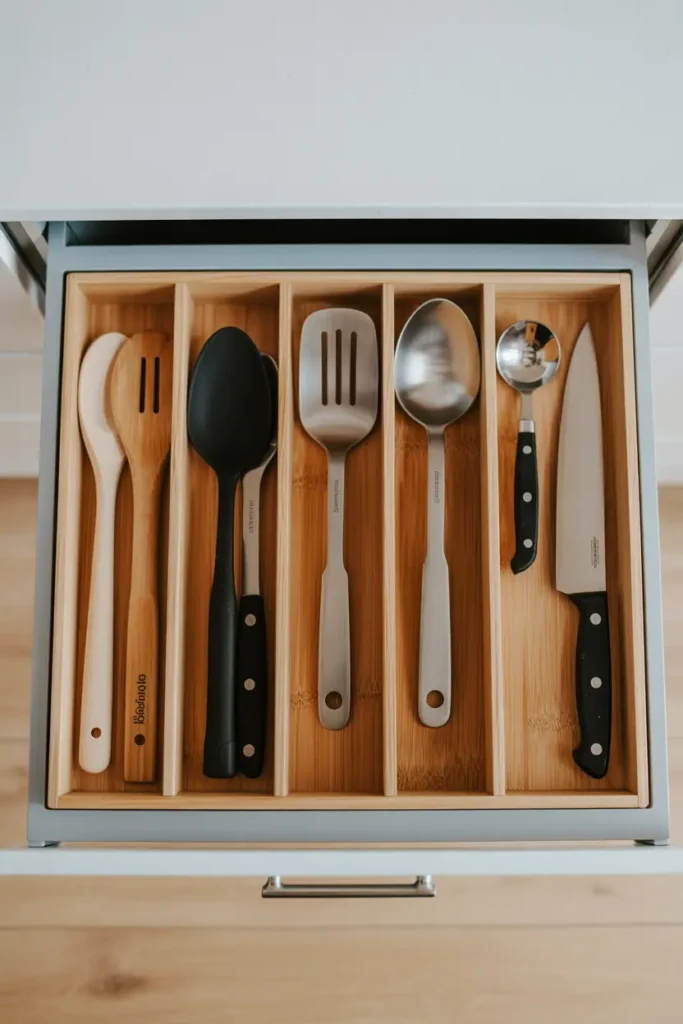
Healthy eating isn’t just about food; it’s also about how easy it is to cook that food. If your drawers are bursting with tools you never use, it can be harder to find the few things that actually support your daily habits.
Consider:
- Keeping your most-used items (a sharp knife, cutting board, spatula, wooden spoon, favorite pan) within easy reach.
- Donating or storing duplicates. You probably don’t need three vegetable peelers or four nearly identical spatulas.
- Letting go of specialty gadgets you never touch. If it’s collecting dust and you forget it exists, your space might be better served without it.
The goal is not a minimalist kitchen; it’s a functional one. When you can quickly grab the tools you need, cooking stops feeling like such a project.
Step 6: Set Up Snack Stations That Support You
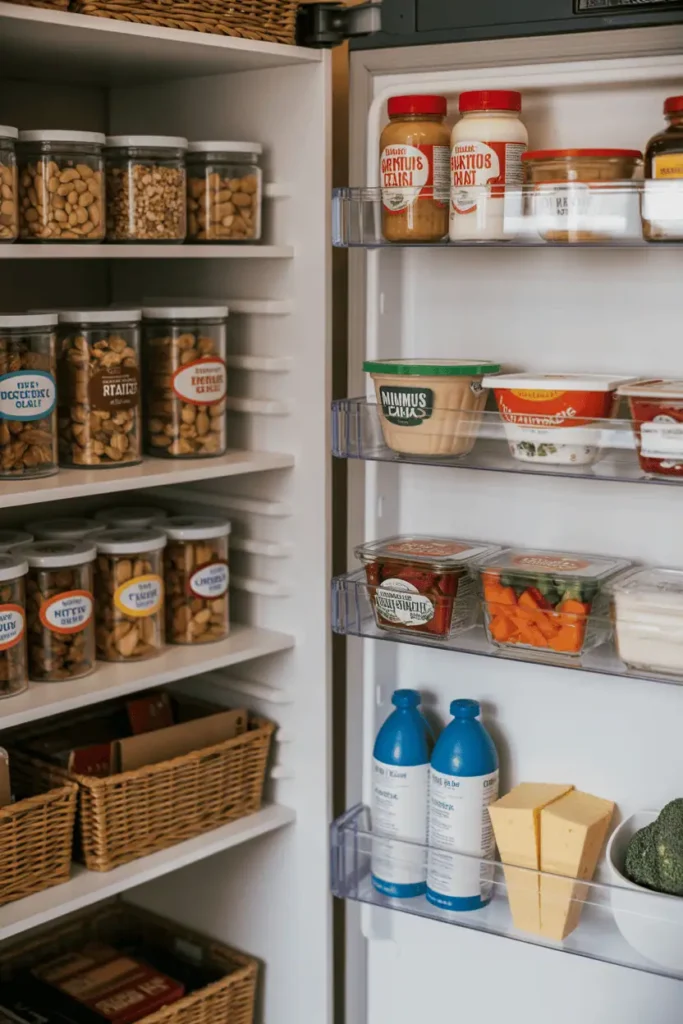
Snacking isn’t “bad.” It’s often just your body saying, “Hey, I need energy.” The problem comes when the easiest options leave you feeling sluggish or unsatisfied.
You can make your kitchen work with your natural snacking patterns, instead of against them:
- Create a small “snack zone” in the pantry with things like nuts, whole-grain crackers, popcorn kernels, or snack bars you feel good about.
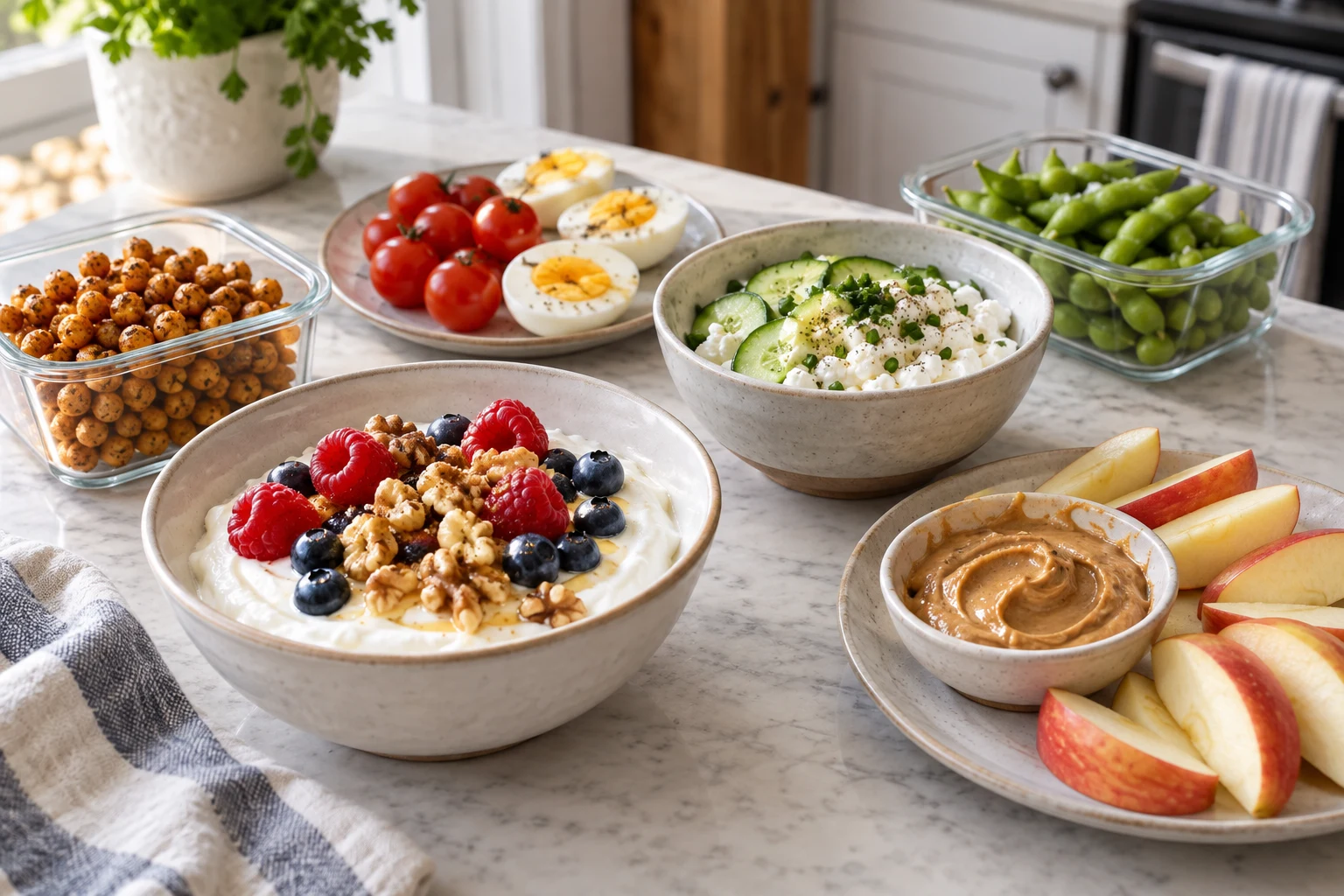
- In the fridge, dedicate one area to ready-to-eat options: hummus, yogurt, cheese sticks, pre-cut fruit, washed berries, hard-boiled eggs, or leftovers you actually like.
- If your family loves sweets, you don’t have to banish them. Instead, store them in a closed container or on a higher shelf so they don’t scream at you every time you open the door.
This isn’t about controlling every bite. It’s about gently guiding your future self toward choices that align with how you want to feel—without judgment if some days look different than others.
Step 7: Create Little Routines to Keep It Tidy
A decluttered kitchen doesn’t stay that way on its own. But you also don’t need to spend hours every week policing it. A few light routines can keep things under control without taking over your life.
You might try:
- A 5–10 minute evening reset: load the dishwasher, clear the main counter, and put food away. Think of it as tucking your kitchen in for the night.
- A weekly “fridge five”: once a week, spend five minutes tossing anything that went bad, wiping quick spills, and moving older items to the front.
- A monthly pantry check: choose one shelf or one category (like baking supplies) to straighten and review. Rotate items so what you bought earlier is easier to see and use.
If life gets busy and the clutter comes back—as it will—there’s no failure in that. You simply start again with one small area. The habits matter more than the occasional mess.
When You Share a Kitchen
If you live with a partner, children, roommates, or extended family, you may not have total control over every shelf and surface. That’s okay. You don’t have to.
Instead:
- Focus on “zones” that are mostly yours: a drawer for your favorite tools, a section of the fridge where you keep your go-to foods, a dedicated shelf in the pantry.
- Communicate in a calm, clear way: “It really helps me cook more when the main counter stays mostly clear. Can we try keeping mail and keys in this basket instead?”
- Accept that shared spaces will never be perfectly organized. Aim for “livable and supportive” instead of “immaculate.”
Even partial control over your environment can make a real difference in how you feel and what you choose.
A Gentle, Unhurried Ending

Decluttering your kitchen isn’t about becoming a different person overnight. It’s about slowly shaping your environment so it’s kinder to you—to your time, your energy, and your body. Each small change you make—a cleared corner of counter space, a visible container of cut fruit, a pantry that feels a little less chaotic—is a quiet act of care.
You don’t have to earn a tidy kitchen by already eating perfectly. You’re allowed to create a space that supports you as you are right now—busy, tired, human, doing your best with what you have. From there, healthier choices become a little less about discipline and a little more about ease.
So the next time you walk into your kitchen and feel that familiar wave of “where do I even start?”, remember you don’t have to fix everything. Choose one drawer, one shelf, one small step that makes life easier for the future you who just wants dinner to feel simpler. Over time, those small steps add up, and your kitchen slowly becomes what it was always meant to be: a place that helps you nourish yourself, not just with food, but with a calmer, more supportive daily rhythm.