A useful weekday lunch should be easy to assemble, satisfying enough to carry you through the afternoon and flexible enough to survive a missed prep session. Mediterranean-style lunches fit that job well because they can be built from ordinary staples: beans, whole grains, vegetables, fruit, yogurt, eggs, fish, poultry, nuts, herbs and olive oil.
You do not need to cook five separate recipes on Sunday. A better system is to prepare a few versatile components, keep several no-cook backups on hand and combine them differently through the week.
Use this simple lunch formula: protein + vegetables or fruit + a substantial base + a flavorful finish. Change one or two components each day and the same groceries can produce bowls, pitas, salads and snack-style lunches.
What makes a lunch Mediterranean-style?
Mediterranean eating is a flexible pattern, not a fixed set of dishes from one country. The American Heart Association describes it as emphasizing vegetables, fruits, whole grains, beans, legumes, nuts and seeds, with olive oil as a primary fat source. Dairy, eggs, fish and poultry can also appear in low to moderate amounts.
For a weekday lunch, that might mean a lentil bowl with roasted vegetables, a hummus pita with crunchy produce, or tuna and white beans over greens. The pattern matters more than whether every ingredient comes from the Mediterranean region.
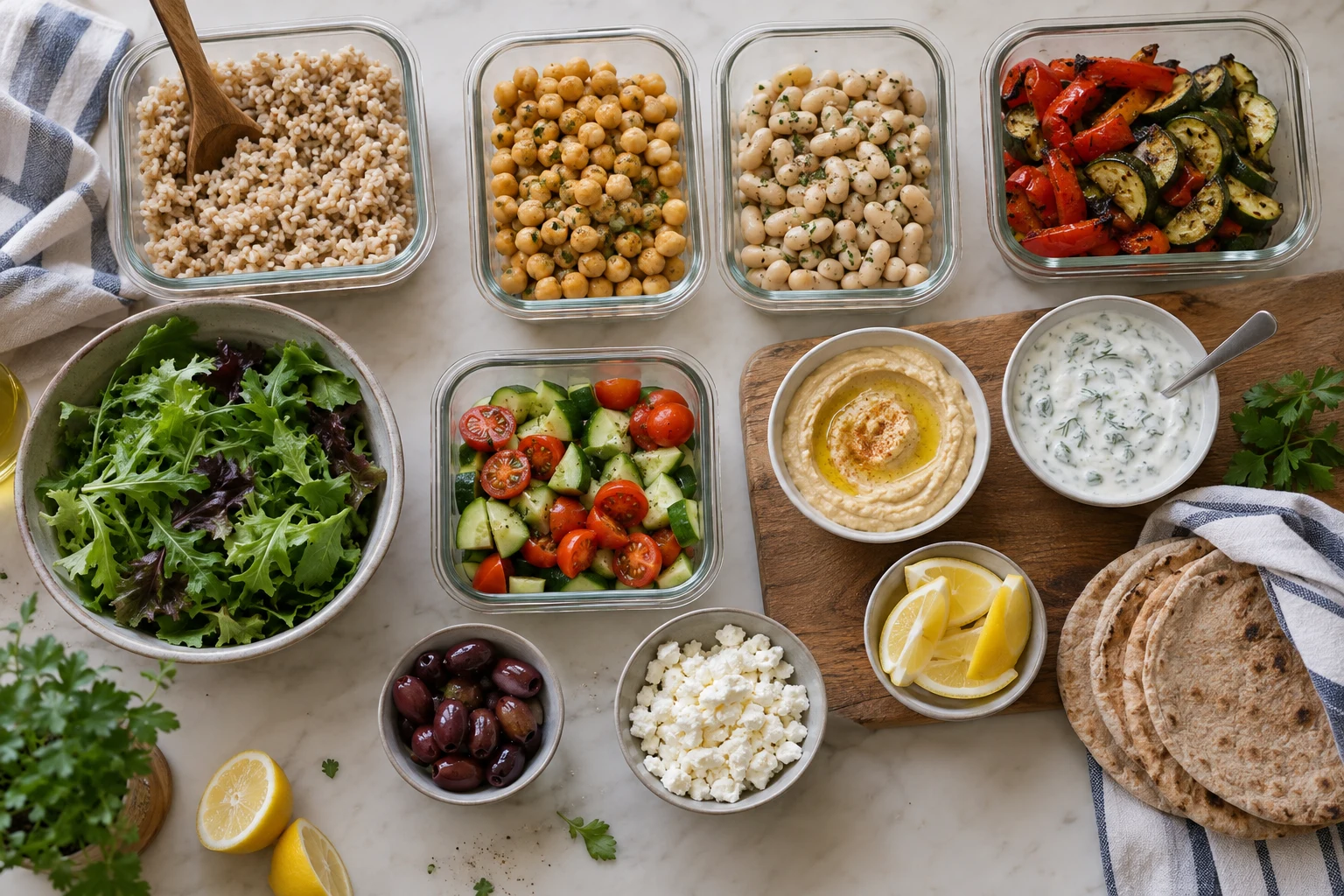
The four-part weekday lunch formula
The formula is deliberately loose. Chickpeas can provide both protein and substance. A grain-and-bean bowl may not need bread. A larger salad might need pita and fruit to feel like a complete lunch. Build for your appetite rather than forcing every meal into identical portions.
12 easy Mediterranean lunches for busy weekdays
These are templates rather than rigid recipes. Most can be assembled from cooked leftovers, canned staples and prewashed produce.
1. Chickpea, cucumber and tomato grain bowl
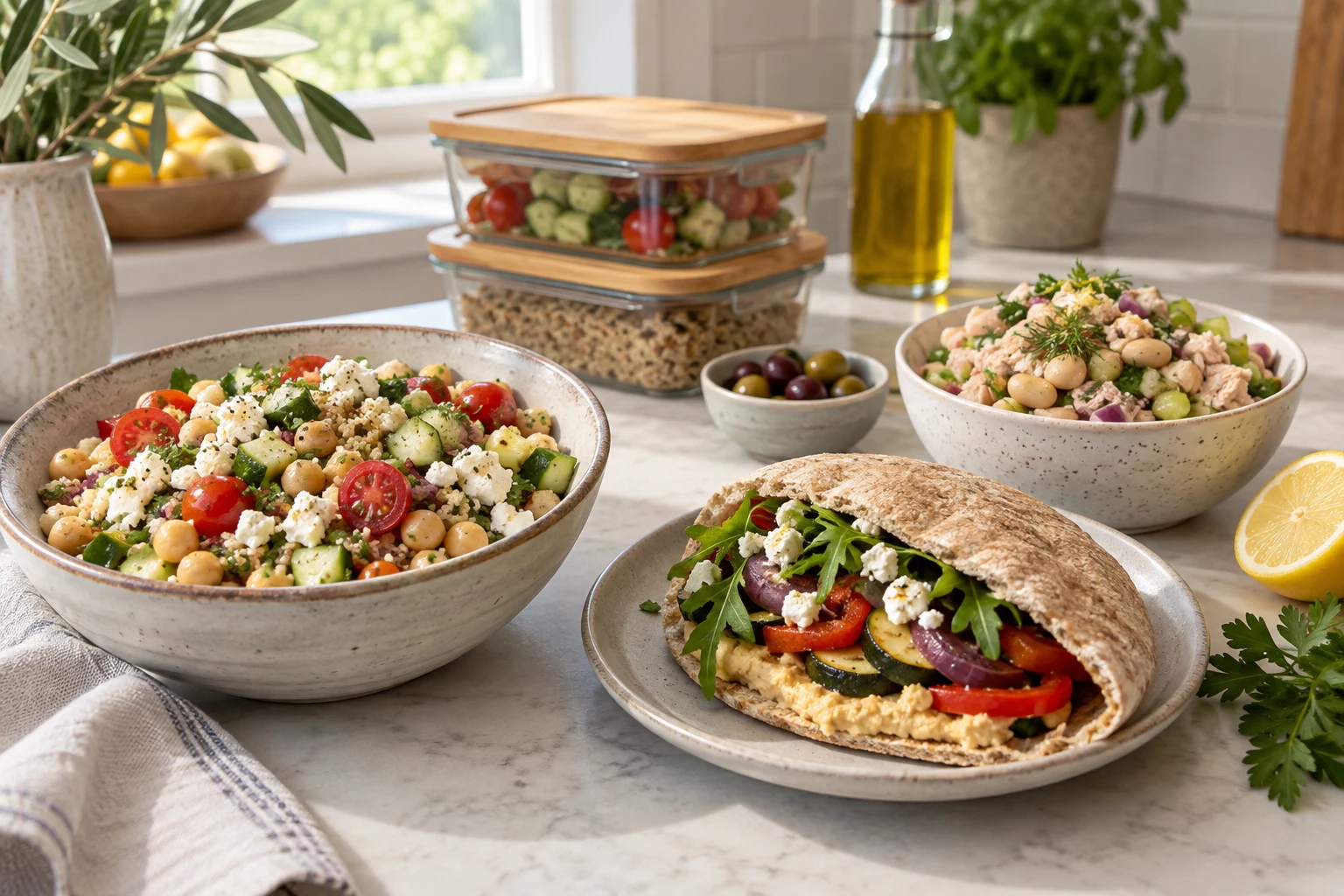
Combine cooked farro, brown rice or quinoa with chickpeas, cucumber, cherry tomatoes, parsley and feta. Dress it with olive oil, lemon, black pepper and a pinch of dried oregano. Keep the dressing separate if you are packing the bowl the night before.
2. Hummus and roasted vegetable pita
Spread hummus inside a whole-grain pita and add roasted zucchini, peppers and red onion. Arugula or spinach adds freshness; feta adds a salty finish. Pack wet ingredients separately when possible so the pita does not become soggy.
3. White bean and tuna salad
Toss drained white beans with canned tuna, chopped celery or cucumber, tomatoes, parsley and red onion. Add olive oil and lemon just before eating. Serve it over greens, with whole-grain crackers or inside a pita.
4. Lentil bowl with roasted vegetables and yogurt sauce
Start with cooked lentils, then add leftover roasted vegetables and a spoonful of plain yogurt mixed with lemon, herbs and black pepper. Walnuts or pumpkin seeds give the bowl extra texture.
5. Greek-inspired chicken lunch box
Pack sliced lemon-herb chicken with cucumber, tomatoes, a scoop of quinoa tabbouleh or brown rice, and a small container of tzatziki. Add fruit when you need a more substantial lunch.
6. Mediterranean egg and bean plate
Pair two hard-boiled eggs with white beans or chickpeas, sliced vegetables, whole-grain pita and hummus. This works especially well when you have no time to build a bowl or reheat food.
7. Salmon, potato and green bean lunch
Use leftover cooked salmon with baby potatoes and green beans. Serve it cold or at room temperature with lemon, dill and a small drizzle of olive oil. If salmon is not available, canned salmon is a practical substitute.
8. Tomato, white bean and feta toast
Lightly mash white beans with lemon and olive oil, then spread them over whole-grain toast. Top with sliced tomato, feta and herbs. Transport the toast and topping separately and assemble at lunchtime for better texture.
9. Couscous salad with chickpeas and herbs
Whole-wheat couscous cooks quickly and works well with chickpeas, cucumber, tomatoes, parsley, mint and lemon. Add olives or feta for a stronger flavor. This is one of the easiest options to scale for several lunches.
10. Leftover Mediterranean dinner bowl
Turn last night's roasted vegetables, beans, chicken or fish into lunch. Add greens or a cooked grain, then change the flavor with hummus, yogurt sauce or lemon vinaigrette. The useful habit is not cooking specifically for lunch; it is making an intentional extra portion at dinner.
11. No-cook snack-style lunch
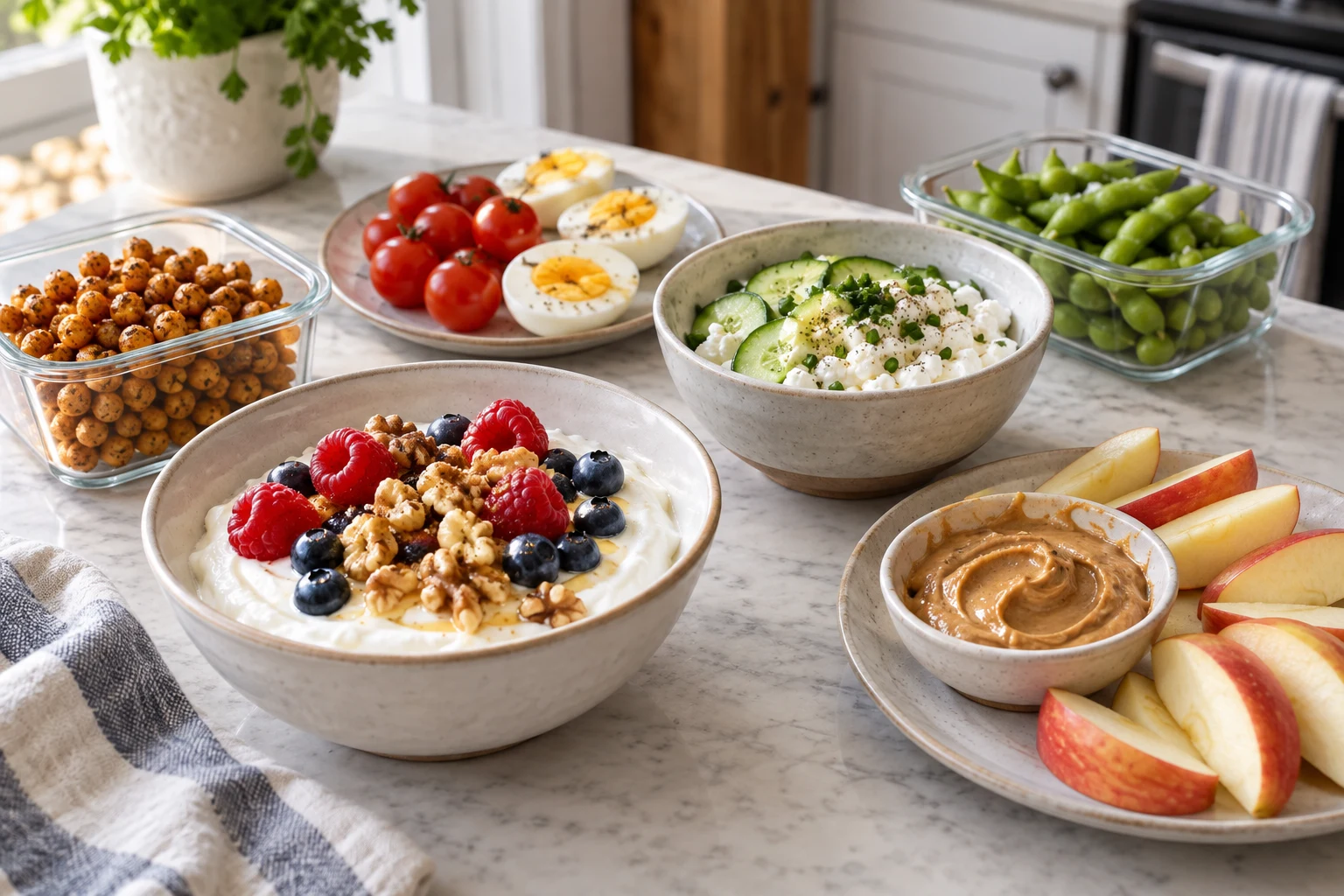
Build a small plate or divided container with hummus, vegetables, whole-grain pita, fruit, nuts and a protein such as eggs, beans or yogurt. This is a realistic backup for weeks when meal prep does not happen.
12. Chickpea salad jar
Layer lemon dressing at the bottom of a wide jar, followed by chickpeas, firm vegetables, feta and greens. Keep the greens away from the dressing until lunchtime, then shake the jar or tip everything into a bowl.
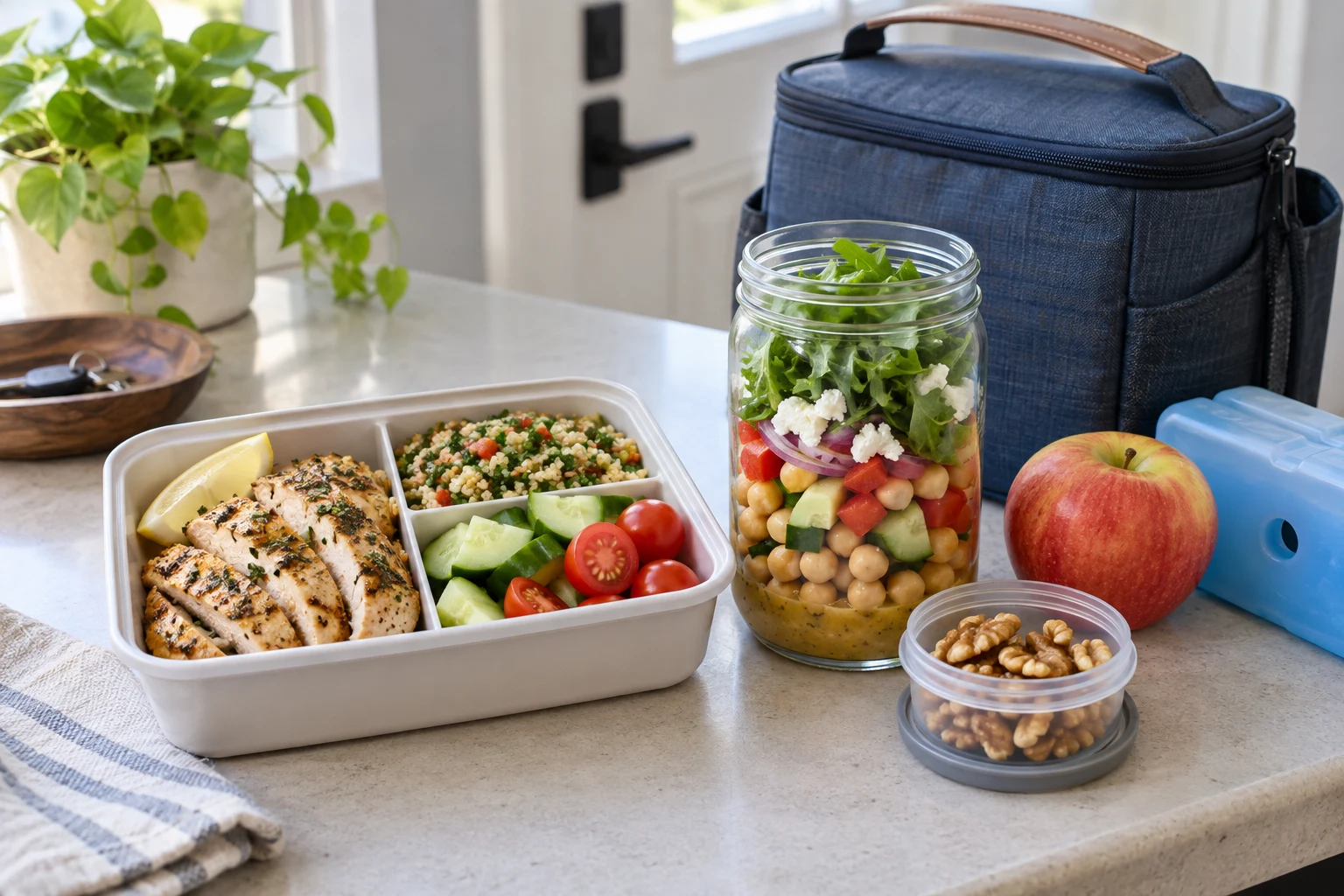
Choose a lunch by the time you actually have
| Time available | Best starting point | Example |
|---|---|---|
| 5 minutes | Canned staple + ready-to-eat produce | White beans, tuna, greens, tomatoes and lemon |
| 10 minutes | Pita, toast or snack plate | Hummus pita with vegetables, feta and fruit |
| 15 minutes | Cooked grain or leftovers | Quinoa bowl with chicken, cucumber and yogurt sauce |
| Prepared ahead | Mix-and-match components | Lentils, roasted vegetables, greens and dressing |
If most of your weekdays allow only five minutes, do not build your plan around lunches that require reheating three components and chopping fresh herbs. Keep the most convenient version of the formula available.
A realistic 45-minute prep session
You can create a useful lunch base without preparing five finished meals. In one short session:
- Cook one base: make quinoa, farro, brown rice or whole-wheat couscous.
- Roast one sheet pan: use peppers, zucchini, red onion or whichever vegetables need using.
- Prepare one sauce: mix plain yogurt with lemon and herbs, or shake olive oil, lemon and oregano in a jar.
- Wash and chop sturdy produce: cucumber, peppers and cherry tomatoes are easy additions.
- Choose two proteins: for example, chickpeas plus eggs, chicken, tuna or lentils.
Keep the components separate rather than assembling every lunch in advance. That lets you make a bowl on Monday, a pita on Tuesday and a salad on Wednesday without eating the same meal repeatedly.
Convenience foods can be part of the system. Canned beans, canned fish, frozen cooked grains, prewashed greens and store-bought hummus reduce work without changing the basic Mediterranean-style structure.
A five-day lunch plan that reuses groceries
- Monday: Chickpea, cucumber and tomato quinoa bowl with feta
- Tuesday: Hummus pita with roasted vegetables and greens
- Wednesday: White bean and tuna salad with whole-grain crackers
- Thursday: Leftover chicken bowl with quinoa, vegetables and yogurt sauce
- Friday: Snack-style lunch with eggs, hummus, vegetables, pita, fruit and walnuts
The repetition is intentional. Chickpeas, cucumber, tomatoes, greens, quinoa, hummus, feta and lemon appear more than once. Reusing ingredients lowers the number of groceries you need while still changing the format and flavor of lunch.
How to keep packed lunches fresh and safe
Texture and food safety both matter when lunch travels. Store wet dressings separately, place greens above heavier ingredients and keep crisp items away from juicy tomatoes until possible.
The USDA Food Safety and Inspection Service advises refrigerating leftovers promptly and generally using cooked leftovers within three to four days. Perishable food should be kept at 40°F or below. If you do not have access to a refrigerator, use an insulated lunch bag with a frozen gel pack or another cold source. See the USDA guidance on leftovers and food safety for more detail.
For a five-day plan, prepare only what will keep well through the middle of the week, freeze suitable portions, or schedule a small midweek refresh. Fresh greens, cut tomatoes and assembled pitas are usually better prepared closer to the day you will eat them.
A short grocery list
- Chickpeas or white beans
- Eggs
- Canned tuna or salmon
- Chicken, lentils or tofu
- Plain Greek yogurt or feta
- Cucumber
- Cherry tomatoes
- Greens
- Peppers and zucchini
- Lemons, herbs and fruit
- Quinoa, farro or brown rice
- Whole-grain pita or crackers
- Hummus
- Olive oil
- Olives and walnuts
Common lunch-prep mistakes
Preparing five completely different meals
This creates a long shopping list and too much Sunday cooking. Reuse components while changing the format.
Building a salad that is mostly leaves
Greens can be part of lunch, but add a clear protein source and enough substance for your appetite. Beans, grains, pita, potatoes, fish, chicken, eggs or yogurt can turn a side salad into a meal.
Assembling everything too early
Some components store better separately. Dressings soften greens, juicy vegetables soak bread and cut herbs lose quality. Prep the building blocks, then combine them when practical.
Having no backup lunch
Keep one shelf-stable or nearly no-cook option available: canned beans or fish, whole-grain crackers, nuts and a piece of fruit can rescue a busy day.
Frequently asked questions
Do Mediterranean lunches need meat or fish?
No. Beans, lentils, tofu, yogurt, cheese, eggs, nuts and seeds can all contribute to a satisfying meatless lunch.
Can I make these lunches without reheating?
Yes. Grain salads, bean salads, pitas, snack plates, jar salads and salmon or chicken lunch boxes can be eaten cold, provided they have been stored and transported safely.
What if I do not like olives or feta?
Leave them out. Use herbs, lemon, toasted nuts, yogurt sauce or another cheese you enjoy. Mediterranean-style eating is broader than a short list of stereotypical ingredients.
How can I make lunch more filling?
Check whether it includes a meaningful protein source and enough substance. Add beans, eggs, fish, chicken, yogurt, whole grains, pita, potatoes, fruit, nuts or seeds based on your preferences and needs.
The simplest weekday strategy
Choose one grain or bread, two protein options, several vegetables and one versatile sauce. Prepare the components you will realistically use, then keep a five-minute backup in the pantry.
That small system can produce a chickpea bowl, a hummus pita, a tuna and bean salad and a snack-style lunch without five separate recipes. If you want to apply the same flexible approach in the morning, use the formula in our high-protein Mediterranean breakfast guide.
Sources and further reading