Resistance bands are inexpensive, light enough to fit in a drawer and versatile enough to work every major muscle group. They are also easy to use badly: a band that is too light does little, one that is too heavy ruins your form, and a poorly anchored band can snap back. This guide shows how to pick bands, set up safely and follow a complete full-body routine with sets, repetitions and progressions.
Do the routine below 2 to 3 non-consecutive days a week: 2 sets of 10 to 15 repetitions per exercise, resting about 45 to 60 seconds between sets. Pick a band that makes the last 2 repetitions hard while your form stays smooth.
Choosing the right bands
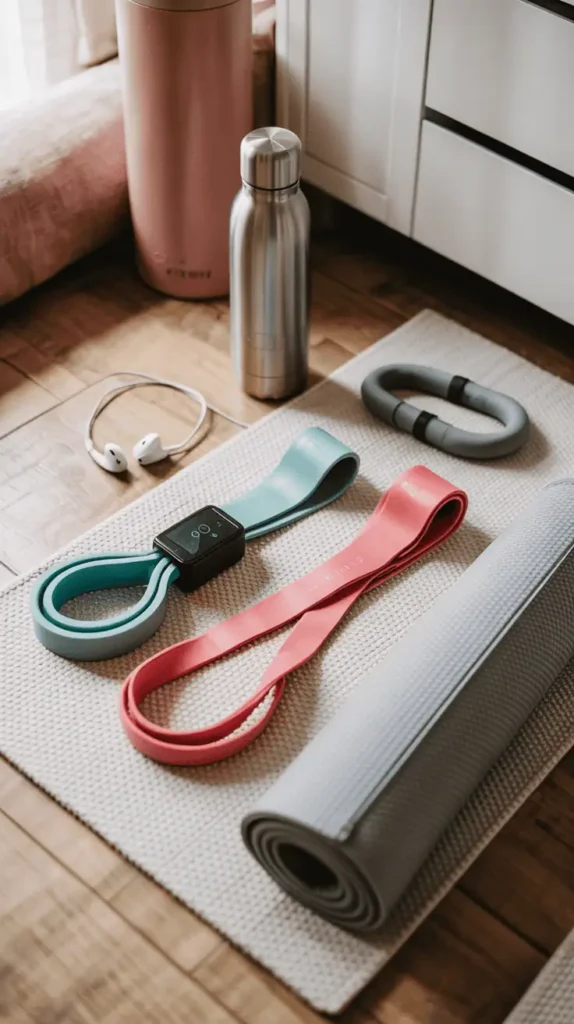
You do not need a complete set. Two bands are enough to start: a lighter one for shoulders and arms and a heavier one for legs and back, where muscles are larger.
| Band type | Best for | Notes |
|---|---|---|
| Loop (mini) band | Glute bridges, lateral walks, squats | Wraps around thighs or ankles; choose fabric versions if plastic rolls or pinches. |
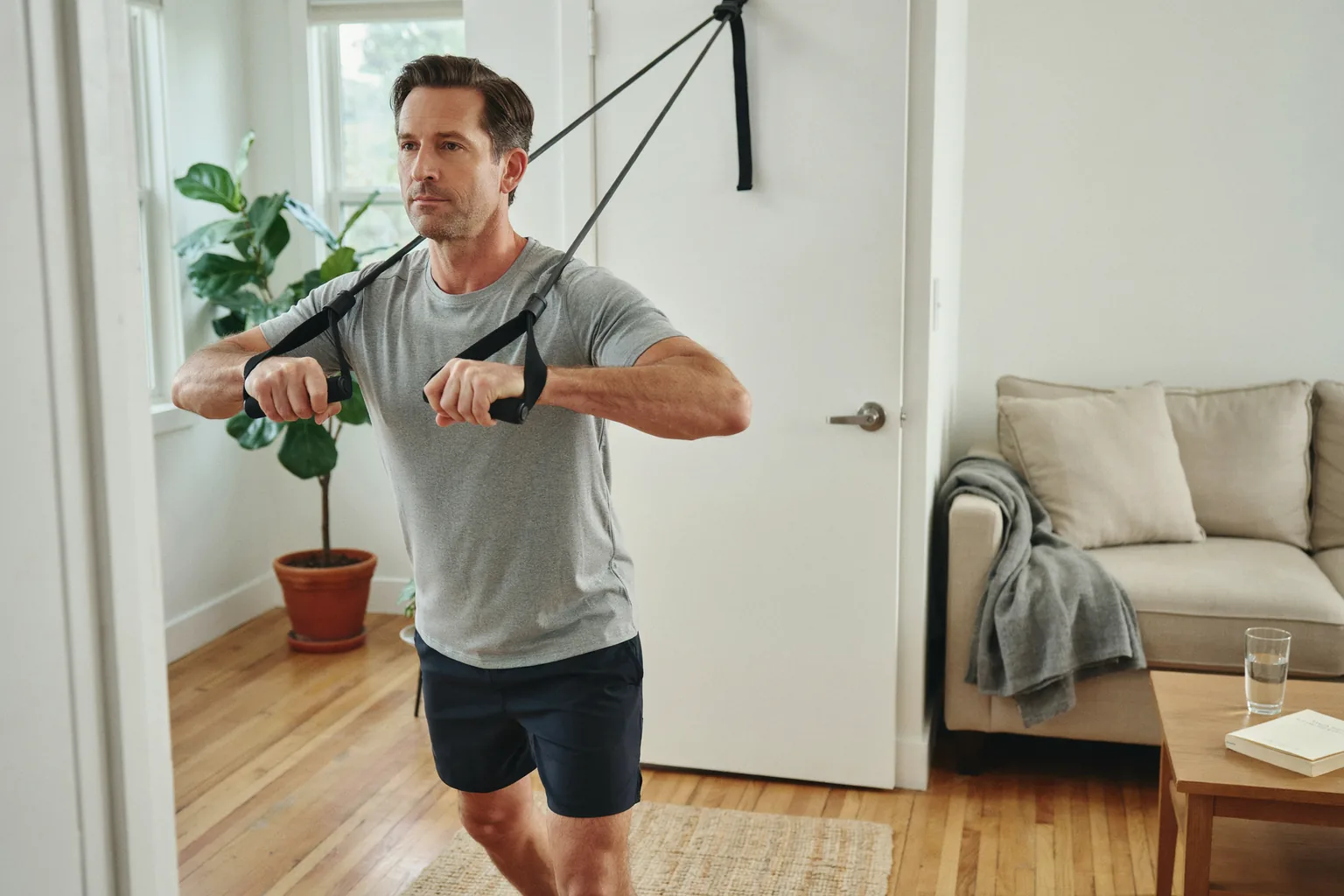
| Tube band with handles | Rows, presses, curls, squats | Comes with a door anchor; the most versatile all-around option. |
| Flat therapy band | Gentle rehab-style exercises, seated work | Good for very light resistance and older adults. |
| Long loop band | Assisted pull-ups, full-body work | Heavier; usually not needed by beginners. |
A note on band strength
Manufacturers use different color codes, so a "medium" band from one brand may feel different from another. Test bands by doing 10 slow repetitions of an exercise you know well: it should feel like work by repetition 8 without making you rush or swing.
Set up safely
- Inspect your band before each session. Look for nicks, thin spots or tears, and replace it if you find any.
- Anchor securely. Follow the manufacturer's instructions for the door anchor, close and latch the door fully, and tug the band firmly before you start. You can also loop it around a sturdy post. Do not attach it to anything that could shift.
- Keep your face and eyes out of the line of the band's snap path.
- Move slowly. Control the band as it returns; do not let it snap back.
The full-body band routine
Warm up for five minutes with brisk walking and arm circles. Then work through the exercises below in order.
| Exercise | Band and setup | Sets and reps | Cues |
|---|---|---|---|
| Banded squat | Loop band above knees or stand on a tube band, handles at shoulders | 2 × 10 to 15 | Push knees gently out; keep chest tall. |
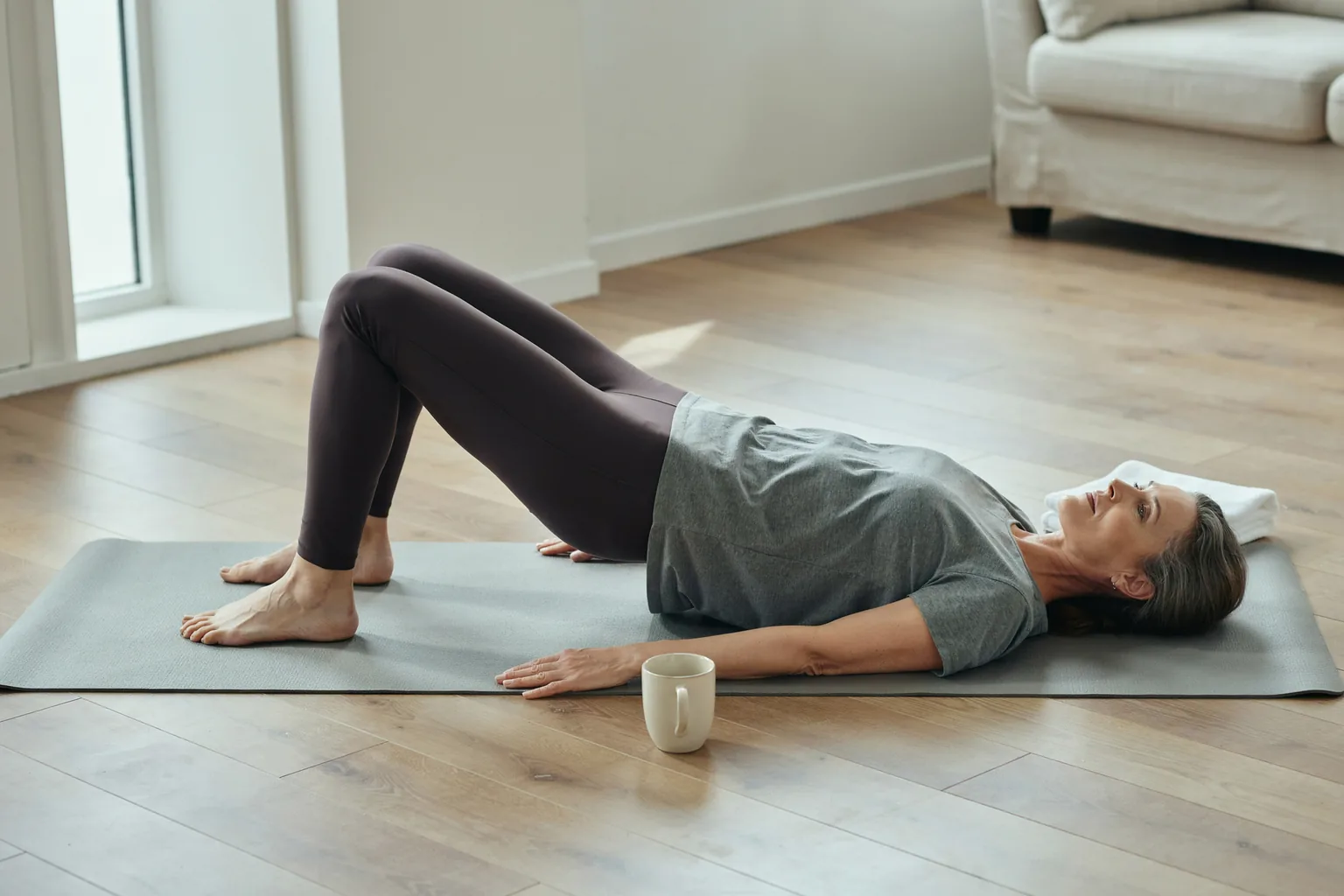
| Glute bridge | Loop band above knees | 2 × 12 to 15 | Press knees out against the band as you lift. |
| Standing row | Tube band anchored at chest height | 2 × 10 to 15 | Pull elbows back and squeeze shoulder blades. |
| Chest press | Tube band anchored behind you at chest height | 2 × 10 to 12 | Press straight forward without shrugging. |
| Overhead press | Stand on the band, handles at shoulders | 2 × 8 to 12 | Stack wrists over elbows; avoid arching your back. |
| Lateral band walk | Loop band above knees or ankles | 2 × 10 steps each way | Keep tension on the band; do not let knees cave. |
| Bicep curl | Stand on the band, elbows by your sides | 2 × 10 to 15 | Keep elbows still; lower slowly. |
| Pallof press (core) | Tube band anchored at chest height, standing sideways | 2 × 8 per side | Resist the pull; do not rotate toward the anchor. |
Stop if you feel sharp pain, especially in your shoulders, elbows or lower back. If you have a joint condition, recent injury or balance concerns, check with a health care provider or physical therapist first. Do this routine seated with a flat band if standing is difficult.
How to make it easier or harder
Use a lighter band, do 1 set, shorten the range of motion or do exercises seated. Hold a chair for balance.
Keep the band and repetitions the same for two weeks and focus on slower lowering, about 3 seconds each rep.
Add a third set, move to a heavier band or shorten the rest. Change only one variable at a time.
Common mistakes
Letting the band snap back instead of controlling the return. Overstretching a band beyond the manufacturer's recommended length, which can cause it to fail. Using momentum instead of muscles. Choosing bands by color only. Test them on real exercises.
Where bands fit in your week
Bands can be your only strength tool or a supplement to dumbbells. Two sessions a week match the CDC's minimum for muscle strengthening. On other days, walk or try the low-effort options in our 10-minute home workouts. For the reasoning behind strength training and how to choose weights, see our beginner's guide to strength training.
FAQ
Can resistance bands replace weights?
How often should I use them?
How long do resistance bands last?
Are bands safe for older adults?
Sources and further reading