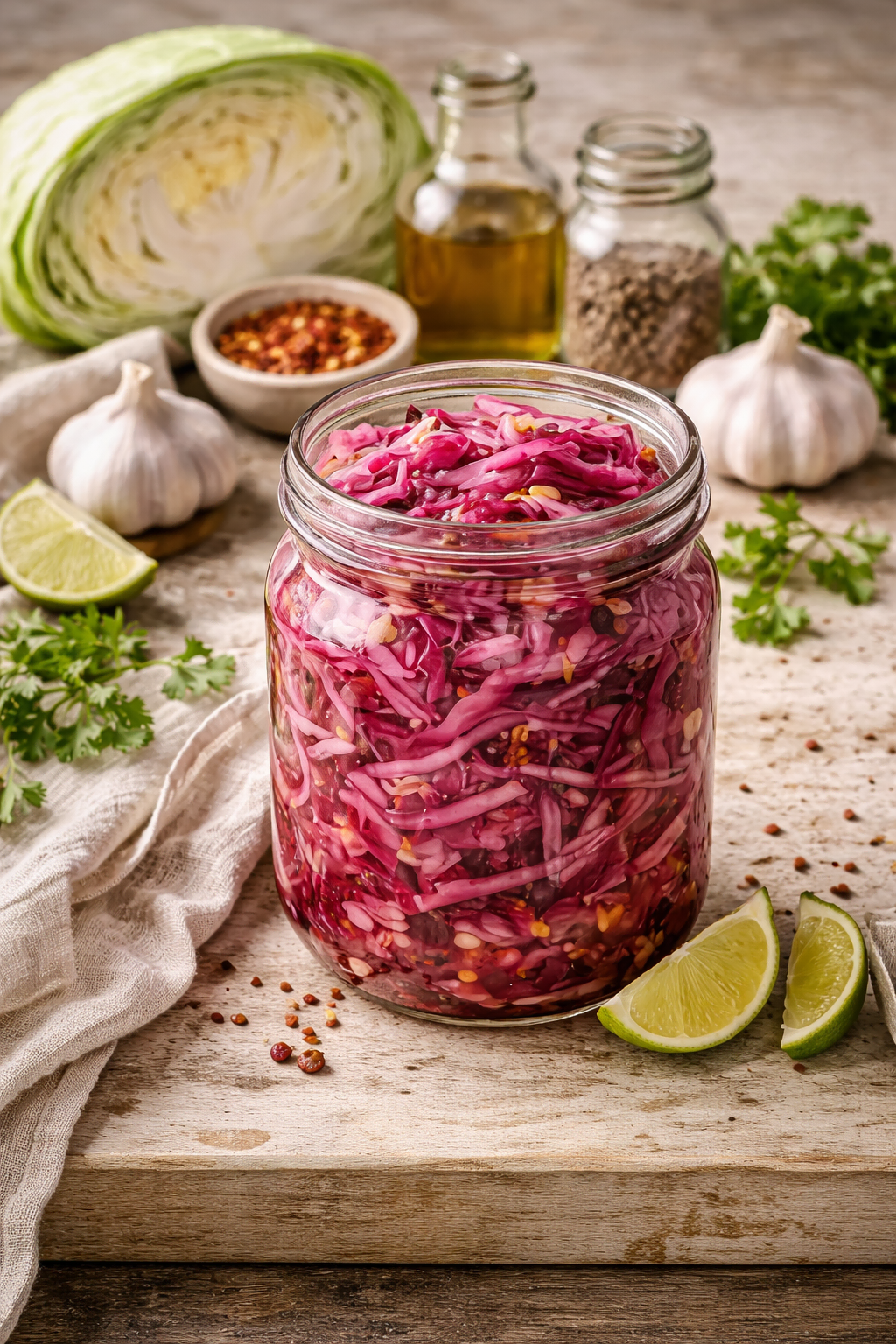
Looking to add flavor and crunch to your tacos and sandwiches? Pickled cabbage is a tasty and easy fix. It makes your meals more fun and healthy.
Adding pickled cabbage to your meals boosts flavor and supports healthy eating. Quick pickling keeps cabbage fresh and adds a tangy kick to your food.
Let's dive into making pickled cabbage at home. We'll show you how to add it to your favorite dishes, making meals more exciting and nutritious.
Key Takeaways
- Add crunch and flavor to your tacos and sandwiches with pickled cabbage.
- Quick pickling is an easy way to preserve cabbage while retaining its nutritional value.
- Pickled cabbage is a versatile ingredient that can enhance various dishes.
- Incorporating pickled cabbage into your diet is a simple step towards healthier eating.
- Make pickled cabbage at home with ease and enjoy it in your favorite recipes.
The Vibrant World of Pickled Cabbage
Pickled cabbage is more than a tangy side dish. It's a flavor booster that can change your meals. It's great for adding zest to tacos, sandwiches, and salads, making it a must-have in your kitchen.
Why Pickled Cabbage Elevates Your Dishes
Pickled cabbage brings a special mix of tastes and textures to your food. It's tangy and crunchy, perfect for adding to soft foods like tacos and sandwiches. The acidity in pickled cabbage balances rich flavors in your meals. It's amazing with a pulled pork sandwich or fish tacos, adding a refreshing touch.
Health Benefits of Fermented Vegetables
Fermented veggies like pickled cabbage are full of probiotics. These good bacteria help your gut health. Eating probiotics can strengthen your immune system and improve your health. Adding fermented foods to your diet can help with digestion and boost your immune system.
Some key health benefits of fermented veggies include:
- Improved gut health with beneficial probiotics
- Better nutrient absorption from fermentation
- Stronger immune system function
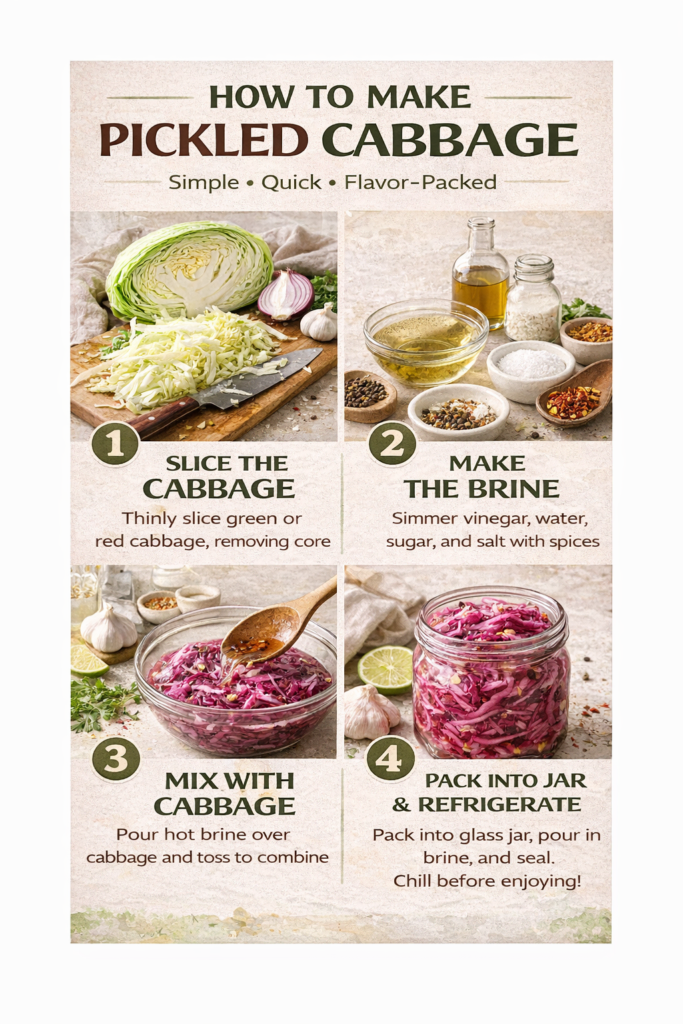
Understanding the Quick Pickling Process
Quick pickling is great for adding crunch and flavor to tacos and sandwiches. It's a fast way to enjoy pickled cabbage without waiting for fermentation.
Quick Pickling vs. Fermentation
Quick pickling and fermentation are two ways to preserve veggies. Fermentation uses natural bacteria to break down sugars, creating a tangy flavor over days or weeks. Quick pickling, on the other hand, uses vinegar to achieve a similar flavor in under an hour.
Here's a comparison of the two methods:
| Method | Time Required | Flavor Profile |
|---|---|---|
| Quick Pickling | Less than an hour to a few hours | Sour, tangy, and slightly sweet |
| Fermentation | Several days to weeks | Complex, sour, and umami |
The Science Behind Pickling Cabbage
Pickling cabbage involves creating a favorable environment for preservation and flavor enhancement. In quick pickling, vinegar's acidity preserves the cabbage by stopping harmful bacteria growth. Salt also helps by removing moisture, making the cabbage crunchy.
"The art of pickling is not just about preserving food; it's about creating a flavor experience that enhances your meals."
Understanding quick pickling lets you make tasty pickled cabbage for your dishes. It's easy for beginners and can improve any meal.
Essential Ingredients for Perfect Pickled Cabbage
The secret to perfect pickled cabbage is in its ingredients. You need the right basics to make it delicious and crunchy.
Selecting the Right Cabbage Varieties
Not all cabbages are the same for pickling. Green cabbage and red cabbage are top choices. Green cabbage is crunchy, and red cabbage adds color. Try Savoy cabbage for a different texture.
Vinegar Options and Their Flavor Profiles
The vinegar you pick changes the taste of your pickled cabbage. Apple cider vinegar is fruity and sweet. White wine vinegar is sharper. White distilled vinegar is traditional. Try different vinegars to find your favorite flavor.
Spices and Aromatics for Enhanced Flavor
Spices and aromatics boost your pickled cabbage's flavor. Add garlic, caraway seeds, and dill for taste. Mustard seeds or red pepper flakes add a kick. Mix spices to match your taste.
Choosing the right cabbage, vinegar, and spices makes great pickled cabbage. Experiment to find your favorite recipe.
Tools and Equipment You'll Need
Before you start pickling, let's look at the basic equipment required. Having the right tools makes the process smoother and more enjoyable.
Basic Kitchen Tools for Pickling
You don't need specialized equipment to start pickling cabbage. Basic kitchen tools will suffice. You'll need a large bowl for preparing the cabbage, a sharp knife for chopping, and a colander for draining. A mandoline can be useful for achieving uniform slices, but it's not essential.
Containers and Storage Options
The right containers are key for pickling and storing your cabbage. You'll need a glass jar or container with a lid to store your pickled cabbage. Glass is preferred because it doesn't react with the acidic brine. Make sure the jar is clean and sterilized before use. For storage, you can use the refrigerator to slow down the fermentation process, or store it in a cool, dark place if you prefer a stronger flavor.
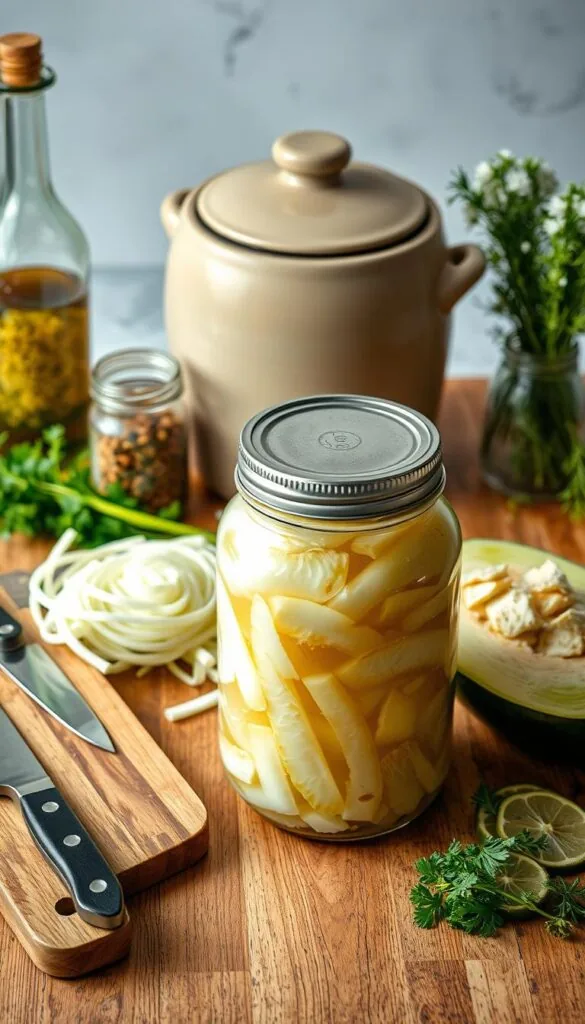
Step-by-Step Guide to Making Pickled Cabbage for Tacos and Sandwiches
We'll show you how to make perfect pickled cabbage for your tacos and sandwiches. It's easy and only needs a few ingredients and basic tools.
Preparing Your Cabbage
Start by picking a fresh, firm cabbage head. This is the first step.
Slicing Techniques for Different Textures
You can slice the cabbage thinly for a delicate crunch or in larger pieces for a heartier bite. Use a sharp knife or mandoline for even slices.
Pre-Salting for Crispier Results
Pre-salting the cabbage makes it crisper. Sprinkle salt over the cabbage and let it sit for 30 minutes. Then, rinse it well.
Creating the Perfect Pickling Brine
The pickling brine lets you play with flavors. A basic brine has vinegar, water, sugar, and salt. You can tweak the amounts and add spices or aromatics for more taste.
Combining Ingredients and Timing
Now, mix your cabbage with the brine. Pack the cabbage into a jar, cover it with the brine, and seal. Let it sit at room temperature for a few hours or overnight. This lets the flavors blend.
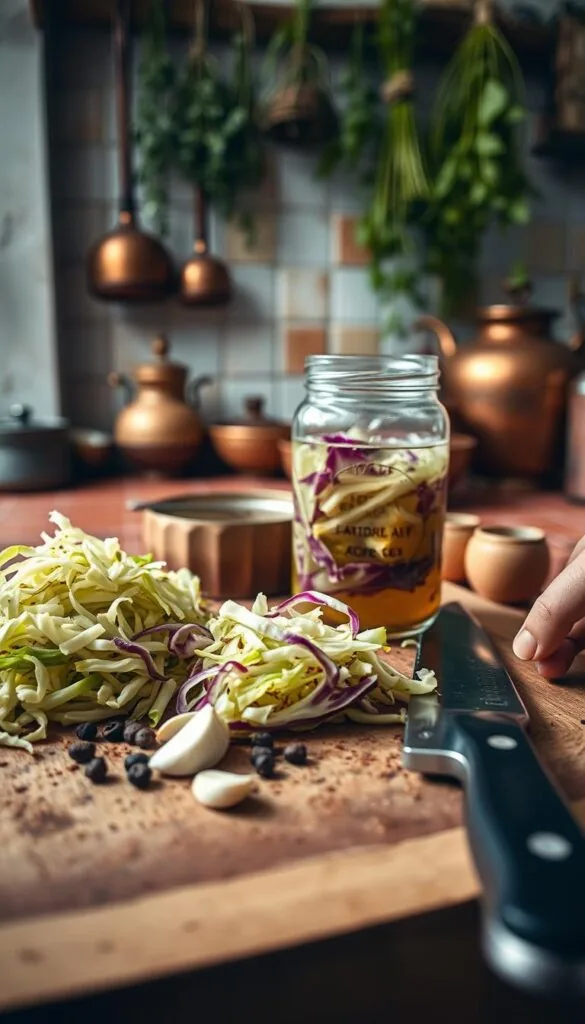
The waiting time depends on how sour you like it and the temperature. Check it often until it tastes just right to you.
Flavor Variations to Complement Different Cuisines
Pickled cabbage is amazing because it can be changed to fit many cultures. By adjusting the ingredients and spices, you can make different flavors. This makes pickled cabbage a great addition to any kitchen.
Mexican-Inspired Pickled Cabbage
To make pickled cabbage Mexican-style, add jalapeños, cilantro, and lime juice. This mix gives a spicy and tangy taste. It's perfect with tacos and grilled meats.
- Add diced jalapeños for an extra spicy kick
- Mix in chopped cilantro for a fresh flavor
- Squeeze in lime juice for a tangy taste
Asian Fusion Variations
For an Asian twist, add ginger, garlic, and soy sauce to your pickled cabbage. This mix creates a savory taste. It's great with sushi, noodle dishes, and stir-fries.
- Grate ginger for a warm, spicy flavor
- Minced garlic adds depth to the pickling brine
- A splash of soy sauce enhances the umami flavor
European Traditional Styles
In Europe, pickled cabbage often includes caraway seeds and a hint of apple cider vinegar. This version is perfect with hearty meats and as a side dish.
- Add caraway seeds for a traditional European flavor
- Use apple cider vinegar for a slightly sweet taste
Trying out these flavor changes lets you enjoy pickled cabbage in many dishes. From tacos to sandwiches, you can experiment. Feel free to mix ingredients to make your own recipes.
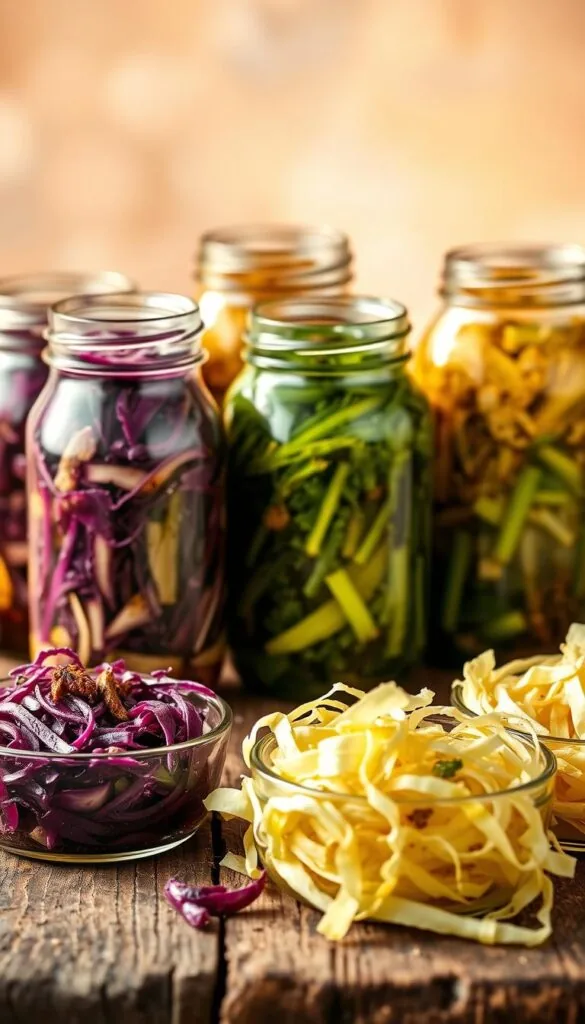
Creative Ways to Use Pickled Cabbage in Tacos and Sandwiches
Make your meals more exciting with pickled cabbage in tacos and sandwiches. It adds a crunchy, zesty flavor and boosts nutrition. Here are some creative ways to use pickled cabbage in your cooking.
Fish Tacos with Zesty Pickled Cabbage
Fish tacos are loved worldwide, and pickled cabbage takes them to the next level. The tangy cabbage pairs well with fish, making a perfect balance. Try it with grilled or battered fish, sour cream, and cilantro.
- Use cod or tilapia for a mild flavor
- Add sliced avocado for extra creaminess
- Sprinkle with queso fresco for a salty kick
Beef and Pork Taco Pairings
Beef and pork tacos are great for those who like a meaty taste. Pickled cabbage's refreshing crunch balances their rich flavors. It's perfect with slow-cooked carnitas or grilled skirt steak.
"The key to a great taco is balance. The spicy, the sour, the sweet, and the savory all come together in perfect harmony." - Chef's tip
Classic Deli Sandwiches
Pickled cabbage is also great in deli sandwiches. It adds crunch and flavor to classics like corned beef and pastrami. Try it on rye bread with Swiss cheese and mustard.
Gourmet Grilled Sandwiches
Pickled cabbage is also good in gourmet grilled sandwiches. It goes well with grilled chicken, turkey, or vegetarian options like mushrooms. The trick is to balance the cheese and bread with the cabbage's tanginess.
- Layer sliced meats with pickled cabbage and cheese
- Add a spread of aioli or hummus for extra flavor
- Use a crusty bread for a satisfying crunch
Adding pickled cabbage to your tacos and sandwiches boosts flavor and nutrition. The fermentation process in pickled cabbage supports gut health, making it a healthy choice for your meals.
Storage, Shelf Life, and Troubleshooting
Keeping your pickled cabbage fresh is all about the right storage. You'll need to store it in the best conditions.
Proper Storage Techniques
Put your pickled cabbage in a clean, airtight container in the fridge. This slows down fermentation and keeps it fresh longer. Make sure the container is tightly sealed to avoid contamination.
How Long Your Pickled Cabbage Will Last
Properly stored in the fridge, pickled cabbage can last weeks to months. The exact time depends on the pickling liquid's acidity and storage conditions.
Common Issues and How to Fix Them
Sometimes, pickled cabbage can have problems. Let's look at a couple of common ones.
Dealing with Soft or Mushy Cabbage
If your pickled cabbage is soft or mushy, it might be over-fermented or stored wrong. To prevent this, regularly check on your cabbage and keep it in the fridge at a steady temperature.
Adjusting Flavors After Pickling
If your pickled cabbage tastes too salty or bland, you can tweak the flavor. For a salty pickle, rinse it with a bit of water before eating. For a bland one, add more spices or a splash of vinegar.
| Issue | Solution |
|---|---|
| Soft or Mushy Cabbage | Store in refrigerator, check regularly |
| Too Salty | Rinse with water before serving |
| Too Bland | Add more spices or vinegar |
By using these storage and troubleshooting tips, you can enjoy your pickled cabbage longer. It will stay a tasty part of your meals.
Conclusion: Mastering the Art of Pickled Cabbage
You now know how to make tasty pickled cabbage for tacos and sandwiches. This adds flavor and health to your meals. Learning to pickle boosts your cooking skills and supports healthy eating.
Keep trying new flavors and recipes to see how pickled cabbage works with different foods. It's great for Mexican dishes and Asian fusion too. Soon, pickled cabbage will be a key ingredient in your kitchen.
With your pickling skills, you can enjoy the health perks of fermented veggies. Plus, you can make your meals more special. So, be creative and start pickling to make your food more delicious and nutritious.
FAQ
What is pickled cabbage and how is it made?
Pickled cabbage is a dish made from shredded cabbage. It's preserved in a brine solution with vinegar, salt, and spices. We'll show you how to make it at home.
What are the health benefits of eating pickled cabbage?
Pickled cabbage is full of probiotics, vitamins, and antioxidants. It supports gut health and boosts your immune system. The fermentation process makes it even more nutritious.
Can I use any type of cabbage to make pickled cabbage?
While you can use different cabbages, we suggest green or red cabbage. They give the best texture and flavor.
How long does pickled cabbage last, and how should it be stored?
Stored in the fridge, pickled cabbage can last weeks to months. We'll share tips on keeping it fresh and how to spot spoilage.
What are some common issues with making pickled cabbage, and how can I fix them?
Issues like soft cabbage or off-flavors can be fixed easily. We'll give you advice to make perfect pickled cabbage.
Can I customize the flavor of my pickled cabbage?
Yes! You can try different flavors like Mexican, Asian, or European. We'll show you how to experiment with spices and ingredients.
How can I incorporate pickled cabbage into my meals?
Pickled cabbage is great in tacos, sandwiches, and salads. We'll share ideas and recipes to get you started.
Is pickled cabbage suitable for a vegan or gluten-free diet?
Yes, pickled cabbage is vegan and gluten-free. It's perfect for various diets. We'll make sure our recipes fit your needs.
Can I make pickled cabbage without fermentation?
Yes, you can make quick-pickled cabbage without fermentation. We'll explain the difference and give you options.