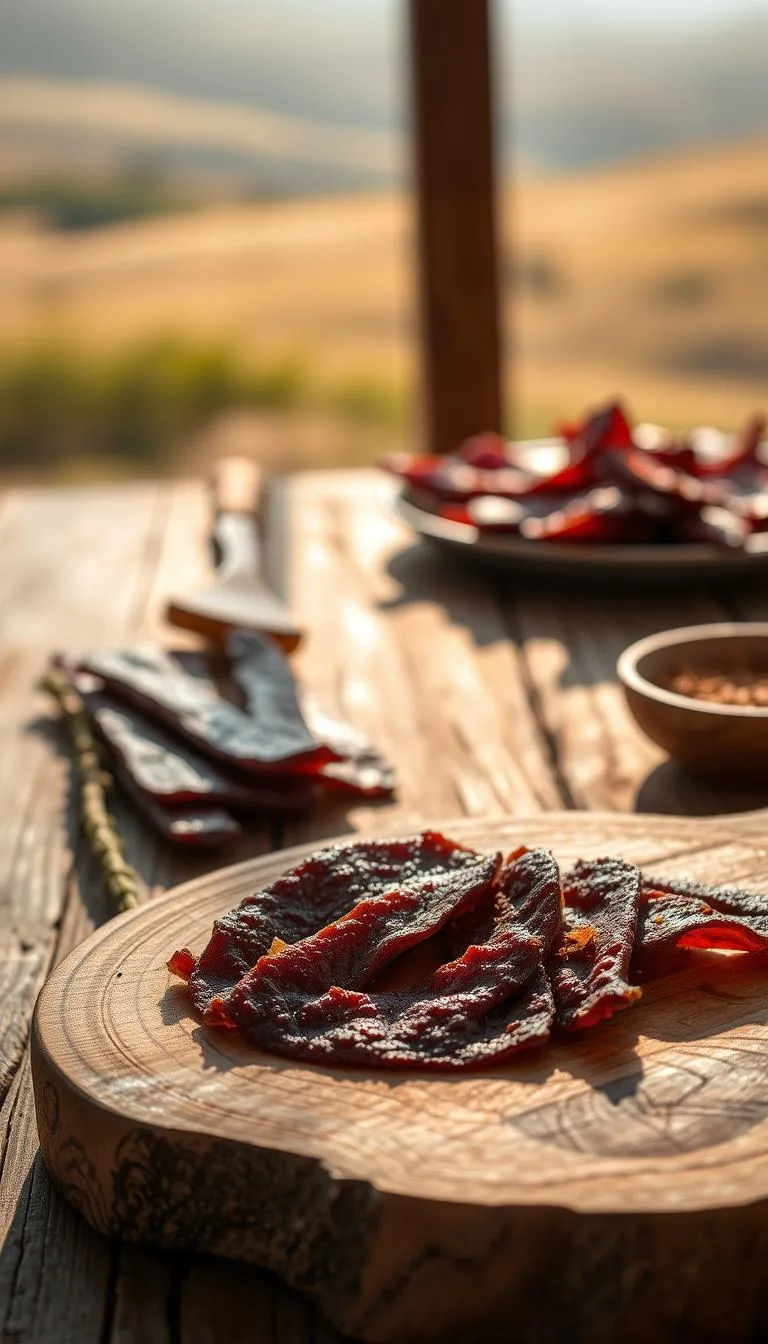
Welcome to our guide on making delicious homemade beef jerky! You're about to learn how to create this tasty, protein-packed snack at home. We will guide you through the process, from choosing the right meat to getting the perfect flavor.
By making your own savory beef jerky, you can control the ingredients and customize the flavor. Our beef jerky recipe is easy to follow and needs just a few ingredients.
Key Takeaways
- Learn how to make healthy, tasty beef jerky at home
- Customize the flavor to your liking with simple ingredients
- Control the ingredients to suit your dietary needs
- Make a delicious snack that's perfect for on-the-go
- Follow our easy-to-follow beef jerky recipe
The Art of Homemade Beef Jerky
Making your own beef jerky at home is easy and rewarding. It lets you pick the ingredients and flavors. This way, you can skip preservatives and additives found in store-bought jerky. Plus, you can choose the meat quality.
Why Make Your Own Beef Jerky
Homemade beef jerky lets you try out different flavors and ingredients. This means your snack can be both tasty and healthy. As "You are what you eat", controlling what's in your jerky is a big plus. You can dodge unwanted additives and preservatives, making it ideal for those who care about their health.
- Customize flavors to your liking
- Choose the quality of the meat
- Avoid preservatives and additives
Health Benefits of Homemade Jerky
Homemade beef jerky is a protein-packed snack great for fitness fans and health buffs. By making it yourself, you can keep it free from added sugars and sodium. This makes it a top choice for a healthy snack. As a protein-rich food, it helps with muscle health and is good for a balanced diet.
Enjoying homemade beef jerky means you get a tasty snack with health benefits. It's a nutrient-dense food that's high in protein and low in bad stuff.
Essential Equipment for Making Beef Jerky
Making beef jerky needs some basic but key equipment. You'll need a few important tools to make tasty and healthy beef jerky.
Must-Have Tools and Appliances
You can't make beef jerky without a way to dry it. A dehydrator is the best choice because it dries the meat evenly. If you don't have a dehydrator, your oven on the lowest setting works too. You'll also need a sharp knife for thin slices and a cutting board for prep. These tools are essential for beef jerky.
Optional Equipment for Enhanced Results
While the must-haves get you going, some optional tools can improve your results. A meat slicer is great for thin, even slices. It's key for drying evenly. Also, marinating containers help spread marinade evenly, boosting flavor.
Selecting the Best Meat for Beef Jerky
The key to great beef jerky is picking the right cut of meat. You want lean cuts with less fat. Fat can make the jerky spoil faster and change its texture.
Ideal Beef Cuts for Jerky Making
For the best results, choose lean cuts like top round, flank steak, or sirloin. These cuts are lean and tender, making them perfect for jerky. Top round is a favorite because it's lean and flavorful. Always choose "lean" or "extra lean" cuts for the healthiest option.
Here's a comparison of popular beef cuts for jerky making:
| Beef Cut | Leaness Level | Flavor Profile |
|---|---|---|
| Top Round | Lean | Mild, Beefy |
| Flank Steak | Lean | Robust, Beefy |
| Sirloin | Lean | Tender, Slightly Sweet |
Understanding Meat Grades and Quality
Knowing the different meat grades helps you pick the best quality for your jerky. In the United States, beef is graded by the USDA as Prime, Choice, or Select, with Prime being the highest. While Prime beef is tender and has great marbling, it might not be necessary for jerky. Choice or Select grades can be just as good, if you're looking for leaner cuts.
When shopping for your beef, consider the following:
- Look for lean cuts with less marbling (fat).
- Choose cuts that are uniform in thickness for even drying.
- Opt for grass-fed or organic beef if you prefer a more natural option.
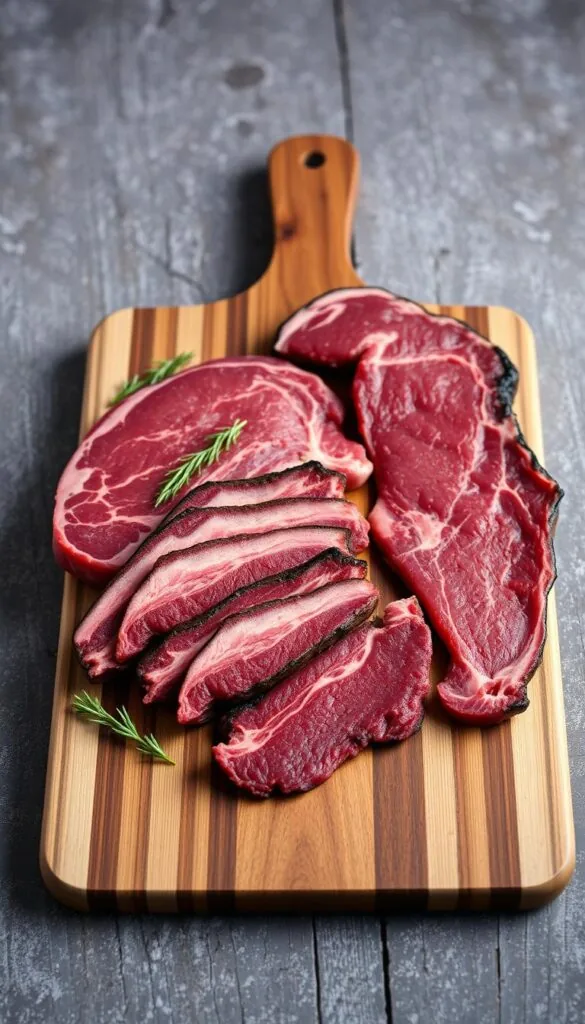
By choosing the right cut and quality of beef, you'll make delicious homemade beef jerky. It will be both healthy and flavorful.
Preparing Your Meat for Jerky
Making great beef jerky begins with the right meat preparation. You want it to taste good and be safe to eat. Here are the key steps to follow.
Trimming and Slicing Techniques
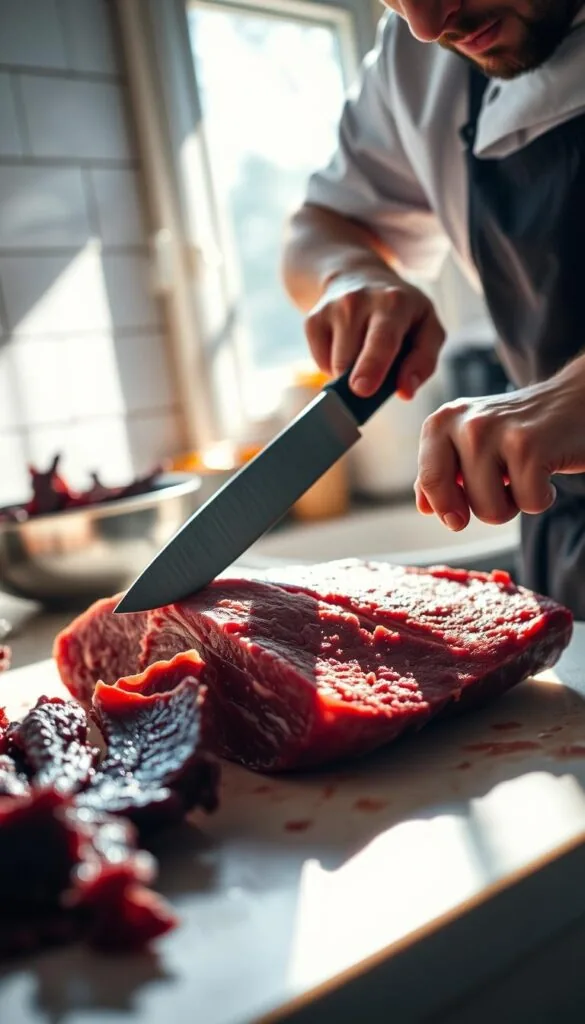
Start with the right cuts of meat for great jerky. Trimming excess fat is key because fat can spoil the jerky faster and change its texture. Use a sharp knife to cut off any fat. Then, slice the meat into thin strips.
Whether you slice with or against the grain is up to you. It's about the texture you prefer. A meat slicer helps make slices even. If you don't have one, try to make the slices as even as you can by hand. This helps your jerky dry evenly.
Achieving the Perfect Thickness
The thickness of your slices is important for drying. Aim for slices about 1/4 inch thick. This thickness is perfect for drying and texture. If slices are too thick, they might not dry right. If they're too thin, they could get too crispy.
To get slices of the same thickness, use a meat slicer or a sharp knife. Freezing the meat a bit before slicing helps. It makes the meat firmer and easier to slice thinly and evenly.
Creating the Ultimate Savory Beef Jerky with Spices
The secret to mouth-watering savory beef jerky is the right spice blend. The perfect mix elevates the jerky's flavor. We'll show you how to make the ultimate savory beef jerky with spices.
Essential Spices for Savory Jerky
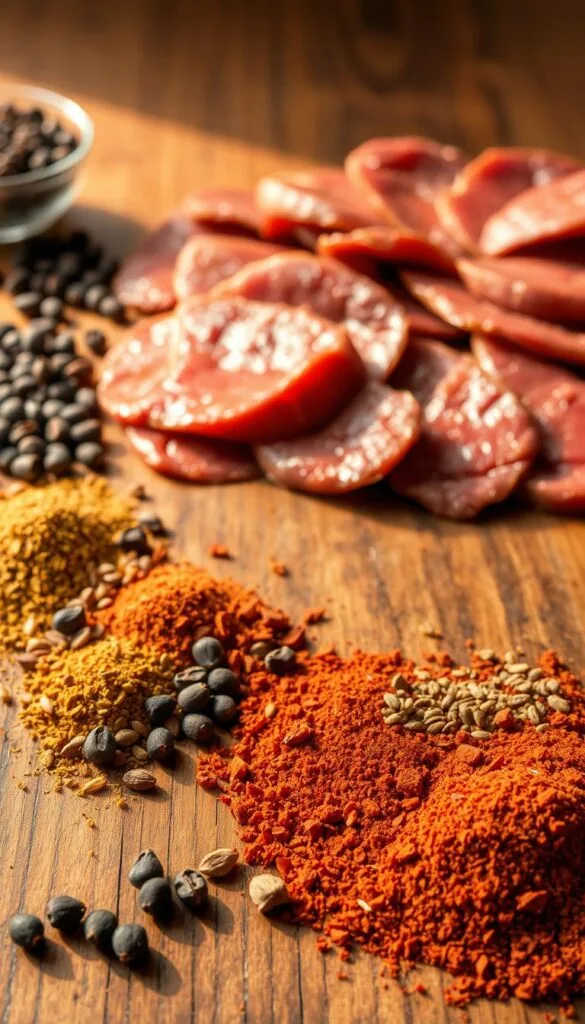
To make savory beef jerky, you need spices that enhance the beef's natural taste. Some essential spices include:
- Garlic powder
- Onion powder
- Paprika
- Black pepper
- Cayenne pepper (optional)
These spices create a rich, savory flavor. You can adjust the amounts to your liking.
Balancing Flavors in Your Marinade
Getting the marinade flavors right is key to great-tasting jerky. You want it to be not too salty, not too bland, and full of depth. To get this, try different spice and ingredient ratios. For example, add more brown sugar to balance saltiness or more garlic powder for a stronger taste.
A good marinade recipe balances salty, sweet, and umami flavors. You can also add soy sauce or Worcestershire sauce for more umami.
Regional and International Spice Variations
Exploring international flavors is exciting when making savory beef jerky. Different regions have unique spice blends that can add a fascinating twist. For example:
- Korean-style jerky might include Gochujang (Korean chili paste) for a spicy kick.
- Indian-inspired jerky could use garam masala and cumin for a warm, aromatic flavor.
- Mexican-style jerky might incorporate chili powder and lime juice for a bold, tangy taste.
By trying these regional and international spice variations, you can create unique and delicious flavors. This makes your jerky stand out.
Marinating Methods for Maximum Flavor
To get the most flavor out of your beef jerky, you need to know the best marinating techniques. Marinating is key to making your jerky taste better and feel more tender. We'll look at the best times and temperatures for marinating, and how to make sure the flavors spread evenly.
Optimal Marinating Times and Temperatures
Finding the right mix of time and temperature is important for a great marinade. Marinating your beef for 4 to 6 hours is usually enough. But, for a stronger taste, marinating it overnight in the fridge works best. It's vital to keep the marinade cold, below 40°F (4°C), to avoid bacteria growth. You can do this by marinating in the fridge or using a cooler with ice.
- Marinate in the refrigerator for 4-6 hours for a standard flavor.
- For a more intense flavor, marinate overnight (8-12 hours).
- Always keep the marinade at or below 40°F (4°C).
Techniques for Even Flavor Distribution
To make sure your beef jerky tastes the same everywhere, you need to spread the marinade well. One way is to massage the marinade into the meat, making sure it's fully covered. You can also use a vacuum sealer to push the marinade deeper into the meat. Another trick is to turn the meat a few times while it's marinating.
By using the best marinating times and temperatures, and the right techniques for spreading flavors, you'll make beef jerky that's not just tasty but also consistently flavorful.
Drying and Cooking Your Beef Jerky
The drying process turns your beef jerky into a tasty snack. You can dry it in an oven or a dehydrator. The choice depends on what you have and what you like better.
Oven Drying Method
To dry beef jerky in an oven, set it to its lowest temperature. This is usually 150°F to 200°F. Put the marinated beef on a baking sheet covered with parchment paper, making sure they don't touch each other. Open the oven door a bit to let moisture out. You need to watch it closely to avoid overcooking. Check the jerky every 30 minutes to see if it's dry enough.
Tips for Oven Drying:
- Use a wire rack on the baking sheet to improve air circulation.
- Rotate the baking sheet every 30 minutes for even drying.
Dehydrator Techniques
A dehydrator makes drying beef jerky easier and more consistent. Set it to 135°F to 155°F. Put the beef strips in a single layer on the trays. The drying time depends on the strip thickness and how dry you want it, usually 3 to 6 hours.
Benefits of Using a Dehydrator:
- Even drying and reduced risk of overcooking.
- Energy efficiency compared to using an oven.
Determining When Your Jerky Is Done
It's important to know when your beef jerky is ready. It should be dry but flexible, with no moisture left. To check, take a piece out and let it cool. If it's too moist, keep drying and checking until it's right.
| Drying Method | Temperature | Time | Texture |
|---|---|---|---|
| Oven | 150°F - 200°F | 3-4 hours | Dry, flexible |
| Dehydrator | 135°F - 155°F | 3-6 hours | Dry, flexible |
By following these steps and checking the jerky often, you'll get delicious and safe beef jerky.
Food Safety and Troubleshooting
To enjoy your homemade beef jerky, focus on food safety. It's important to make sure your jerky is tasty and safe. This means following key steps from handling the meat to storing it.
Critical Safety Considerations
When making beef jerky, handling the meat safely is key. Always wash your hands before and after touching raw meat. Make sure your tools and cutting boards are clean too. Store the meat in sealed containers at the right fridge temperature to stop bacteria from growing.
Safe Drying Temperatures are also vital. Use a dehydrator or oven at 160°F (71°C) to kill harmful bacteria. Dry the jerky until it's at a safe moisture level to avoid spoilage.
| Safety Measure | Description | Importance Level |
|---|---|---|
| Hand Washing | Wash hands before and after handling raw meat | High |
| Utensil and Surface Cleaning | Clean all utensils and surfaces that come into contact with raw meat | High |
| Drying Temperature | Ensure a temperature of at least 160°F (71°C) during drying | Critical |
Common Problems and Solutions
Even with careful planning, issues can happen when making beef jerky. A common problem is over-drying, making the jerky tough or brittle. To avoid this, check the jerky's texture while it's drying. Take it out when it's slightly flexible.
Another issue is under-seasoning. To prevent this, make sure your marinade is balanced and the meat is evenly coated. You can also tweak the marinade's seasoning to your liking.
Knowing these common problems and how to solve them will help you make delicious and safe beef jerky. Troubleshooting these issues will improve your jerky-making skills, leading to better results every time.
Conclusion
You now know how to make tasty homemade beef jerky for healthy snacking. Our guide helped you learn to make savory beef jerky with your favorite spices.
Keep trying new marinades and spice mixes as you make more jerky. This makes snacking fun and lets you customize your jerky for any time. It's great for a quick energy boost or a protein-rich snack for outdoor fun.
Sharing your homemade beef jerky with loved ones is a wonderful way to share healthy snacking. You can also try new recipes and variations to keep things exciting.
Adding homemade beef jerky to your daily routine is a big step towards a healthy life. Enjoy the journey and happy snacking!
FAQ
What is the best cut of beef for making jerky?
For making jerky, choose lean cuts like top round, flank steak, or sirloin. These cuts have less fat, making them perfect for drying.
How do I ensure my beef jerky is safe to eat?
To keep your beef jerky safe, handle the meat safely and store it right. Dry it to a safe temperature. Always check the jerky while it's drying.
Can I use an oven to dry my beef jerky?
Yes, you can dry your beef jerky in an oven. But, you must watch it closely to avoid overcooking. A dehydrator is better for controlled drying.
How long should I marinate my beef jerky?
Marinating time varies, but a few hours or overnight is best. Make sure the meat is well-coated with the marinade.
What are some essential spices for making savory beef jerky?
For savory jerky, use garlic, onion powder, and paprika. Try different spices to add a unique flavor.
How do I know when my beef jerky is done?
Your jerky is ready when it's dry but flexible. Check it often to get the perfect texture.
Can I customize the flavor of my beef jerky?
Yes, making your own jerky lets you choose the flavors. Try different spice mixes and marinades to find your favorite.
Is homemade beef jerky a healthy snack option?
Yes, homemade jerky is a healthy snack. You can avoid preservatives, sugars, and sodium found in store-bought versions.