
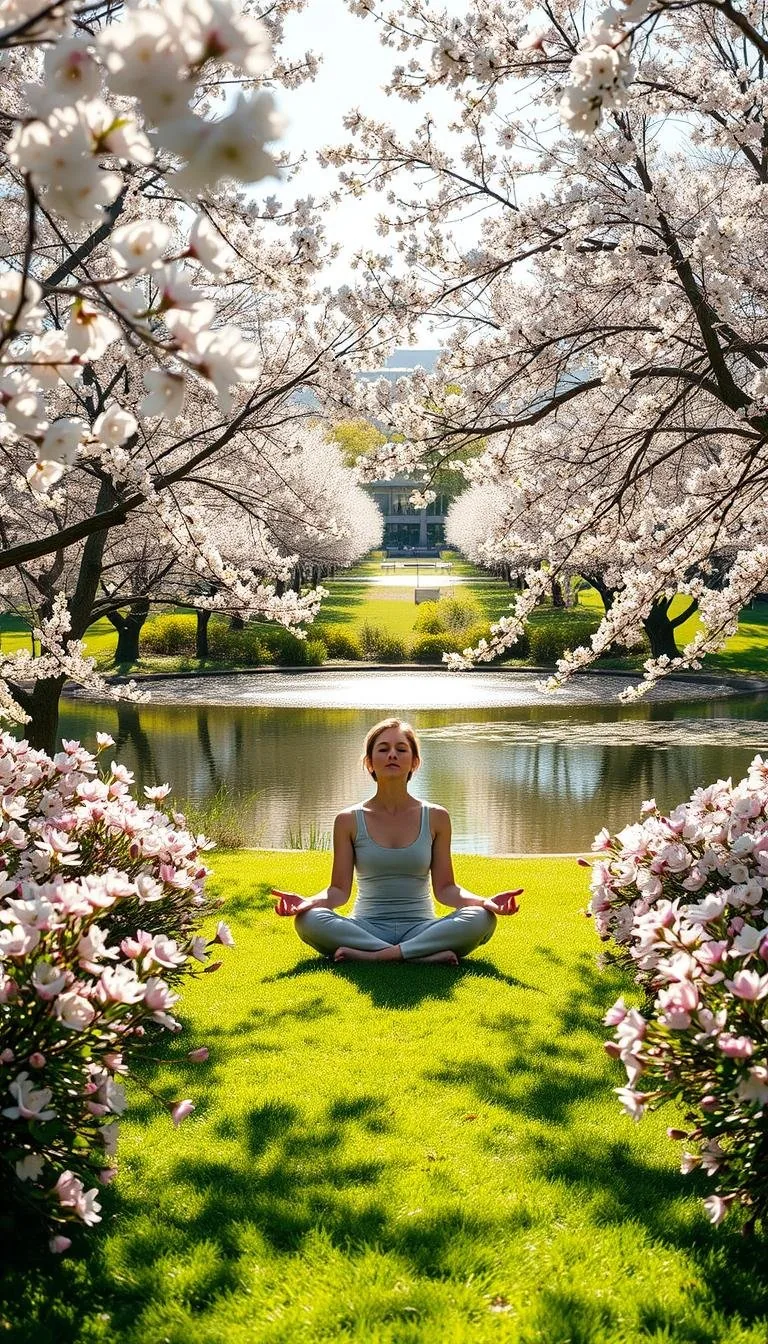
Spring is supposed to feel fresh, but for many people it brings its own stress: allergy season, busier calendars, cleaning lists, school and work deadlines and a jump in outdoor plans. Mindfulness can give you a few pauses in a busy season and a reason to get outside.
This guide offers seasonal mindfulness practices for spring, a simple weekly plan and tips for allergy season and daylight changes.
Use spring's daylight and outdoor time for short mindful moments: a five-minute walk, a few slow breaths with a window open or a mindful look at what is growing. Keep it small, and reduce something on your list at the same time.
Seven spring mindfulness practices
| Practice | How | Time |
|---|---|---|
| Sensory walk | Walk slowly and notice sights, sounds and smells. Choose three signs of spring. | 5 to 10 min |
| Morning window minute | Open a window, take five slow breaths and notice the light and air. Skip this on high-pollen days if you have allergies. | 1 min |
| Mindful cleaning | Give one cleaning task your full attention, noticing motion and sensation. See Simple Spring Cleaning Tips. | 10 min |
| Mindful planting or plants | Touch soil, water a plant or notice one bloom. | 5 min |
| Slow meal outside | Eat one meal outdoors without a screen. | 15 min |
| Evening wind-down | Longer days can push bedtime later. Keep a steady routine. See Simple Ways to Create a Calming Evening Routine. | 20 min |
| Weekly reset | Choose what to keep, drop or delay from your spring list. | 30 min |
If spring makes you stressed instead
- Allergies: check the pollen count, keep windows closed on high days and shower after being outdoors. See How to Tackle Spring Allergies.
- Overscheduling: pick two spring priorities instead of ten.
- Time change and sleep: the spring clock change can disrupt sleep for a few days. Keep your wake-up time and get morning daylight.
- Comparison and pressure: "new season, new you" messages are optional. Choose a small change that matters to you.
A four-week spring plan
| Week | Focus |
|---|---|
| 1 | Sensory walks three times. |
| 2 | Morning window minute daily, plus one outdoor meal. |
| 3 | One mindful cleaning session and one evening wind-down. |
| 4 | Weekly reset and choose what to keep. |
A five-minute sensory walk, step by step
- Step outside and take three slow breaths.
- Walk slowly for two minutes, feeling your feet touch the ground.
- Notice five things you see, especially colors.
- Listen for three sounds, near and far.
- Notice the air on your skin and any scents.
- Head back slowly and write down one thing you noticed.
Spring stress and mood
Some people feel better as days lengthen, while others feel restless or overwhelmed. If you notice persistent low mood, loss of interest, sleep changes or anxiety that last more than a couple of weeks, talk to a provider. Seasonal changes can affect mood in either direction.
Mindfulness and breathing practices are generally low-risk, but NCCIH notes that some people have negative experiences, such as increased anxiety or distress. If a practice feels overwhelming, stop and switch to a grounding activity such as feeling your feet on the floor or taking a walk. If you have a history of trauma, panic attacks or serious mental health conditions, talk to a provider first. These practices do not replace medical or mental health care. In the United States, call or text 988 if you are in crisis.
FAQ
How can I use mindfulness in spring?
Why do I feel stressed in spring?
Can I practice mindfulness with allergies?
Sources and further reading