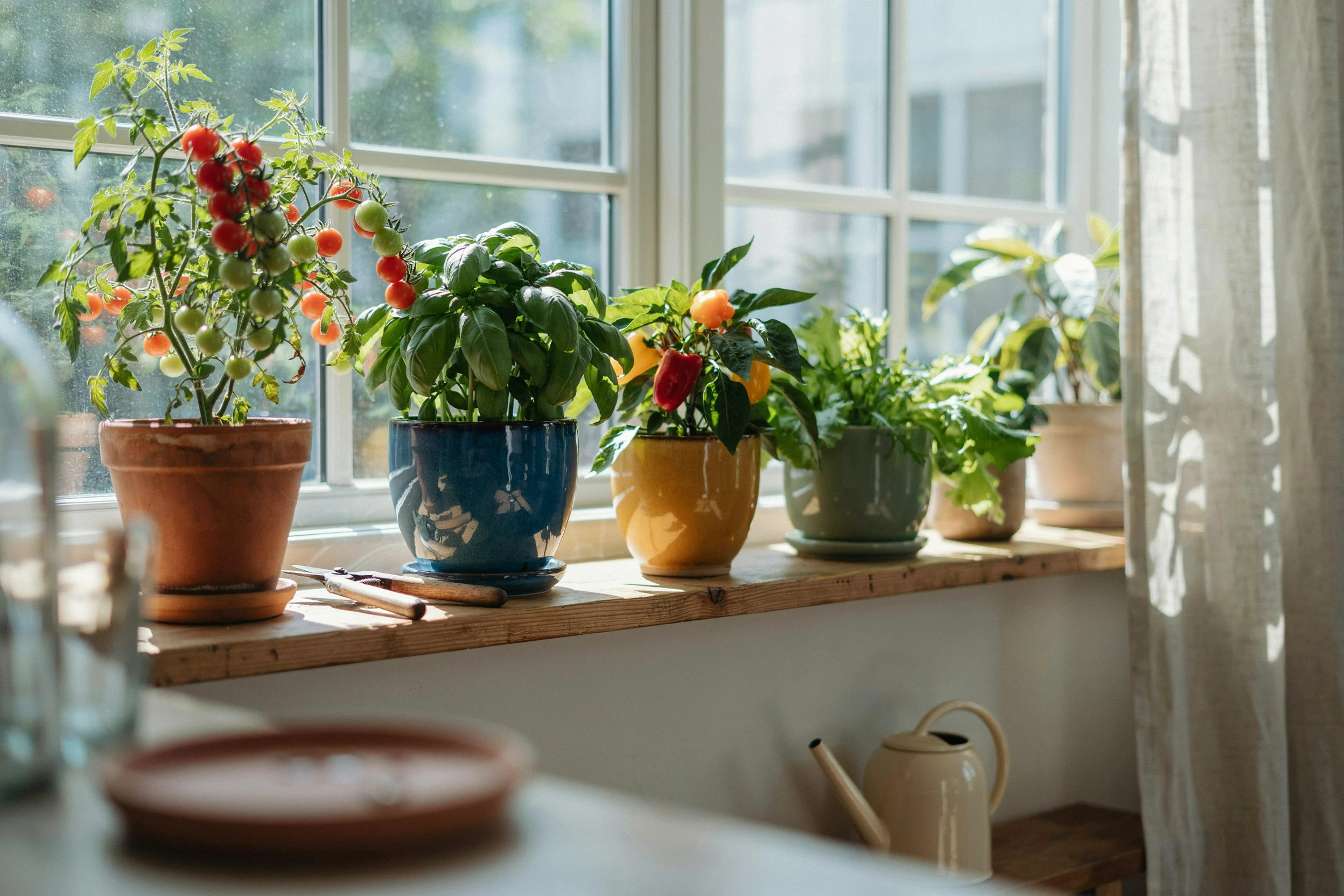
You can grow real food indoors, even in winter and without a yard. Lettuce, herbs, microgreens and green onions all do well in a bright spot or under an inexpensive grow light. The trade-offs are light, space and food safety, especially with sprouts.
This guide covers what grows well indoors, how much light you need, simple setups and how to handle sprouts and microgreens safely. For herbs specifically, see How to Start an Indoor or Balcony Herb Garden. Part of the Grow Your Own Food series.
Indoors, light is the limit. A sunny window can work for herbs, but a grow light on a timer (about 12 to 14 hours a day) is more reliable. Microgreens are easy to start, but avoid raw home-grown sprouts if you are pregnant, elderly, very young or have a weak immune system.
What grows well indoors
| Crop | Light | Time to first harvest | Notes |
|---|---|---|---|
| Microgreens (radish, pea shoots, sunflower, broccoli) | Bright light or a grow light | About 1 to 3 weeks | Grown in trays of soil or growing mix and cut above the soil line. |
| Leaf lettuce | Grow light or a very bright window | About 4 to 6 weeks | Shallow containers. Pick outer leaves. |
| Herbs (chives, parsley, mint, oregano, thyme) | Sunny window or grow light | A few weeks | Basil needs warmth. |
| Green onions | A bright window | Ongoing | Regrow store-bought roots in water, changing the water often, or plant them in soil. |
| Small peppers or cherry tomatoes | Strong grow light | Months | More demanding. Better for experienced growers. |
Light: the main constraint
- Windows: a south-facing window is best in the U.S. Even so, winter light is often too weak for fruiting crops. Herbs need about 6 hours of direct sun.
- Grow lights: extension guidance suggests fluorescent or full-spectrum lights about 6 to 12 inches above the plants, on for 12 to 14 hours a day. Use a timer.
- Signs of too little light: tall, thin, pale, leaning growth.
A simple microgreens setup
- Use a shallow tray with drainage and a second tray underneath.
- Fill with about 1 to 2 inches of clean potting or seed-starting mix.
- Sprinkle seeds labeled for microgreens or sprouting thickly, press them into the surface and mist.
- Cover for a few days and keep the mix moist.
- Uncover and give light once seeds sprout.
- Harvest with scissors when the first true leaves appear, cutting above the soil line.
Food safety: sprouts and microgreens
| Sprouts | Microgreens | |
|---|---|---|
| How they are grown | Seeds soaked and sprouted in water, often in a jar, and eaten whole with the seed and root. | Grown in soil or growing mix, and cut above the soil line. |
| Risk | The warm, humid conditions are also ideal for bacteria. The FDA has reported 52 outbreaks of foodborne illness linked to sprouts in the U.S. between 1996 and 2020, with at least 2,700 illnesses. If bacteria are on the seed, they can multiply even in clean home conditions. | Generally considered lower risk than sprouts because they are grown in a medium and harvested above it, but not risk-free. |
| Who should avoid raw | The FDA advises people at higher risk of foodborne illness, such as young children, older adults, pregnant women and people with weakened immune systems, to avoid raw or lightly cooked sprouts of any kind. | Use clean hands and equipment, wash your harvest, and refrigerate. |
If you grow sprouts, use seed sold for sprouting, keep everything clean and consider cooking them. Check for current FDA advisories.
Countertop gardens and hydroponics
Compact, self-watering kits with built-in lights can be a convenient way to grow herbs and greens all year. They cost more than trays and pots, but they take the guesswork out of light and water. Clean the reservoir regularly, and follow the manufacturer's directions.
Common indoor problems
| Problem | Fix |
|---|---|
| Leggy growth | More light, lowered closer to plants. |
| Mold on microgreens | Improve airflow, do not overwater, use clean mix and less-dense sowing. |
| Fungus gnats | Let the soil surface dry between waterings. |
| Slow growth | Check temperature (most crops like a normal room temperature) and light. |
FAQ
What vegetables can I grow indoors?
Do I need a grow light?
Are sprouts safe to grow at home?
Sources and further reading