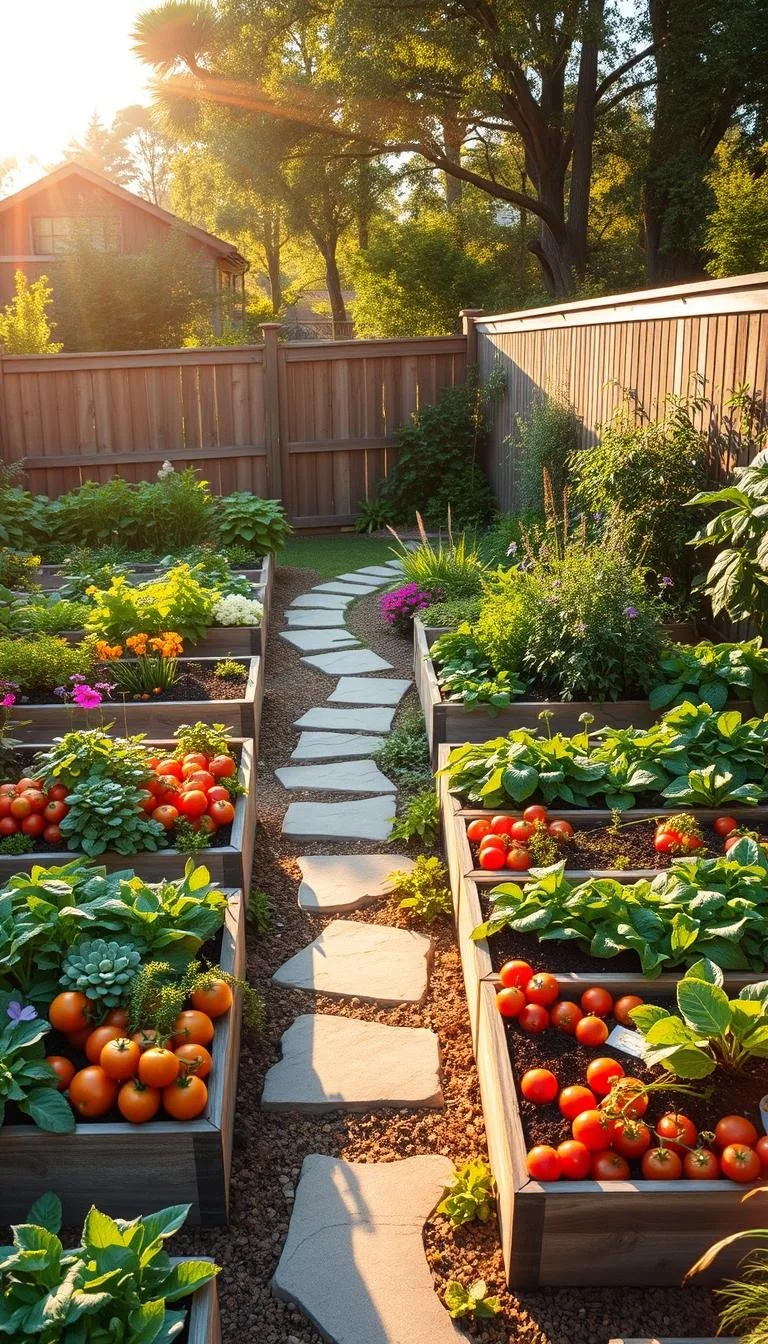
A vegetable garden can be as attractive as a flower border. Colorful lettuces, trellises draped with beans, herbs edging a path and pots by the door can turn food growing into part of your landscape, which helps if you have a front yard, a homeowners association or a small space to work with.
This guide is about design: how to make an edible garden look good without giving up productivity. For where to put beds and rows, see Ideal Veggie Garden Layout. Part of the Grow Your Own Food series.
Make it look intentional with clear edges, paths, structure (trellises and arches) and repeating colors. Mix in edible and pollinator flowers, and keep everything you plant edible or useful.
Six design ideas that also produce food
| Idea | How | Good crops |
|---|---|---|
| Define the space | Use raised beds, a low fence or a hedge to give the garden clear edges. | Any. |
| Add vertical structure | Arches, obelisks, teepees or fence trellises. | Pole beans, peas, cucumbers, small squash. |
| Use color | Plant contrasting leaves and fruit, and repeat colors in rows or blocks. | Red and green lettuces, purple kale, rainbow chard, colorful peppers. |
| Edge with herbs | Border beds and paths with low herbs. | Thyme, chives, oregano, parsley. |
| Mix in flowers | Add flowers to attract pollinators and add color. | Nasturtiums, zinnias, calendula, sunflowers. |
| Make paths part of the design | Use mulch, gravel or brick, and curved lines for a softer look. | N/A. |
Front-yard edible gardens
- Check rules first. Some HOAs and cities regulate front-yard vegetables, fences and heights.
- Keep it tidy. Neat edges, mulch and trimmed plants help it look intentional.
- Choose ornamental edibles such as colorful kale, chard, peppers and herbs.
- Use containers near the door for herbs and greens.
- Consider safety. Roadside soil may contain contaminants such as lead. See Your First Garden.
Edible flowers: safety first
Some flowers are edible, including nasturtiums, calendula and pansies. But not all flowers are safe to eat. Only eat flowers you can positively identify as edible, and only if they were grown without pesticides not labeled for food crops. Do not eat flowers from florists or garden centers unless labeled edible. People with allergies should be cautious.
What about companion planting?
Companion planting is popular in garden design, and mixing crops and flowers can look great and support pollinators. But evidence for many pest-repelling pairings is limited, so treat it as an aesthetic and biodiversity choice, not a guarantee of pest control. See Common Vegetable Garden Pests for methods with stronger support.
A simple design recipe
- Pick a focal point, such as a trellis or an arch.
- Frame the beds with a border of herbs or flowers.
- Choose two or three colors and repeat them.
- Add height variety with tall crops at the back and low ones at the front.
- Keep paths clear and mulched.
- Prune and harvest to keep it tidy.
Keep function first
Beautiful gardens still need sun, soil and water. Do not sacrifice sun for looks, and remember that some crops, such as tomatoes and beans, get messy late in the season. Support them well, remove spent plants and replant.
Plant by role, like a designer
| Role | Purpose | Edible options |
|---|---|---|
| Structure | Height and focal points | Pole beans on a teepee, cucumbers on an arch, tomatoes on tall stakes |
| Color | Visual interest through the season | Red lettuce, purple kale, rainbow chard, colored peppers |
| Edging | A neat border | Chives, thyme, parsley, compact basil |
| Fill | Cover soil between larger plants | Lettuce, radishes, bush beans |
| Pollinator support | Attract bees and beneficial insects | Nasturtiums, calendula, zinnias, sunflowers |
A garden that looks good all season
- Spring: peas on a trellis, lettuces in mixed colors and chives in bloom.
- Summer: tomatoes, peppers, beans and flowers for color.
- Fall: kale, chard and cabbage-family crops that handle cool weather.
- Winter (mild climates): hardy greens and herbs.
Replace finished crops promptly so beds are never bare. See How to Get More From Your Garden for succession planting.
Keep it looking tidy in 15 minutes a week
| Task | Time |
|---|---|
| Harvest ripe produce and remove spent plants | 5 min |
| Tie up sprawling vines | 3 min |
| Pull weeds and top up mulch | 5 min |
| Tidy edges and paths | 2 min |
FAQ
How do I make a vegetable garden look nice?
Can I grow vegetables in my front yard?
Which flowers are safe to eat?
Sources and further reading