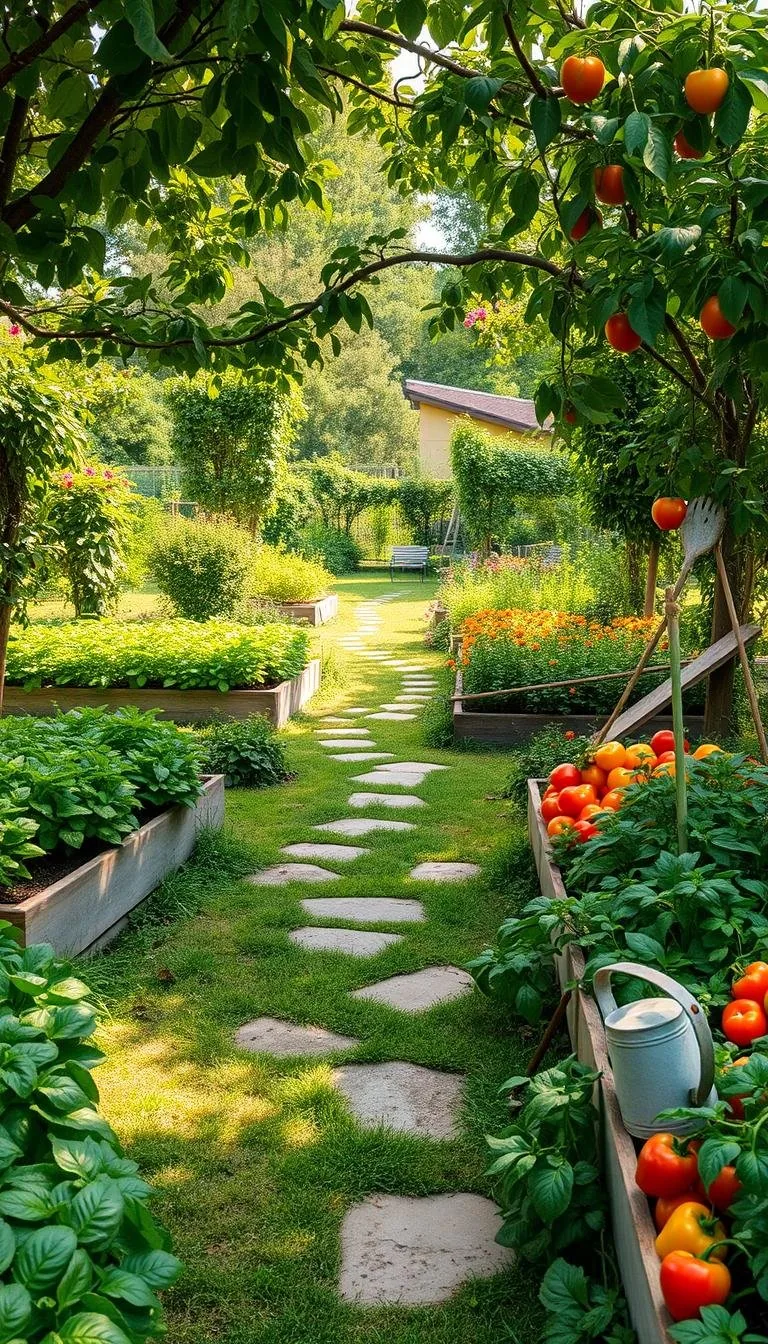
A good layout makes everything easier: plants get sun, you can reach them all, water lines are short and tall crops do not shade short ones. You do not need a landscape design, only a few rules and a sketch.
This guide covers bed styles, dimensions, where to put tall crops, three sample layouts (small, family-size and a grow-bag layout for tight spaces) and how to rotate crops from year to year. Part of the Grow Your Own Food series.
Make beds no more than 4 feet wide, leave paths of 2 to 3 feet, put tall crops on the north side and keep the things you pick most often closest to the kitchen. Sketch it on paper first.
Bed styles compared
| Style | How it works | Pros | Cons |
|---|---|---|---|
| Traditional rows | Long single rows with paths between. | Easy to cultivate with tools, and good for large plantings. | Wastes space in paths. |
| Wide rows or blocks | Beds 3 to 4 feet wide, plants spaced evenly. | Makes more of the space and shades weeds. | Needs to be reached from the sides. |
| Raised beds | Framed beds of soil. See How to Build a Raised Garden Bed. | Good drainage, tidy and easy to manage. | Cost of materials and soil. |
| Square-foot style | Divide a bed into 1-foot squares and plant a set number in each. | Simple to plan and good for small beds. | Needs regular attention and spacing that suits each crop. |
| Containers | Pots on a patio or balcony. See Growing Vegetables in Containers. | Flexible and portable. | Needs frequent watering. |
Layout rules
- Reach: beds should be no more than 4 feet wide if you can reach from both sides, or 3 feet from one side.
- Paths: 2 to 3 feet wide so you can move a wheelbarrow.
- Sun: put tall crops such as tomatoes, pole beans and corn on the north side so they do not shade the others.
- Orientation: if you can choose, run beds north to south so both sides get even sun.
- Water: place beds within reach of a hose or drip line.
- Perennials: put asparagus, rhubarb and perennial herbs at one end or edge, where they will not be disturbed.
- Frequent picks close to the door: herbs and salad greens go closest to the kitchen.
Three sample layouts
1. A 4-by-8-foot bed (starter)
| Area | Crops |
|---|---|
| North edge | 2 tomatoes on cages or stakes |
| Middle | Peppers and a row of bush beans |
| South edge | Lettuce, radishes and a few herbs |
| Corner | 1 cucumber on a small trellis |
2. A family-size plan: two 4-by-8-foot beds and a trellis
| Bed | Crops |
|---|---|
| Bed A (warm-season) | Tomatoes, peppers, eggplant, basil and marigolds or other flowers along the edge if you like |
| Bed B (mixed) | Bush beans, zucchini, cucumbers on a trellis, and a succession of lettuce and radishes |
| Along a fence | Pole beans or peas on a trellis |
3. A tight-space layout with grow bags or pots
| Container | Crop |
|---|---|
| Large pot (about 20 inches wide) | 1 tomato |
| Medium pot (about 14 inches wide) | 1 pepper or eggplant |
| Window box or shallow pot | Lettuce and herbs |
| Tall trellis in a pot | Pole beans or cucumbers |
Crop rotation: a simple plan
Moving related crops to a new bed each year can help reduce pest and disease buildup. A simple approach is to divide crops into four groups and shift them one bed each year:
| Group | Examples |
|---|---|
| Tomato family | Tomatoes, peppers, eggplant, potatoes |
| Cabbage family | Broccoli, cabbage, kale, radishes |
| Vine and squash family | Cucumbers, squash, melons |
| Legumes and roots | Beans, peas, carrots, beets, onions |
In small gardens, rotation is hard, so refresh the soil with compost each year and do what you can.
Sketch it before you plant
- Measure your space and draw it on graph paper, one square per foot.
- Mark sun, water and paths.
- Place tall crops on the north, then medium crops, then short crops on the south.
- Check spacing on the seed packets or plant tags.
- Keep the sketch, and note changes each year.
FAQ
How wide should a garden bed be?
Which way should garden rows run?
Do I need to rotate crops in a small garden?
Sources and further reading