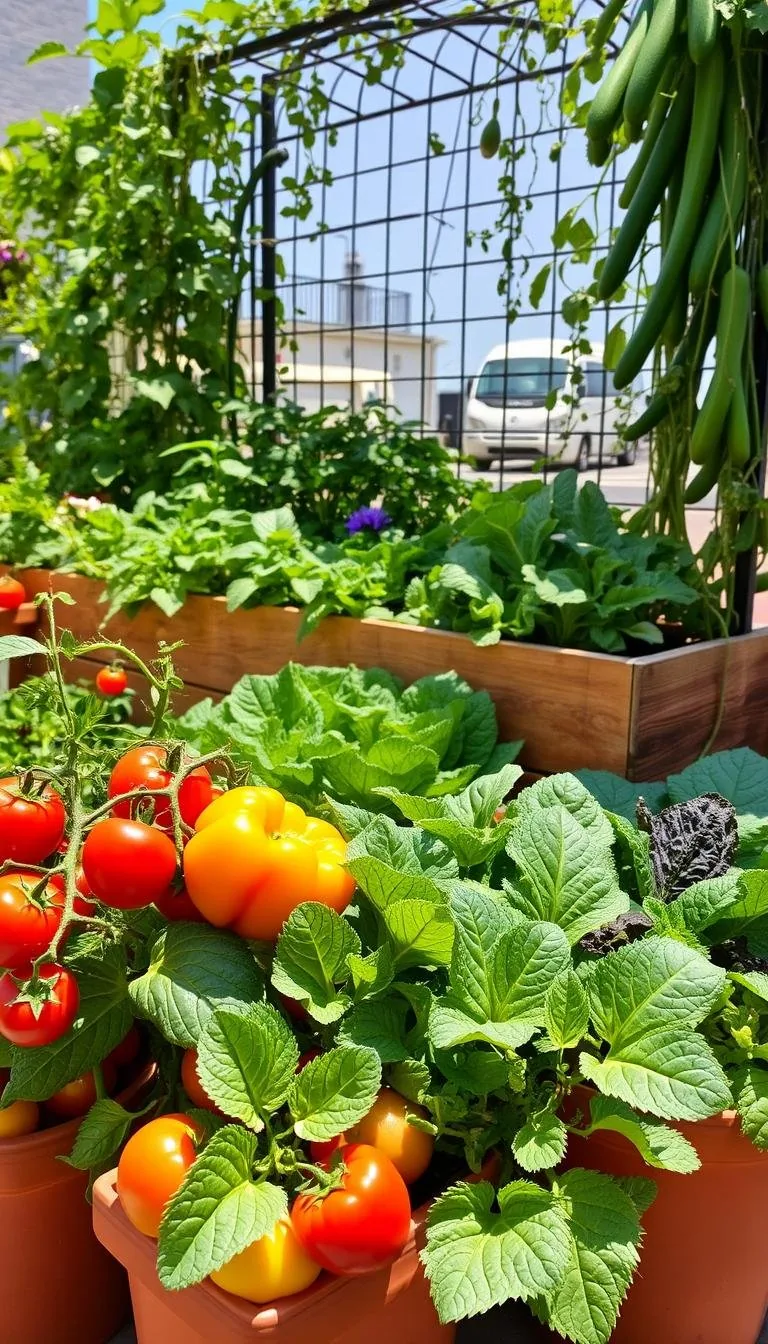
You can grow a surprising amount of food in pots: tomatoes, peppers, lettuce, herbs, beans, even carrots. Containers suit patios, steps and small yards, and they let you move plants to follow the sun. They also dry out fast and need more attention to watering and feeding than a garden bed.
This guide covers choosing pots, the right potting mix, which vegetables do well in containers, and how to water and feed them. For apartment and balcony specifics, see Balcony and Patio Vegetable Gardening. Part of the Grow Your Own Food series.
Use containers with drainage holes, fill them with potting mix, not garden soil, choose pots big enough for the crop, and expect to water daily in hot weather. Put them where they get 6 or more hours of sun.
Pot size by crop
| Crop | Minimum container | Notes |
|---|---|---|
| Tomatoes | About 20 inches wide, at least 5 gallons or more | Choose compact or "patio" varieties for smaller pots. Add a cage. |
| Peppers and eggplant | About 14 inches wide | Full sun and warmth. |
| Bush beans | Wide, at least 8 to 12 inches deep | Sow several seeds in a wide pot. |
| Lettuce, greens and herbs | Smaller pots, window boxes or wide, shallow containers | Shallow roots. |
| Carrots and radishes | Deep containers, about 12 inches or more | Use loose, stone-free mix. |
| Cucumbers | Large pot with a trellis | Choose bush or compact types. |
Penn State Extension notes that pots should be at least as tall as they are wide for healthy root growth.
Containers: what works
- Drainage holes are non-negotiable. Waterlogged soil suffocates roots. If a pot has no holes, drill some near the bottom.
- Raise pots slightly on bricks or pot feet so water drains freely.
- Materials: plastic, fabric grow bags, glazed ceramic and wood all work. Dark pots absorb heat, and terra-cotta dries out faster.
- Food safety: use containers that never held toxic substances, and avoid old painted pots that may contain lead. Food-grade buckets are a common choice.
Potting mix, not garden soil
Fill containers with a soilless potting mix. Garden soil is heavy, packs down and drains poorly in a pot. Extension services recommend lightweight, well-draining mixes designed for containers. Refresh or replace the mix each season, and avoid reusing mix from plants that had disease.
Best vegetables for containers
| Good choices | Better in the ground |
|---|---|
| Lettuce, kale, chard, spinach | Sweet corn |
| Tomatoes (compact), peppers, eggplant | Watermelon |
| Bush beans, radishes, carrots | Winter squash |
| Herbs | Large sprawling zucchini or squash plants |
| Cucumbers on a trellis | Potatoes in bulk (grow bags work for a small harvest) |
Watering containers
- Most container gardens need water at least once a day in hot summer weather.
- Water until it runs out of the bottom, and empty saucers so roots do not sit in water.
- Check the top inch or two of mix. If it is dry, water.
- Mulch the surface with straw or shredded bark to slow evaporation.
- Self-watering pots or drip lines on a timer help if you are away often.
Feeding
Nutrients wash out of pots with frequent watering. Many potting mixes contain some fertilizer, but plants often need more after several weeks. Use a slow-release or liquid fertilizer according to the label, and avoid overfeeding, which burns roots and can cause leafy growth with few fruits.
Common container problems
| Problem | Cause | Fix |
|---|---|---|
| Wilting midday | Heat and small pots | Water and move to afternoon shade, or use bigger pots. |
| Yellow leaves | Overwatering or nutrient shortage | Check drainage, and feed lightly. |
| Blossom-end rot on tomatoes | Uneven watering | Water consistently. |
| Few fruits | Too little sun or too much nitrogen | Move to full sun and adjust feeding. |
Plan a container garden
- Find a spot with 6 or more hours of sun.
- Choose 3 to 5 containers and 3 to 5 crops you eat.
- Use large pots for tomatoes and peppers, and shallow ones for greens and herbs.
- Set up a way to water easily.
- Grow up with trellises. See Grow More Veggies in Less Space.
FAQ
What size pot do I need for tomatoes?
Can I use garden soil in containers?
How often should I water container vegetables?
Sources and further reading