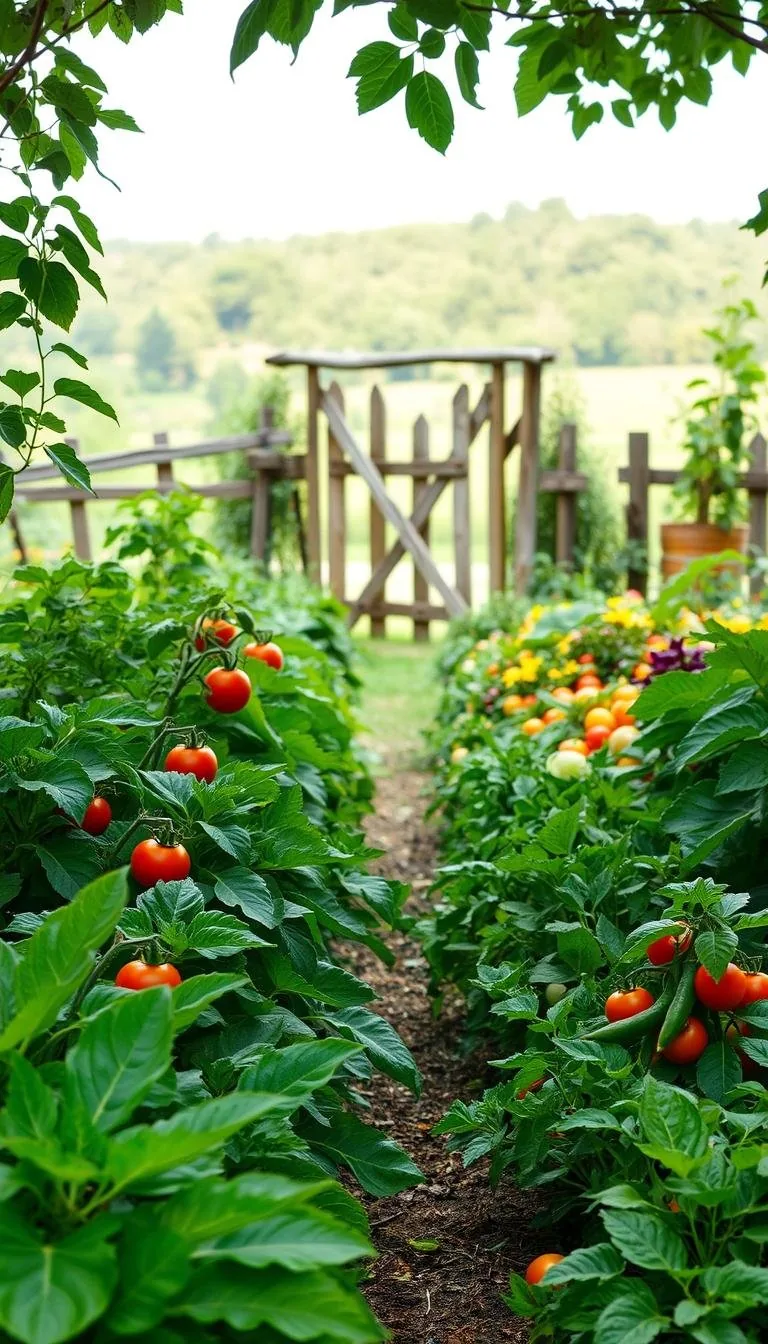
Small spaces can produce a surprising amount of food if you use them well. The biggest gains come from growing up, planting closely but sensibly, using containers and hanging planters and tucking quick crops into gaps.
This guide covers vertical growing, small-space techniques, which crops climb and which do not, and how to build simple supports safely. For pots and balconies, see Growing Vegetables in Containers and Balcony and Patio Vegetable Gardening. Part of the Grow Your Own Food series.
Grow up, not out: trellis peas, pole beans and cucumbers, cage or stake tomatoes, and plant lettuce at the base. Place tall structures on the north side so they do not shade shorter plants, and make supports sturdy.
Crops that climb
| Crop | Support | Notes |
|---|---|---|
| Peas | Fence, netting or a light trellis | Cool-season. Finish before summer heat. |
| Pole beans | Teepee, arch or tall trellis | Produce over a long season. Pick often. |
| Cucumbers | Trellis or cage | Vertical fruit is straighter and cleaner. |
| Indeterminate tomatoes | Tall stakes or cages | Prune and tie as they grow. |
| Small squash and melons | Strong trellis with slings for heavy fruit | Choose compact varieties. |
University of Minnesota Extension notes that many long-vined varieties do well in small spaces if you train them onto trellises.
Small-space techniques
| Technique | How |
|---|---|
| Vertical structures | Trellises, arches, cages, fences and wall planters. |
| Intensive spacing | Plant in blocks so leaves touch at maturity, with fewer wasted aisles. This works best for greens, carrots and cabbage-family crops. |
| Interplanting | Plant lettuce or radishes at the base of tall crops that are still small. |
| Hanging baskets | Herbs, strawberries, trailing tomatoes and salad greens. |
| Salad tables and window boxes | Shallow containers for lettuce and herbs on a patio. |
| Succession planting | Replace finished crops quickly. See How to Get More From Your Garden. |
Build a simple, sturdy trellis
- Choose materials: bamboo poles, wooden stakes, cattle panels, wire fencing or netting.
- Set posts deep. Loaded vines catch wind, so anchor supports firmly.
- Keep the height reachable. About 5 to 6 feet is easier to pick than 8 feet.
- Place it on the north side of the bed.
- Train vines early. Tie stems gently with soft ties.
- Support heavy fruit with slings made from fabric or netting.
What does not fit a small space
- Sweet corn, which needs a block of plants and gives few ears per plant.
- Sprawling melons and winter squash without a strong trellis.
- Large plantings of potatoes and storage onions if space is very limited.
Weight and safety on balconies and walls
Wet soil is heavy. If you are gardening on a balcony, roof or wall, check weight limits and rules with your building or landlord, and secure planters so they cannot fall. See Balcony and Patio Vegetable Gardening.
Tomatoes, cucumbers and beans: how to support each
| Crop | Best support | Training tips |
|---|---|---|
| Indeterminate tomatoes (keep growing all season) | A tall, sturdy stake, spiral or cage taller than the plant will get | Tie the main stem loosely as it grows, and remove damaged lower leaves for airflow. |
| Determinate or bush tomatoes (stop at a set size) | A cage of about 3 to 4 feet | Little pruning needed. |
| Cucumbers | Fence, panel or A-frame trellis | Guide young vines onto the support, and pick fruit young so vines are not weighed down. |
| Pole beans | Teepee of poles, string or netting | Beans twine on their own. Start them at the base with a few seedlings per pole. |
| Peas | Netting or a fence with small openings | Give the tendrils something thin to grip. |
Hanging baskets and wall planters
- Best crops: strawberries, trailing herbs, lettuce, and cherry tomato varieties bred for baskets.
- Mix: use lightweight potting mix, because baskets get heavy when wet.
- Watering: hanging containers dry out fast in wind and sun. Check them daily in summer.
- Hardware: hang them from sturdy hooks or brackets rated for the weight.
A sample 3-by-6-foot small-space bed
| Position | Plant | How it saves space |
|---|---|---|
| North edge, on a trellis | Cucumbers or pole beans | Grows up, so it uses little ground. |
| Behind, in a cage | 1 or 2 tomatoes | Vertical growth. |
| Base of the tomatoes | Lettuce or radishes | Quick crops finish before the tomatoes fill out. |
| Front edge | Herbs and salad greens | Frequent-pick crops near the path. |
Common small-space mistakes
- Flimsy supports. A heavy tomato or cucumber plant in wind can pull down a weak trellis. Anchor posts firmly.
- Shading neighbors. Place tall structures to the north of shorter crops.
- Overcrowding. Very tight planting reduces airflow and can make disease worse. Space by the plant tag.
- Forgetting water. Dense plantings and containers dry out quickly.
- Choosing crops that sprawl. Large melons and winter squash take more room than a small bed can spare.
FAQ
What vegetables grow well vertically?
How can I grow more in a small garden?
Will a trellis shade other plants?
Sources and further reading