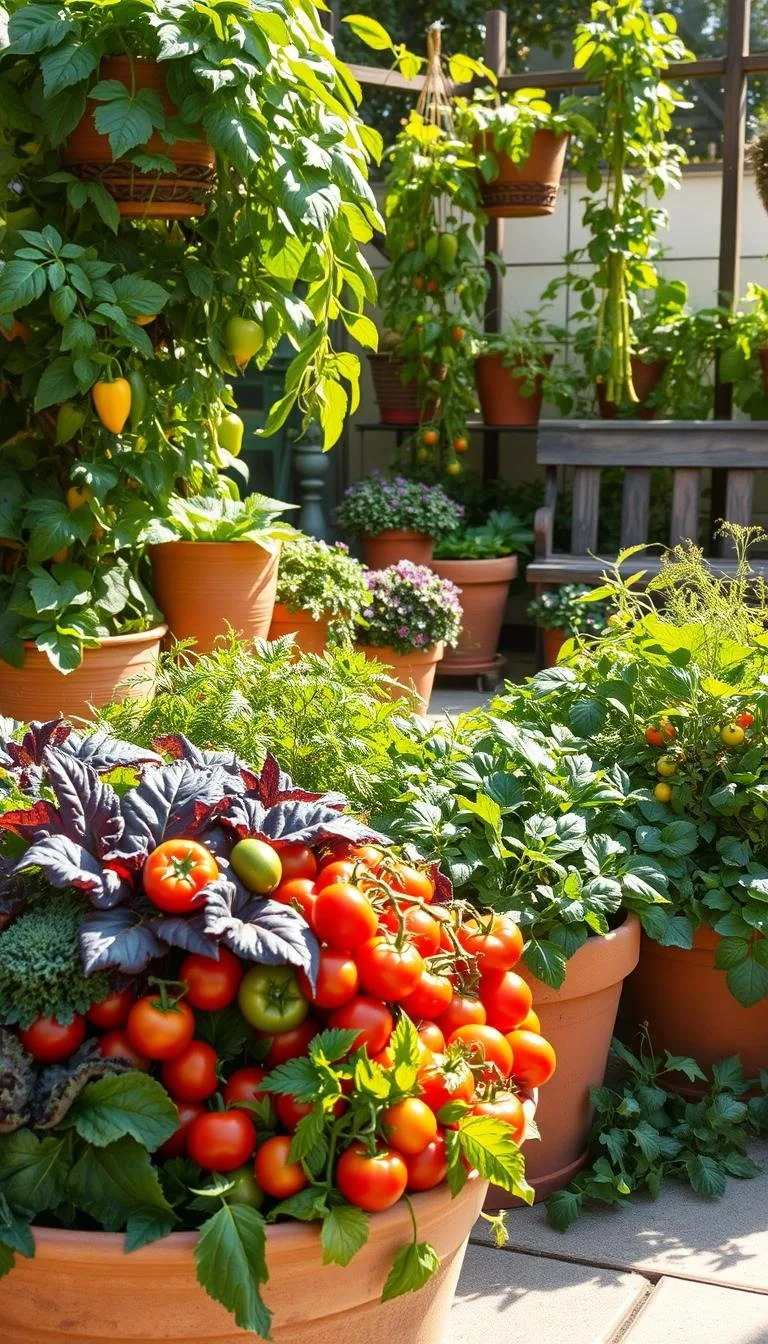
Apartments, condos and rentals limit what you can do, but not always what you can grow. A sunny balcony or patio can hold tomatoes, herbs and salad greens if you plan around light, weight, wind and the rules of your building.
This guide is about the constraints of small outdoor spaces: assessing your light, checking rules and weight, choosing compact varieties and dealing with wind and heat. For general container methods, see Growing Vegetables in Containers. Part of the Grow Your Own Food series.
Key takeaway
Track how many hours of direct sun your balcony gets. Six or more hours suits tomatoes and peppers, and three to five hours suits greens and herbs. Check building rules and weight limits, and choose compact varieties.
Step 1: Measure your light
| Direct sun | What to grow |
|---|
| 6 to 8 hours or more | Tomatoes, peppers, eggplant, cucumbers, beans, herbs such as basil and rosemary |
| 3 to 5 hours | Lettuce, spinach, kale, chard, radishes, chives, mint, parsley |
| Less than 3 hours | A few herbs and greens, or consider a grow light indoors. See Growing Food Indoors. |
Check the light at different times of day, since buildings and trees move shade. In the U.S., south- and west-facing balconies tend to get the most sun, and north-facing ones the least, although nearby buildings can change that.
Step 2: Check rules and safety
- Lease and building rules: some restrict plants on railings, hanging pots, watering runoff or grills and heaters.
- Weight: wet soil is heavy. Ask about the balcony's load limit, and use lightweight potting mix and fabric or plastic pots.
- Drainage: use saucers or trays so water does not drip onto neighbors below.
- Secure everything: tall pots and railing planters can fall in wind. Fasten them and keep heavy items low.
- Emergency access: do not block exits or fire escapes.
Step 3: Choose compact varieties
| Crop | Look for |
|---|
| Tomatoes | "Patio," "dwarf" or "determinate" cherry types |
| Cucumbers | "Bush" or "patio" varieties, or train vines up a trellis |
| Peppers | Compact varieties |
| Beans | Bush beans, or pole beans on a trellis |
| Greens | Cut-and-come-again lettuce mixes |
Wind, heat and surfaces
| Challenge | What helps |
|---|
| Wind (especially on high floors) | Use windbreaks such as lattice or screens, low pots and sturdy supports. |
| Heat from concrete or brick | Raise pots off the surface and consider light-colored containers. Water often. |
| Reflected sun | Give afternoon shade to lettuce and greens. |
| Cold nights | Move tender plants inside or wrap pots when frost is forecast. |
Save space
- Use railing planters (check the rules), hanging baskets and wall-mounted pockets.
- Use a narrow trellis or a tiered plant stand.
- Grow herbs together in a wide, shallow pot.
- See Grow More Veggies in Less Space.
A starter balcony plan
| Container | Plant |
|---|
| 1 large pot with a cage | Cherry tomato |
| 1 medium pot | Pepper |
| 1 window box | Lettuce mix |
| 1 wide pot | Herbs (chives, parsley, basil) |
| 1 pot with a small trellis | Bush cucumber or pole beans |
Renter-friendly tips
- Use freestanding pots and stands so nothing is fastened to the building.
- Protect surfaces with trays.
- Keep a list of what you planted, and take your containers with you when you move.
- Look for a community garden plot if your space is very limited.
Watering and feeding on a balcony
- Expect to water often. Containers dry out quickly, especially on windy, sunny balconies. Check daily in summer.
- Use saucers with a drainage plan. Empty them after watering so roots do not sit in water and so you do not flood the balcony below.
- Consider self-watering containers or a small drip system on a timer if you are away often.
- Feed lightly. Frequent watering washes nutrients out of potting mix. Use a slow-release or diluted liquid fertilizer according to the label.
- Mulch the surface of pots to slow evaporation.
A season-by-season balcony plan
| Season | Do |
|---|
| Early spring | Clean pots, refresh potting mix and sow lettuce, radishes and peas in containers as soon as it is safe. |
| After last frost | Plant tomatoes, peppers, cucumbers, beans and basil. Set up trellises and cages. |
| Summer | Water daily in heat, feed lightly and harvest often. Give lettuce afternoon shade. |
| Fall | Sow lettuce, kale and radishes again, and bring tender plants indoors before frost. |
| Winter | Empty and store pots so they do not crack, or grow herbs on a bright windowsill. See How to Start an Indoor or Balcony Herb Garden. |
Best lightweight containers
| Type | Pros | Cons |
|---|
| Fabric grow bags | Light, good drainage, easy to store | Dry out quickly. |
| Plastic pots | Light, inexpensive, hold moisture | Can overheat in strong sun. |
| Food-grade buckets | Cheap and large | Need drainage holes drilled. |
| Glazed ceramic | Attractive and sturdy | Heavy, so check weight limits. |
FAQ
Can I grow vegetables on an apartment balcony?
Yes, in containers, if you get enough sun and your building allows it. Check rules and weight limits first.
How much sun do I need?
Six or more hours for tomatoes and peppers, and three to five for greens and many herbs.
What vegetables grow best on a balcony?
Compact tomatoes, peppers, lettuce, herbs, radishes and bush beans.
Sources and further reading

Written by Carmen
Carmen is the voice behind Vital Life Tips, sharing real, doable ideas for healthy eating, mindful living, and everyday habits that actually stick.
More About Carmen →