
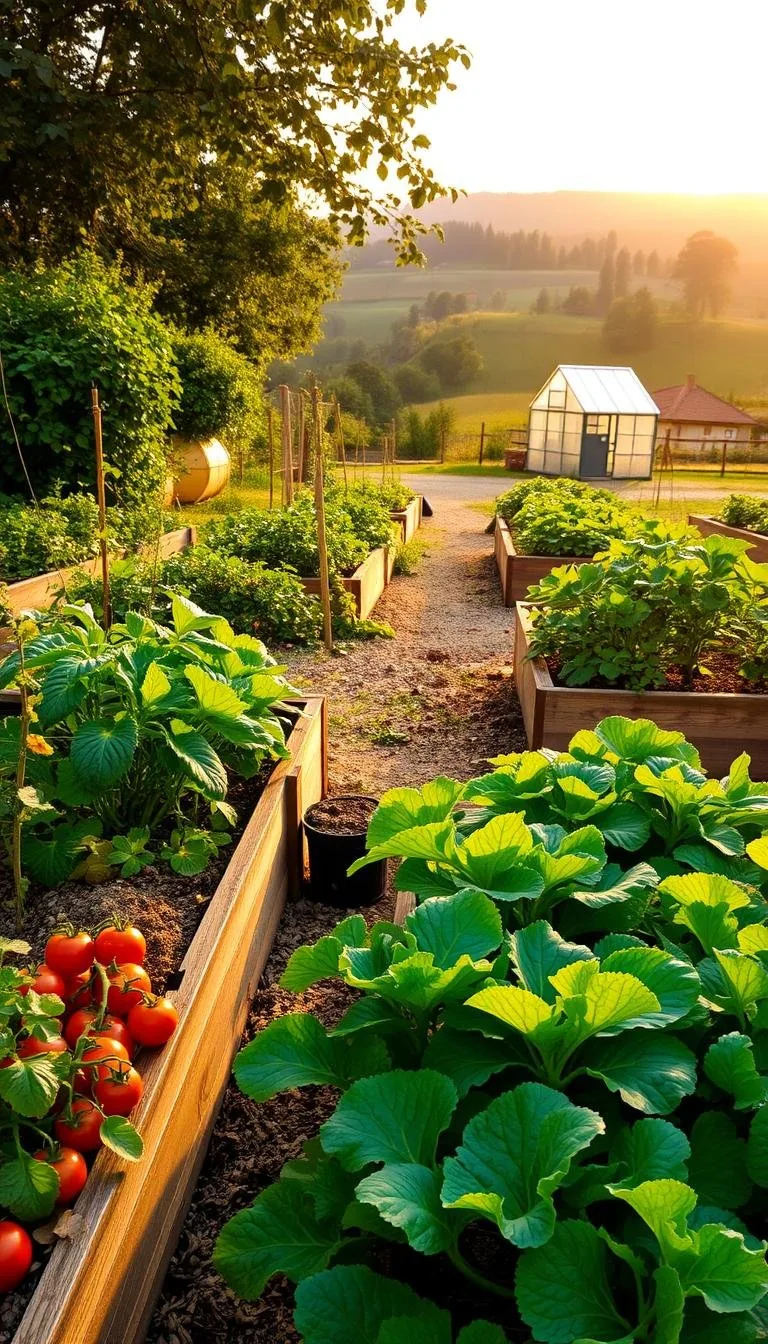
A raised bed is a simple frame filled with good soil. It warms up earlier in spring, drains better than heavy clay and lets you skip poor or compacted ground. It also keeps you from stepping on the soil, which helps keep it loose.
This guide covers where to put a bed, what wood to use (with what extension services say about treated lumber), how to build a basic 4-by-8-foot frame and how to fill it. Part of the Grow Your Own Food series.
Keep the bed no more than 4 feet wide so you can reach the middle, put it in 6 to 8 hours of sun, and fill it with a mix of topsoil and compost. Use decay-resistant wood, and avoid railroad ties and old treated lumber.
Decide the size and place
| Decision | Guidance |
|---|---|
| Width | No more than 4 feet if you can reach from both sides, or about 3 feet if you can reach from only one. |
| Length | Commonly 8 feet, but any length that suits your space works. |
| Height | Commonly around 6 to 12 inches. Taller beds are easier on the back but need more soil. |
| Sun | At least 6 to 8 hours of direct sun. |
| Location | Level ground, near water. Leave paths wide enough for a wheelbarrow, about 2 to 3 feet. |
| Orientation | Run the bed north to south if you can so plants get even sun. Put tall crops on the north side. |
Materials: what to use and what to avoid
| Material | Notes |
|---|---|
| Cedar or redwood | Naturally decay-resistant and long-lasting, but more expensive. |
| Untreated pine or fir | Inexpensive, but may begin to rot within a few years. |
| Modern pressure-treated lumber | Oregon State University research found little copper movement into soil and none into plants from copper azole-treated lumber intended for ground contact. Lumber made since 2003 does not contain arsenic. Some gardeners still prefer alternatives. |
| Concrete blocks, stone or metal | Durable options. Check that metal is food-safe and that blocks are not repurposed from unknown sources. |
| Railroad ties and older treated lumber | Avoid. They may contain creosote or arsenic-based preservatives. |
If you use treated lumber, choose wood rated for ground contact and made for residential use. See the extension resources below for details.
How to build a 4-by-8-foot bed
- Mark and level the site. Remove sod or cover it with cardboard to smother grass.
- Cut the lumber. Two boards at 8 feet and two at 4 feet, stacked one or two high.
- Assemble the frame with exterior screws and corner posts or brackets.
- Check that it is level and square.
- Optional: line the bottom with hardware cloth if gophers or voles are a problem in your area.
- Loosen the soil underneath with a fork so roots can go down.
- Fill with soil mix. See below.
What to fill it with
A common approach is a mix of topsoil and compost. Extension guidance suggests that one-third to one-half of the mix can be your native soil, with the rest being compost or other organic matter. Bagged potting mix is lighter and works for smaller or shallow beds, but it may cost more. Settle the soil with water, top it off, and let it rest a week before planting if you can. Ask about lead if you are building near an older home or busy road, and see Your First Garden for a soil-safety overview.
Plan the planting
Use your bed for crops you will eat. See Ideal Veggie Garden Layout for how to arrange them and Watering and Mulching for care.
Common mistakes
- Making the bed too wide to reach the center.
- Skipping drainage on hard clay soil under the bed.
- Placing it in partial shade.
- Using heavy clay soil only, which drains poorly.
- Forgetting to mulch and water.
FAQ
What is the best wood for a raised bed?
How deep should a raised bed be?
Do I need a bottom on a raised bed?
Sources and further reading