
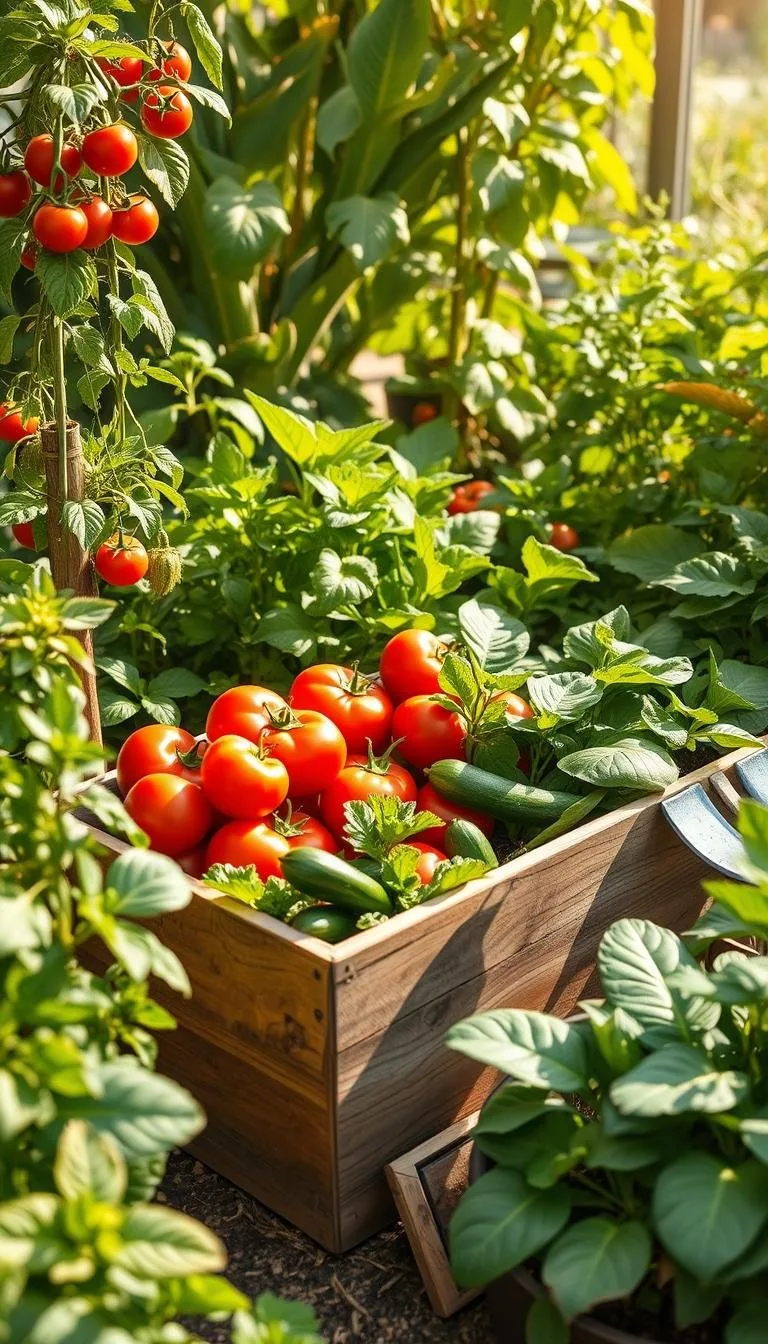
You can grow real food without spending every evening in the garden. The trick is to design for low effort from the start: a small footprint, deep mulch, water delivered efficiently and crops that shrug off imperfect care.
This guide gives you a 30-minute-a-week plan, a list of forgiving crops, a setup that cuts watering and weeding, and what to do when you go on vacation. It is part of the Grow Your Own Food series.
Keep it small, cover the soil with 1 to 3 inches of mulch, water deeply once or twice a week (about an inch in total), and grow reliable crops. Most weeks, 30 minutes is enough.
The setup that saves time
| Choice | What to do | Time it saves |
|---|---|---|
| Small size | A 4-by-8-foot bed or a few containers. | Less to water, weed and harvest. |
| Location | Choose a spot with 6 to 8 hours of sun, close to a hose. | Fewer trips and healthier plants. |
| Mulch | Spread 1 to 3 inches of organic mulch, such as straw, shredded leaves or wood chips (coarser materials go on thicker). | Extension services say mulch can cut evaporation substantially and helps limit weeds. |
| Drip or soaker hose | Put it on a timer or lay it and turn on the spigot. | A drip system on a mulched garden can reduce water needs by roughly half, according to extension guidance. |
| Reliable crops | Choose forgiving vegetables. See 10 Foolproof Veggies. | Fewer losses and less fussing. |
A 30-minute weekly routine
| Task | Time | How |
|---|---|---|
| Walk and look | 5 min | Check for pests, wilting, disease and ripe produce. |
| Water if needed | 10 min | If the soil is dry about two inches down, water deeply. Skip it if it rained. |
| Weed and mulch | 5 min | Pull small weeds before they seed. Top up mulch where thin. |
| Harvest | 5 min | Pick ripe fruit and greens. |
| Tidy | 5 min | Tie up plants, remove damaged leaves and note what worked. |
Two or three short visits during the week often work better than one big one. Small problems are easiest to fix early.
Watering the low-effort way
- Aim for about 1 inch of water a week, counting rain.
- Water deeply and less often so roots grow down. On heavier soils, once a week is often enough. Sandy soils may need water twice a week.
- Check by digging: if the soil is dry two inches below the surface, it is time to water.
- Water at the base of plants in the morning.
See Watering and Mulching Your Vegetable Garden for details.
Crops that need the least attention
| Crop | Why it is low-effort |
|---|---|
| Bush beans | Direct sow, few pests, steady producers. |
| Zucchini and summer squash | Grow fast and produce heavily. |
| Kale and chard | Tolerate cold and heat and give repeat harvests. |
| Herbs like chives, oregano and thyme | Perennials that come back in many climates. |
| Cherry tomatoes | Need a cage and regular water but reward you for months. |
Going on vacation
- Water deeply and mulch just before you leave.
- Harvest everything that is ripe, since fruit left on the plant slows production.
- Ask a neighbor to water and harvest, and let them keep the produce.
- Use a timer with a drip or soaker line if you can.
What to skip
- Fussy crops such as cauliflower, celery and melons in your first year.
- Large plantings that outstrip your time.
- Watering shallowly every day. It encourages shallow roots.
Design the bed to weed less
- Smother before you plant. Lay cardboard, wet it and cover it with mulch to block weeds.
- Plant closely enough that leaves shade the soil, but follow spacing on the tag.
- Mulch paths as well as beds.
- Weed small. Pulling seedlings takes seconds. Weeds that go to seed create years of work.
- Avoid tilling unless needed, since it brings up dormant weed seeds.
Perennial edibles reduce yearly work
| Plant | Notes |
|---|---|
| Chives, thyme, oregano, sage | Herbs that return each year in many climates. |
| Rhubarb | A long-lived plant that returns each spring. Eat only the stalks, not the leaves, which are toxic. |
| Asparagus | Productive for many years once established, but it takes patience before the first harvest. |
| Berries | Strawberries, raspberries and blueberries. See Backyard Fruit Garden. |
A busy-week and busy-month survival plan
| Situation | Do this |
|---|---|
| One hectic week | Do only two things: water deeply and harvest. Weeds can wait a few days. |
| A busy month | Mulch thickly, put a timer on the drip line, harvest every few days and skip new plantings. |
| Summer heat wave | Water deeply and consider shade cloth over lettuce and greens. |
| You fell behind | Cut back overgrown plants, weed one bed at a time and replant with quick crops or fall crops. |
FAQ
How much time does a vegetable garden take?
What is the easiest way to water a garden?
What can I plant and mostly forget about?
Sources and further reading