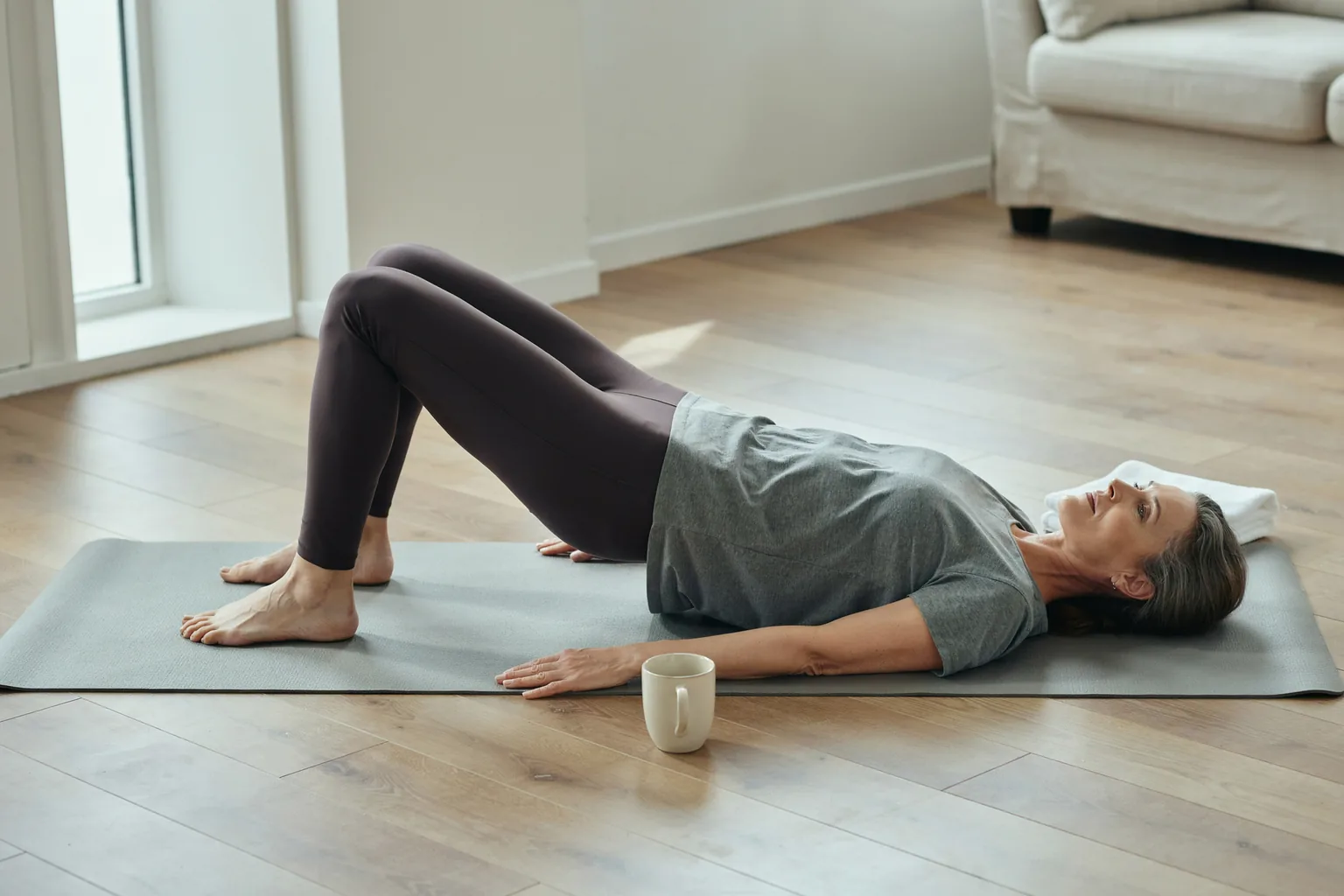
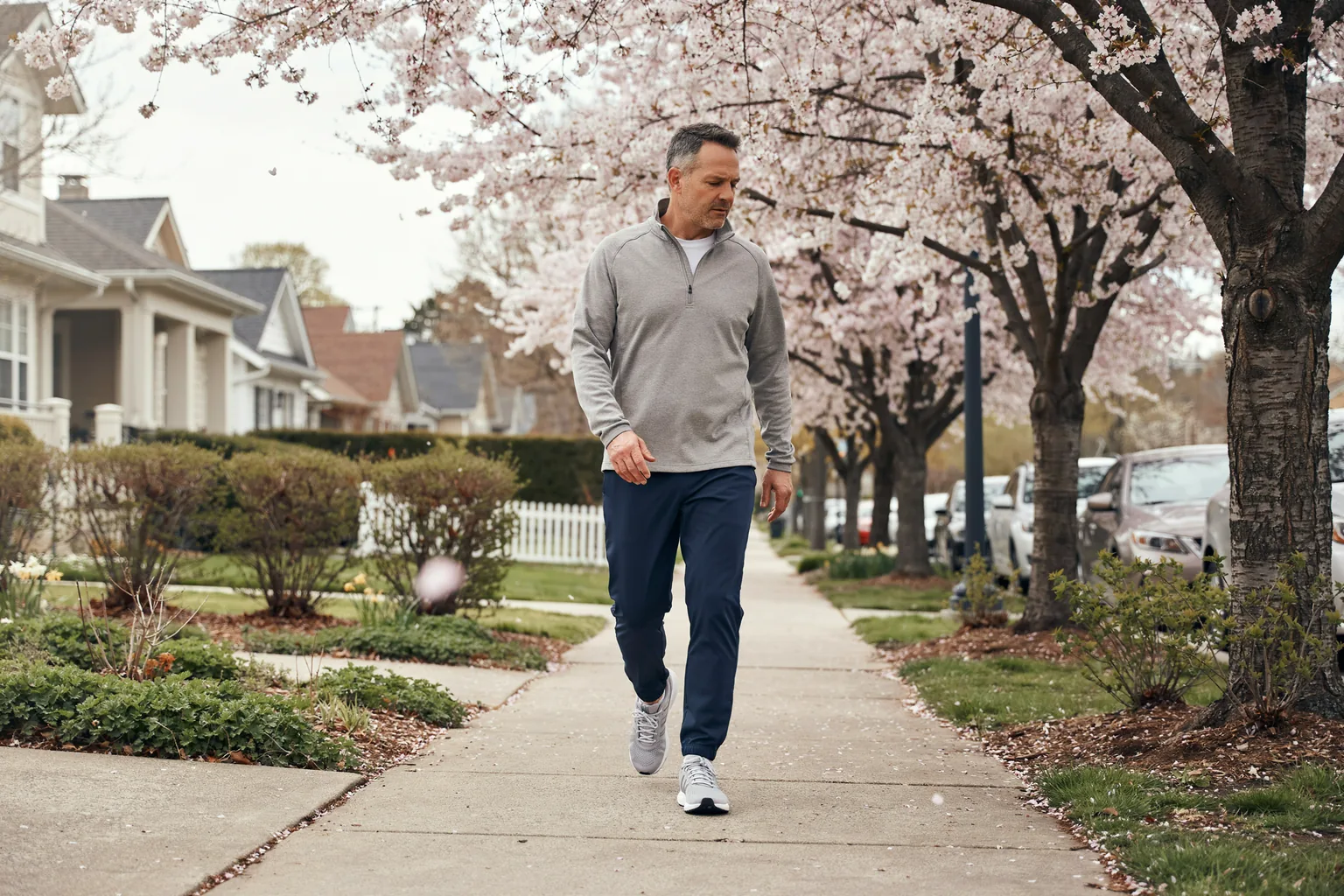
Four weeks is enough time to build a routine you can repeat, and not enough to transform your body. This plan does not promise transformation. It promises structure: a week-by-week progression that takes you from wherever you are to a sustainable pattern of walking, strength and mobility work, timed for spring when longer days make outdoor exercise easier.
Over four weeks, build toward 3 walks, 2 strength sessions and 1 mobility session a week. Each week adds only a small step. If you miss a week, repeat it rather than skipping ahead.
What "spring fitness goals" should mean
Realistic goals in four weeks are behavioral and ability-based: walking more consistently, completing two strength sessions a week and finding movement that fits your life. They are not about a specific weight, size or appearance. For help choosing your own targets, see our guide to setting realistic fitness goals.
For reference, the CDC recommends adults aim for at least 150 minutes of moderate-intensity activity a week and 2 days of muscle-strengthening activity. This plan builds toward that gradually. If you are currently doing very little, reaching about 100 minutes a week is real progress.
If you have a chronic condition, are pregnant or postpartum, have joint pain or have not been active for a long time, check with your health care provider before starting. Stop for chest pain, dizziness or unusual shortness of breath.
Before week 1: set up (30 minutes)
- Choose your three walking days and two strength days. Put them in your calendar.
- Pick a walking route you like: a neighborhood loop, a park path or a mall in bad weather.
- Gather basics: supportive shoes, a mat, a water bottle and optionally a resistance band.
- Note your baseline: how long you can walk comfortably, and how many sit-to-stands you can do in 30 seconds.
The four-week plan
Week 1: Establish the habit
| Session | What to do |
|---|---|
| Walks (3) | 15 minutes at an easy pace |
| Strength (2) | 1 set of 8 to 10 each: sit-to-stand, counter push-up, glute bridge, bird dog |
| Mobility (1) | 5 to 10 minutes of gentle stretching |
Week 2: Add a little time
| Session | What to do |
|---|---|
| Walks (3) | 20 minutes; make one of them slightly brisker |
| Strength (2) | 2 sets of 8 to 10 of the same four exercises |
| Mobility (1) | 10 minutes |
Week 3: Add variety
| Session | What to do |
|---|---|
| Walks (3) | 25 minutes; try hills or intervals of 1 minute brisk, 2 minutes easy |
| Strength (2) | 2 sets of 10 to 12; add a row with a band or dumbbell and a dead bug |
| Mobility (1) | 10 to 15 minutes; add a beginner yoga sequence |
Week 4: Consolidate
| Session | What to do |
|---|---|
| Walks (3) | 30 minutes on one day, 20 to 25 minutes on the others |
| Strength (2) | 2 to 3 sets of 10; move one exercise to a harder version |
| Mobility (1) | 15 minutes; repeat your favorite routine |
For strength exercises you can use, try the 10-minute home workouts or our beginner strength guide. For the mobility sessions, yoga for beginners has simple poses.
Week-by-week checklist
- Three walks done
- Two strength sessions done
- One mobility session done
- Warm-up of 3 to 5 minutes
- Talk test passed on walks
- No sharp pain
- Note what worked
- Note what got in the way
- Plan next week
If you fall behind
Missed days happen. Use these rules:
- Missed one session: do the next planned session. Do not double up.
- Missed most of a week: repeat the previous week.
- Feeling unusually tired or sore: reduce sets by one and shorten walks by 5 minutes.
Spring considerations
- Pollen: if seasonal allergies or asthma affect you, plan walks for lower-pollen hours or move indoors on high-pollen days, and ask your provider for guidance.
- Weather swings: keep a rain plan, such as a 15-minute indoor routine.
- Longer daylight: after-dinner walks are easier to fit in as days get longer.
- Sun: wear sunscreen and a hat for longer outdoor sessions.
What to expect after four weeks
Realistic outcomes include a walking habit that feels more automatic, easier sit-to-stands, better energy or sleep for some people and a clearer sense of what fits your schedule. Weight may or may not change, and it is not the measure of success here. Next steps could be extending the walks, adding a third strength day or setting a new goal, such as a 5K or a longer hike.
FAQ
Can I really see results in four weeks?
What if I can only walk 5 minutes at first?
Do I need equipment?
Can I swap walking for cycling or swimming?
Sources and further reading