
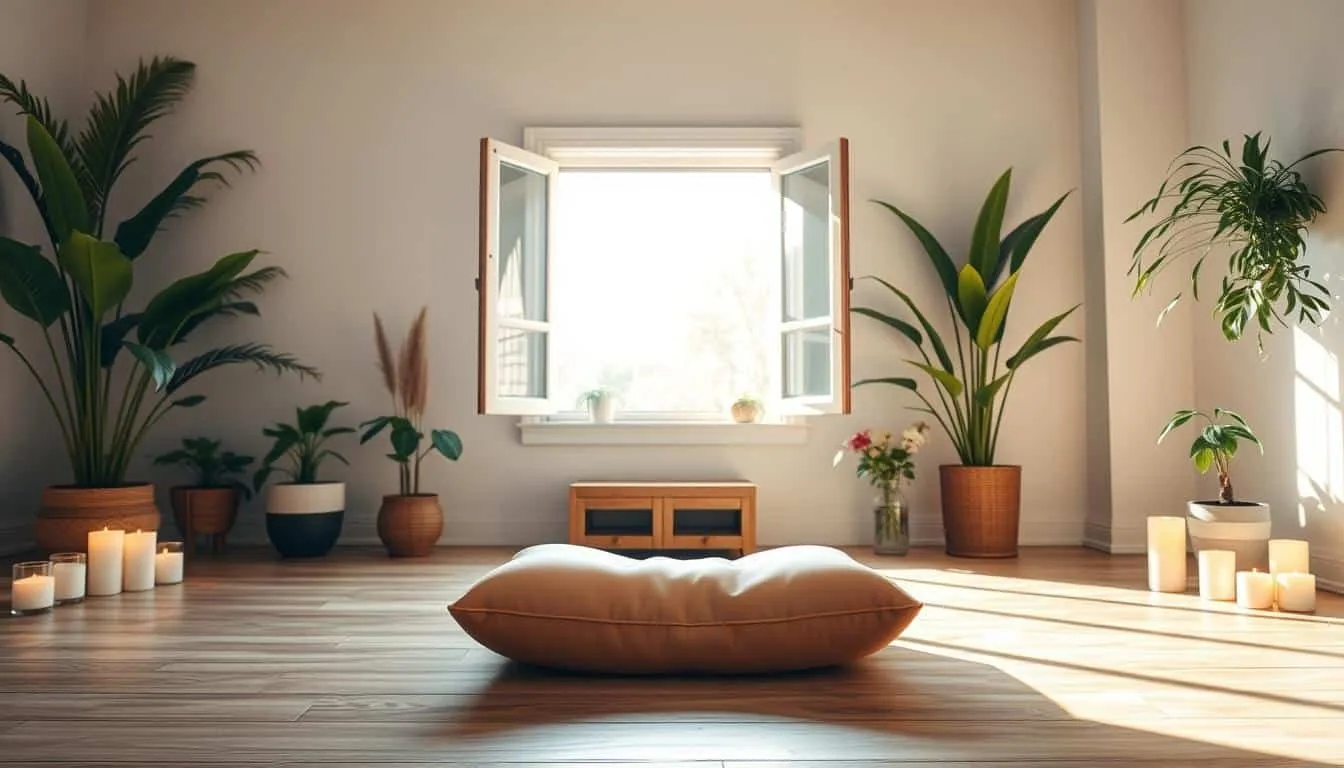
Meditation is the practice of training your attention, often by focusing on your breath, body or sounds, and gently returning when your mind wanders. You do not need a special cushion, an app or a quiet mind. You need about five minutes and a willingness to notice that your attention drifts, and to bring it back.
This guide gives you a simple five-minute practice, a two-week plan, fixes for common obstacles and an honest look at what research does and does not show.
Sit comfortably, set a timer for five minutes, and follow your breath. When you notice your mind has wandered, gently return to the breath. Do it at the same time each day for two weeks before deciding whether it suits you.
A five-minute breath meditation
- Choose a spot and a time. Sit in a chair or on the floor with your back supported, feet flat and hands resting on your lap. Pick a time you already have, such as after brushing your teeth.
- Set a timer for five minutes. A soft alarm is easier than checking the clock.
- Close your eyes or lower your gaze.
- Notice your breath where you feel it most: nostrils, chest or belly. You do not need to change it.
- Count if it helps. Count each exhale from one to ten, then start again.
- When your mind wanders, return. Wandering is not failure. Noticing it and coming back is the exercise.
- End slowly. Take a deeper breath, wiggle your fingers and open your eyes.
A two-week starter plan
| Days | Length | Focus |
|---|---|---|
| 1 to 4 | 3 minutes | Follow the breath, no counting. |
| 5 to 8 | 5 minutes | Count exhales from one to ten. |
| 9 to 12 | 5 to 7 minutes | Add a short body scan from head to toe. |
| 13 to 14 | 5 to 10 minutes | Choose the style you liked best, and notice how you feel afterward. |
Common obstacles and what helps
| What you notice | Try this |
|---|---|
| "My mind will not stop." | That is normal. Count exhales, or silently label thoughts as "thinking" and return to the breath. |
| "I fall asleep." | Sit upright, meditate earlier in the day or open your eyes slightly. |
| "I get restless." | Shorten the session, shift position or try a walking meditation. |
| "I do not feel anything." | You may not, and that is fine. The benefit is in repeated practice, not a special feeling. |
| "I keep forgetting." | Link it to a habit, such as coffee or brushing your teeth. See Why Small Daily Habits Matter More Than Motivation. |
| "It makes me anxious." | Stop, open your eyes, feel your feet on the floor and choose a gentler activity. Talk to a provider if it keeps happening. |
What the research says
NCCIH reports that meditation and mindfulness may help reduce symptoms of anxiety and depression. One 2023 randomized trial found that a mindfulness-based stress reduction program was noninferior to a commonly used anti-anxiety medication. However, much of the research is preliminary, methods differ between studies, and results may have been interpreted too optimistically. Practice is usually low-risk, but around 8 percent of participants in some studies reported a negative effect, which is similar to rates reported for psychological therapies.
Other ways to practice
- Morning: pair it with daylight and coffee. See Unlock the Power of Morning Meditation.
- Setting: you can create a simple space at home. See Meditate in Your Own Peaceful Corner at Home.
- Everyday moments: Mindfulness Exercises to Stay Present.
- Movement: Yoga Poses to Relieve Stress or Yoga Nidra.
Three beginner styles to try
| Style | What you do | You might like it if |
|---|---|---|
| Breath focus | Follow the sensation of breathing. | You want the simplest starting point. |
| Body scan | Move attention slowly through the body. | You hold tension or want to relax before sleep. |
| Sound or open awareness | Listen to sounds and notice them come and go. | Counting or breath focus feels tense. |
| Guided recording | A voice leads you through the practice. | You prefer instructions to silence. |
| Walking meditation | Walk slowly and notice each step. | Sitting still is hard. |
What a session may feel like
Expect your mind to wander many times. Thoughts about work, dinner or the past are normal. You might feel relaxed, bored, restless or sleepy, and each session can feel different. There is no correct feeling. Some days will seem like nothing happened, and the benefit, if it comes, tends to show up gradually, in how you handle a stressful moment or how quickly you notice you are tense.
How to keep going
- Track it lightly. Mark a calendar each day you sit, even if it was two minutes.
- Use a cue. After your morning coffee, or when you get into bed.
- Make it pleasant. Choose a comfortable seat and a time when you are not rushed.
- Be flexible. If sitting is not working, try walking, or a shorter session.
- Try a class or a teacher if you want guidance. Many libraries and community centers offer classes.
Meditation and mindfulness are generally low-risk, but NCCIH notes that some people have negative experiences, such as increased anxiety or distressing memories. If a practice feels overwhelming, stop, open your eyes or shift to a gentler activity such as walking. If you have a history of trauma, panic attacks or serious mental health conditions, talk to a provider or a qualified teacher first. These practices do not replace medical or mental health care. In the United States, call or text 988 if you are in crisis.
FAQ
How long should a beginner meditate?
What time of day is best for meditation?
Do I need an app?
Can meditation cure anxiety?
Sources and further reading