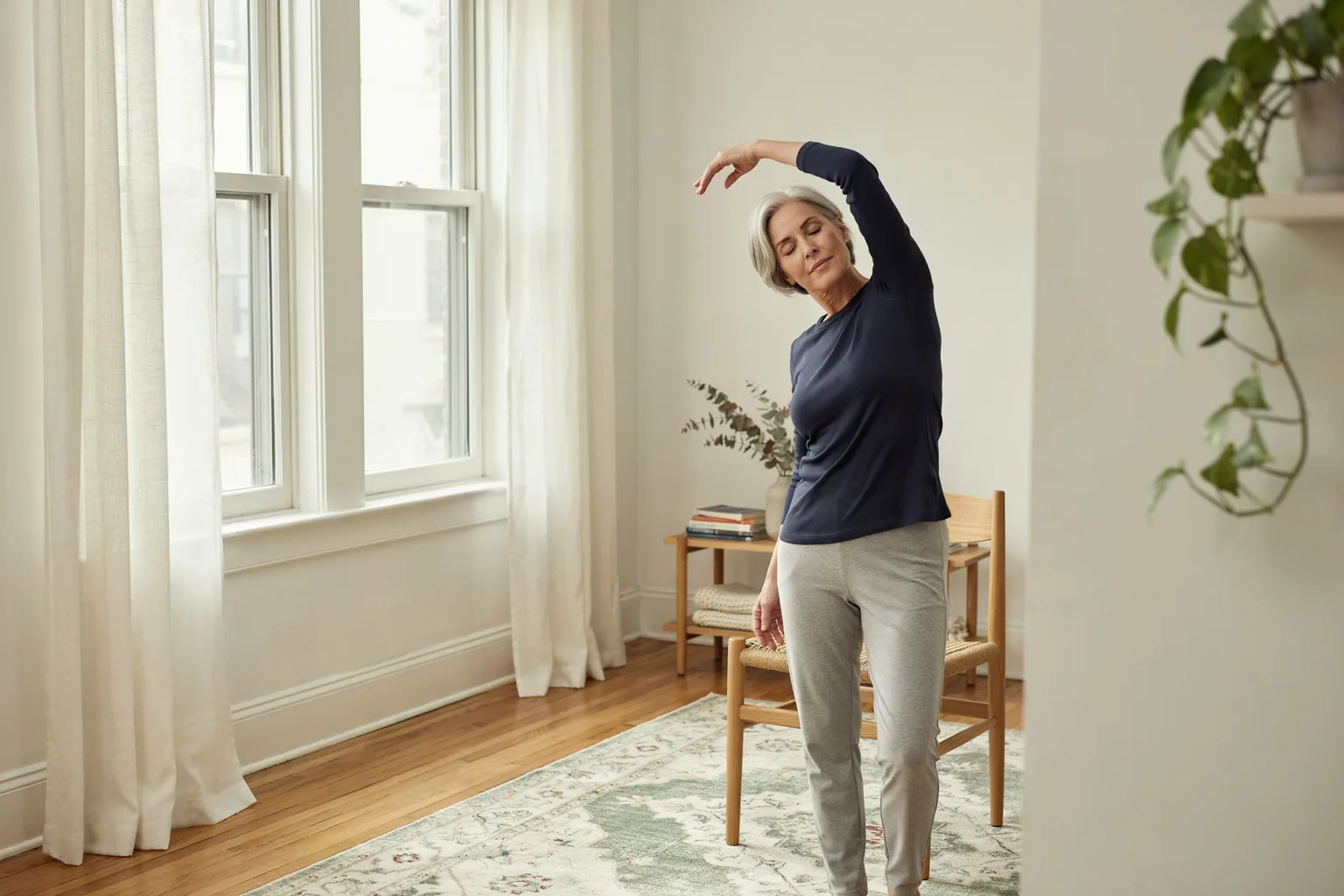
When you feel stressed, your shoulders rise, your jaw tightens and your breathing gets shallow. Yoga gives you a way to interrupt that pattern with slow movement, longer exhales and a few minutes of stillness. It will not remove the source of stress, but it can help you feel calmer while you deal with it.
This guide explains what research does and does not show, then gives you six calming poses, two breathing techniques and a 10-minute routine for after work or before bed.
Do 10 minutes of slow poses with long exhales a few evenings a week. Choose gentle poses, stay in each for 5 to 10 slow breaths and stop anything that hurts. If stress or anxiety feels overwhelming or persistent, yoga is a helpful addition but not a replacement for professional care.
What the research says about yoga and stress
The National Center for Complementary and Integrative Health (NCCIH) reports that reviews of research have found beneficial effects of yoga on perceived stress in healthy adults. It also describes yoga as generally safe when practiced properly, with sprains and strains being the most common injuries.
Studies vary in style, length and quality, so it is fair to say yoga is a reasonable stress-management tool for many people, but it does not work the same for everyone and it is not a treatment for anxiety disorders or depression. If you have symptoms that interfere with daily life, talk to a health care provider or mental health professional.
Check with your provider before starting if you are pregnant, have glaucoma, severe high blood pressure, balance problems, or a hip, knee or spine condition. Pregnant people should avoid hot yoga and positions that require lying on the back for long. Older adults should take extra care with standing balance poses and use a chair or wall.
Six calming poses
| Pose | How to do it | Hold | Modification |
|---|---|---|---|
| Child's pose | Kneel, sit back on your heels and fold forward with arms extended or by your sides. | 8 to 10 breaths | Place a pillow between hips and heels. |
| Cat-cow | On hands and knees, alternate rounding and arching your spine with your breath. | 8 to 10 rounds | Pad your knees; use fists if wrists hurt. |
| Standing forward fold | Fold forward with bent knees and let your head and arms hang heavy. | 5 to 8 breaths | Rest hands on a chair. |
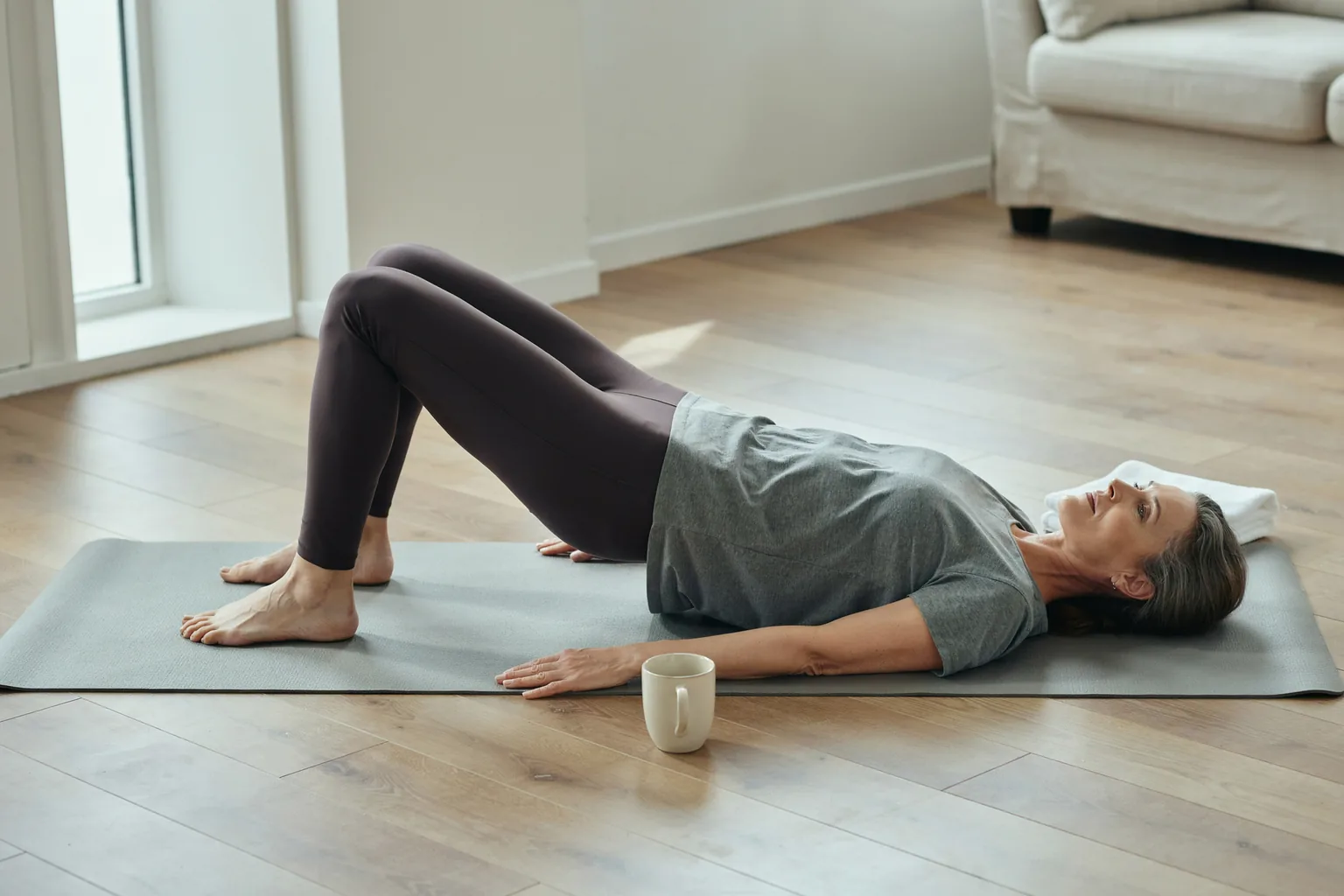
| Supported bridge | Lie on your back, lift hips and place a block or firm pillow under your sacrum. | 1 to 3 minutes | Skip the block and lift lightly. |
| Reclined twist | Lie on your back and let bent knees fall to one side, arms open. | 8 breaths per side | Support knees with a pillow. |
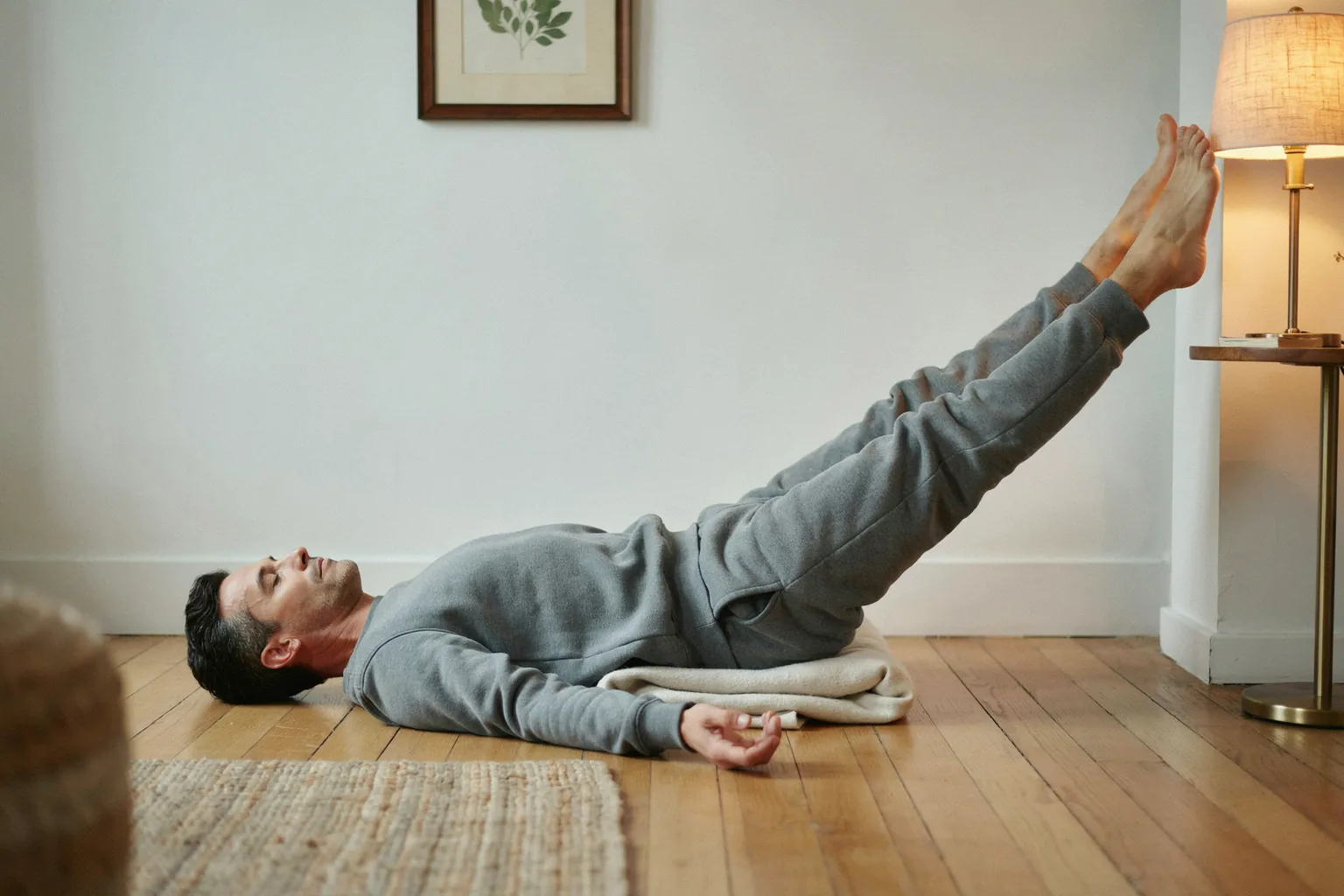
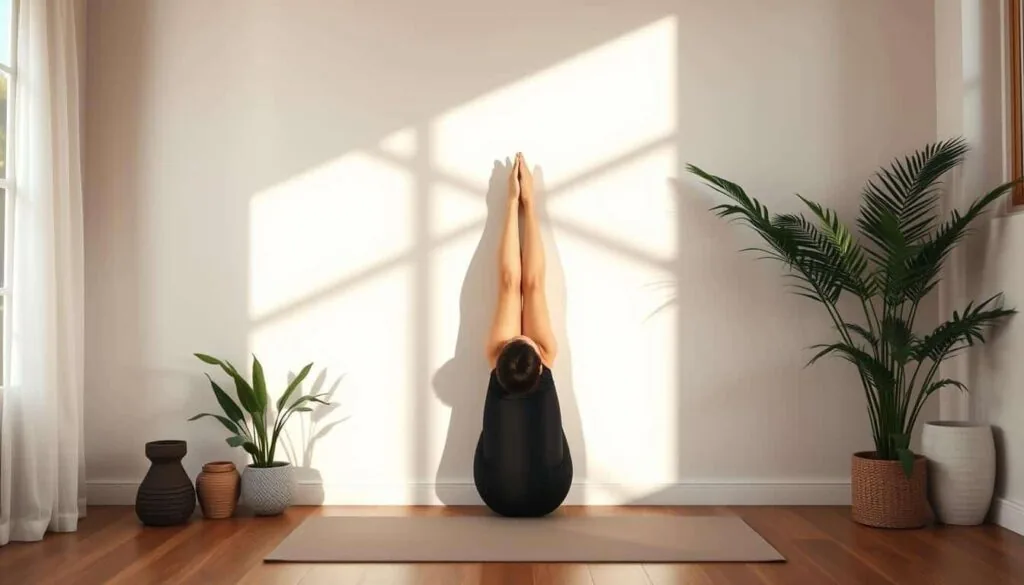
| Legs-up-the-wall | Lie on your back with your legs resting up a wall and arms at your sides. | 3 to 5 minutes | Place a folded blanket under your hips, or bend your knees. |
Two breathing techniques
Longer exhale breathing
Inhale gently for a count of 4, then exhale slowly for a count of 6. Repeat for 2 to 3 minutes. If counts feel uncomfortable, make the exhale simply longer than the inhale. Stop if you feel dizzy.
Belly breathing
Lie down or sit comfortably with one hand on your belly. Breathe in through your nose so your belly rises, and breathe out slowly. Ten slow breaths can help you notice tension you were holding.
A 10-minute stress-relief routine
| Minutes | What to do |
|---|---|
| 0 to 2 | Belly breathing while sitting or lying down |
| 2 to 3 | Cat-cow |
| 3 to 4 | Child's pose |
| 4 to 5 | Standing forward fold (bent knees) |
| 5 to 7 | Reclined twist, one minute each side |
| 7 to 10 | Legs-up-the-wall with longer exhale breathing |
Yoga for better flexibility
The poses above also lengthen the muscles along the back, hips and hamstrings, which can make daily movements more comfortable. Flexibility improves gradually with regular practice, so aim for two to three short sessions a week rather than a single long one. If you are new to yoga, start with our yoga for beginners guide for basic poses and props.
Other calming habits that fit around yoga
- A short walk outdoors after work.
- A consistent evening routine. See our guide to creating a calming evening routine.
- Mindful breathing breaks during the day, as described in mindfulness exercises to stay present.
- Yoga nidra or guided relaxation before bed, explained in our article on yoga nidra and sleep.
FAQ
Does yoga reduce stress?
How long should a stress-relief practice be?
Which poses are best before bed?
Can yoga replace therapy or medication?
Sources and further reading