
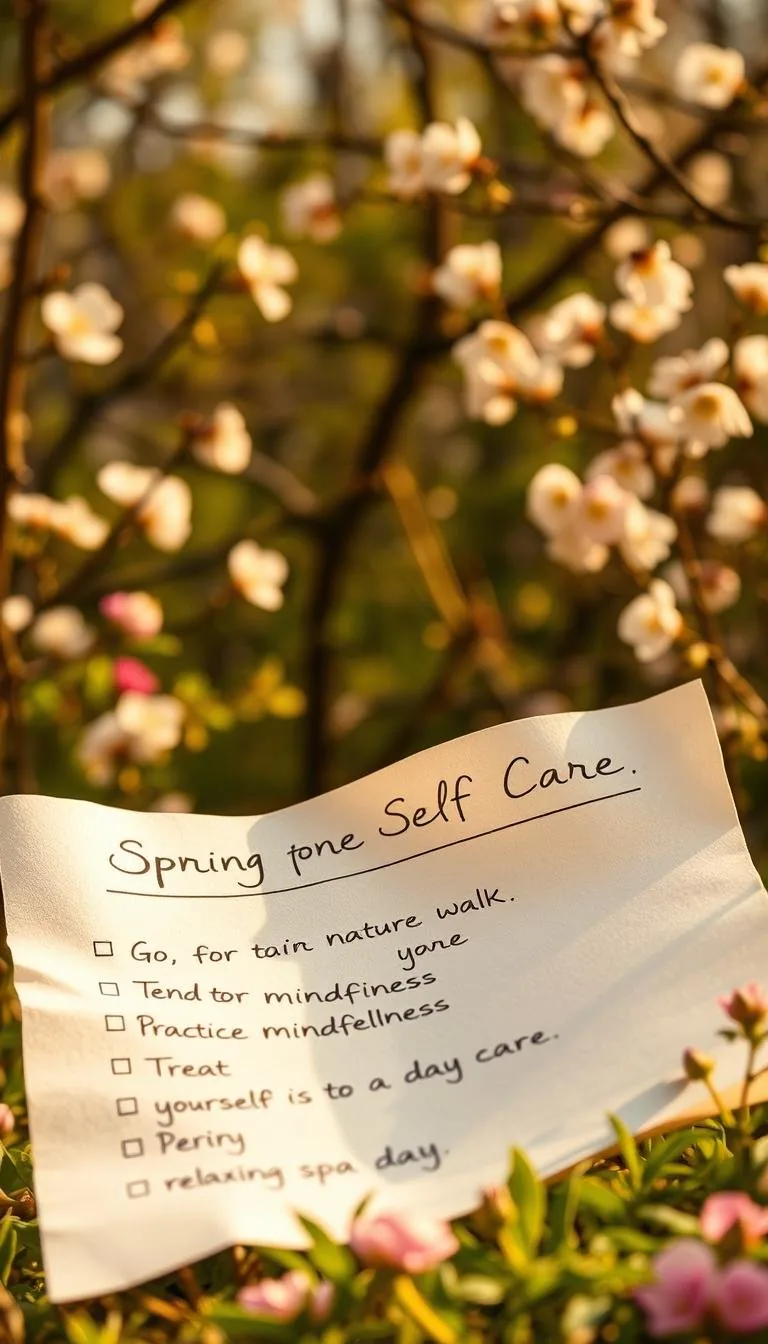
Spring is a natural time to check in on your habits. Longer days and warmer weather make it easier to get outside, but allergies, busy calendars and the time change can also throw you off. This checklist covers six areas, with small actions you can tick off over a few weeks.
It is not a replacement for mental health care. If you have been feeling low, anxious or overwhelmed for weeks, talk to a provider.
Pick two or three items from the checklist for the first week, not all of them. Start with sleep, daylight and one thing you can take off your plate.
The spring self-care checklist
| Area | Actions |
|---|---|
| Sleep | Keep a steady wake-up time after the clock change. Turn screens off 30 minutes before bed. See Simple Ways to Create a Calming Evening Routine. |
| Daylight and movement | Take a 10 to 20 minute walk outside most days. See A Simple Walking Routine for Beginners. |
| Food | Add one seasonal vegetable or fruit a week. Keep regular meals. |
| Mind | Try a five-minute brain dump or a short mindfulness practice. See Mindfulness Techniques to Reduce Springtime Stress. |
| People | Schedule one social plan, such as a walk or a coffee with a friend. |
| Home | Do one small cleanup. See Simple Spring Cleaning Tips. |
| Health care | Schedule any overdue checkups, dental visits or skin checks. |
| Allergies | Check pollen counts and plan ahead. See How to Tackle Spring Allergies. |
A four-week rollout
| Week | Focus |
|---|---|
| 1 | Sleep and daylight. |
| 2 | Food and one social plan. |
| 3 | Home and a mind practice. |
| 4 | Health appointments and a review of what to keep. |
If spring feels harder, not easier
Not everyone feels lighter in spring. Some people experience restlessness, anxiety or low mood. Changes in daylight and routines can affect mood in either direction. If you feel worse for more than a couple of weeks or your daily life is affected, talk to a provider. In the United States, call or text 988 if you are in crisis.
What to let go of
- A long list of "spring goals" you feel obligated to complete.
- Comparison with other people's plans.
- Commitments that no longer suit you.
Small actions for each area
| Area | A 5-minute version | A 20-minute version |
|---|---|---|
| Sleep | Set a phone alarm for wind-down time. | Follow a short evening routine. |
| Movement | Stretch by an open window. | Walk around the neighborhood. |
| Food | Add fruit to breakfast. | Prep a seasonal salad or soup. |
| Mind | Three slow breaths. | A brain dump and priorities for the week. |
| People | Send a text. | Call a friend. |
| Home | Clear one surface. | Clean out a closet shelf. |
Signs it may be time to talk to someone
- Feeling sad, empty or hopeless most days for two weeks or more.
- Loss of interest in things you usually enjoy.
- Big changes in sleep or appetite.
- Trouble concentrating or getting through daily tasks.
- Thoughts of harming yourself. Call or text 988 in the United States.
This guide is general wellness information, not therapy or medical advice. If low mood, anxiety or stress lasts for weeks, affects your sleep, work or relationships, or you feel hopeless, talk to a health care provider or licensed mental health professional. In the United States, call or text 988 if you are in crisis.
FAQ
What is a good self-care routine for spring?
Does the time change affect mental health?
How do I start if I feel overwhelmed?
Sources and further reading