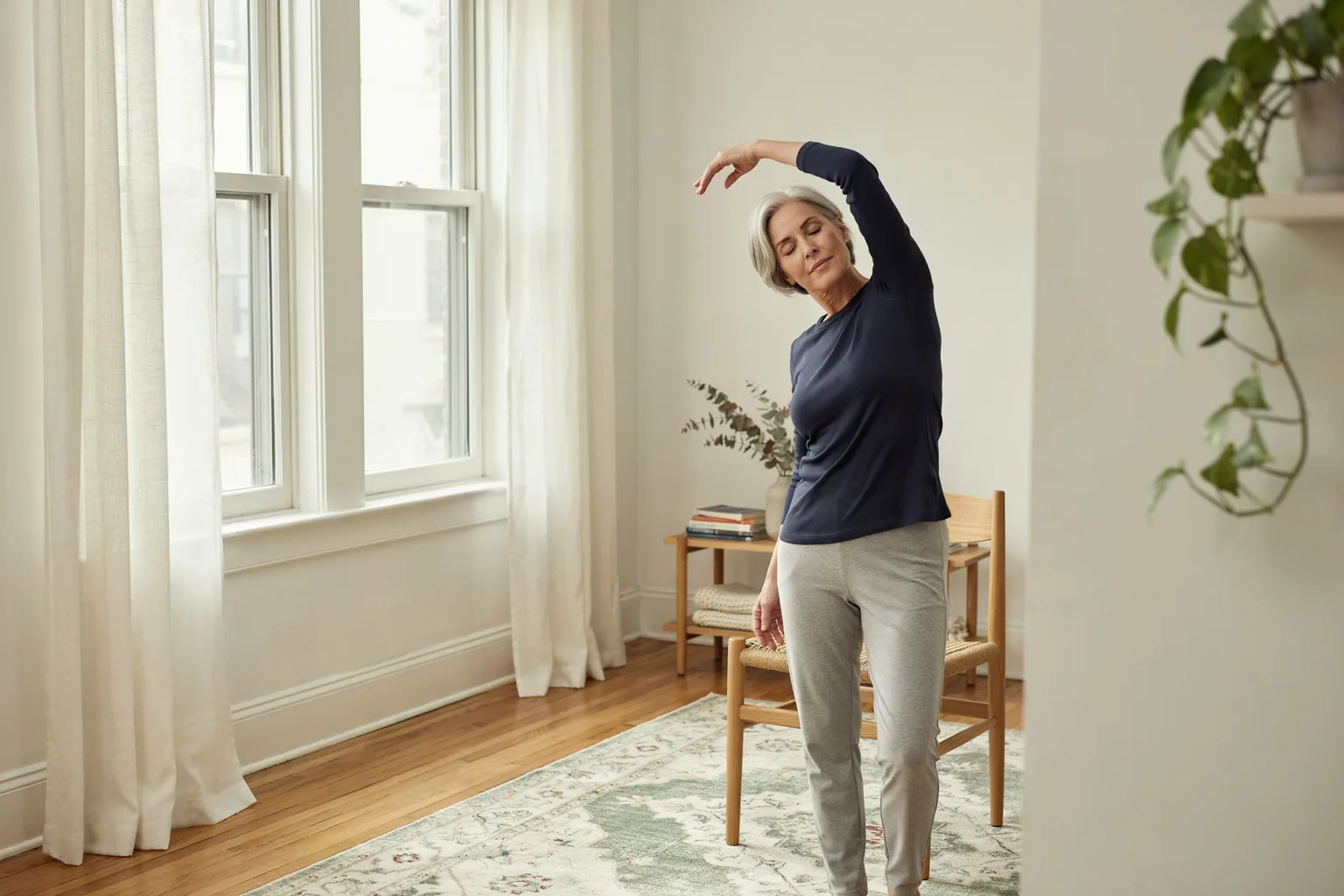

A good fitness challenge gives you a clear start, a clear finish and a small daily task, which is exactly what makes it easier to begin. The best ones are not extreme; they are simple enough to complete on a busy Tuesday. Here are three spring challenges with calendars you can follow, plus a template for designing your own.
Choose one challenge, write it on a calendar and include rest days and a minimum version. A challenge works best when a slow day still counts as progress and missing a day does not mean starting over.
Pick the challenge that fits you
| Challenge | Length | Daily time | Best for |
|---|---|---|---|
| 1. 21-day outdoor walk | 21 days | 10 to 30 minutes | Beginners, or anyone returning to exercise |
| 2. 4-week strength starter | 4 weeks | 15 to 20 minutes, 3 days a week | People who want to build strength at home |
| 3. Family or friends "move together" week-by-week | 4 weeks | Varies | Groups, families, coworkers |
If you have a chronic condition, are pregnant or postpartum, have joint pain or have not been active for a while, check with your health care provider before starting. Increase time gradually, and stop for chest pain, dizziness or unusual shortness of breath.
Challenge 1: 21-day outdoor walk
The goal is to get outside every day, rather than to walk far. Start with 10 minutes and increase gradually. The CDC notes that moderate activity can be broken up across the week, so shorter walks still count.
| Days | Plan |
|---|---|
| 1 to 7 | 10 minutes at an easy pace. Take a rest day (or a 5-minute stroll) on day 4. |
| 8 to 14 | 15 minutes; make one walk slightly brisker (you can talk but not sing). |
| 15 to 21 | 20 minutes; add a hill, a new route or a walk with a friend on two days. |
Minimum version: 5 minutes around the block. Bonus: take a photo of something new you notice each day, like blossoms, birds or street art. It gives you a reason to look up.
Challenge 2: 4-week strength starter
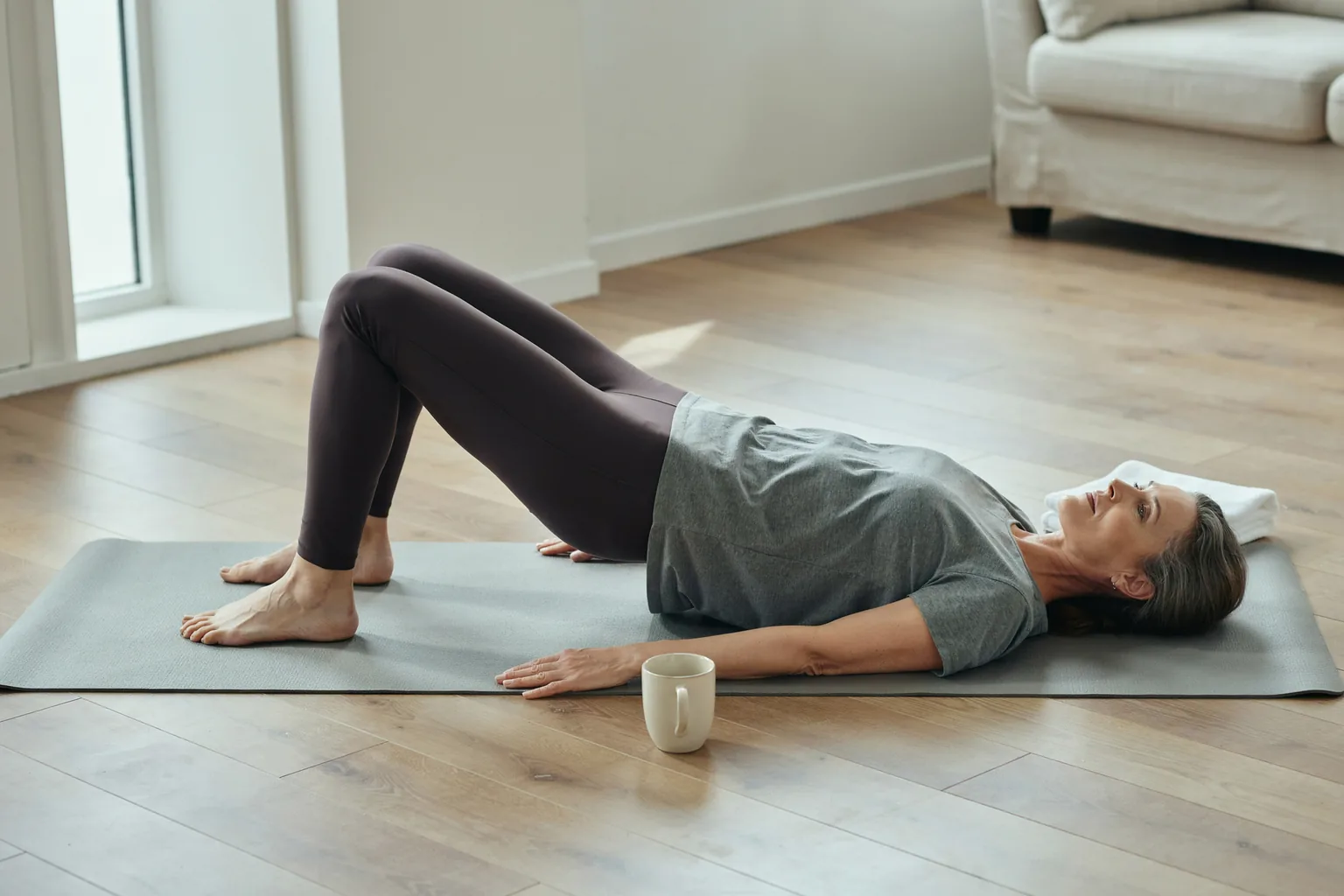
Three short sessions per week on non-consecutive days. Each session uses four exercises: sit-to-stand or squat, counter push-up, glute bridge and bird dog.
| Week | Sets and reps | Extra |
|---|---|---|
| 1 | 1 set of 8 | Focus on form |
| 2 | 2 sets of 8 | Slow the lowering to 3 seconds |
| 3 | 2 sets of 10 | Add a plank hold of 15 seconds |
| 4 | 3 sets of 8 to 10 | Retest your baseline (sit-to-stands in 30 seconds) |
Need help with the moves? Our beginner strength guide and 10-minute home workouts include steps and easier versions.
Challenge 3: Move together, week by week
Ideal for families, coworkers or friends. Each week has a shared theme, and everyone chooses their own version.
| Week | Theme | Ideas |
|---|---|---|
| 1 | Walk and talk | Take a 15-minute walk on three days; hold a phone call while walking. |
| 2 | Try something new | A dance video, a beginner yoga class or a local park trail. |
| 3 | Strength together | Do a 10-minute routine at the same time (in person or by video call). |
| 4 | Celebrate and reset | Choose a favorite activity, share it and plan the next month. |
Keep the group focus on completion, not competition. A leaderboard can motivate some people and discourage others, so consider a shared goal like "as a group, we complete 60 sessions."
How to design your own challenge
- Choose one behavior (walk, stretch, strength) rather than five.
- Pick a length of 2 to 4 weeks.
- Set a daily or weekly target you can hit even on a bad day.
- Include rest days and a minimum version.
- Write down the rule for a missed day: "I skip it and continue tomorrow."
- Choose a way to track: a paper calendar, an app or check-ins with a friend.
- Plan what happens after: keep the habit, repeat or choose a new one.
Spring-specific things to plan for
- Allergies: if pollen affects you, choose lower-pollen times, shorten sessions or move indoors on high-pollen days. Ask your provider about managing symptoms.
- Unpredictable weather: keep an indoor plan for rain.
- Sun exposure: use sunscreen and a hat on longer outdoor sessions.
- Longer days: shift your session to an after-dinner walk if mornings are rushed.
Making it too hard in week one. Having no rest days. Treating one missed day as failure. Tying it to weight or body changes instead of actions. Starting several challenges at once. Once you have completed one, you can choose another.
Once your challenge ends, keep the habit going with our weekly fitness plan, or use the tips in how to stay motivated with spring workouts when your energy dips.
FAQ
How long should a fitness challenge last?
What if I miss a day?
Can I do a challenge with a health condition?
Should I track steps?
Sources and further reading