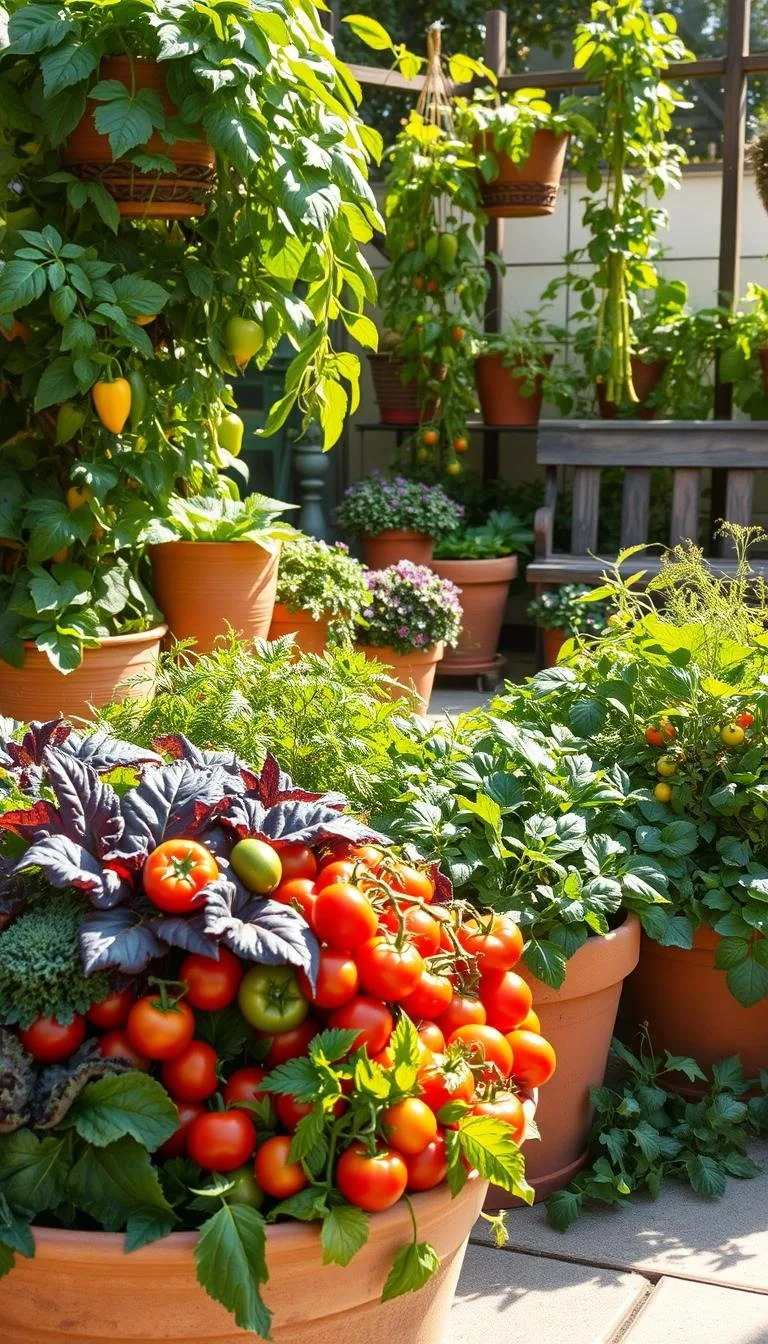
Love fresh veggies but short on space? This guide makes container gardening easy. Perfect for patios or balconies, you’ll learn how to grow healthy plants in pots. Discover tips to boost your harvest and enjoy homegrown food.
Whether you’re new to gardening or looking to improve, this article covers all steps. From choosing the right containers to harvesting, you’ll find simple strategies for Growing Vegetables In Pots. Every section is packed with practical advice.
Start your journey today. Follow these steps to turn your small space into a productive garden. With the right methods, you can enjoy fresh produce all season long!
Why Grow Vegetables in Pots?
Turn your outdoor area into a lush garden without needing lots of land. Container gardening is great for those wanting to grow veggies but have little space. It opens up new possibilities for city dwellers and apartment owners.

Benefits of Container Gardening
Container gardening makes caring for plants easier. Soil stays clean when you change it every year, and pests are simpler to find and control. You can also move plants inside when it gets cold.
No worries about soil contamination. Just replace the potting mix every year for better crops.
Ideal for Limited Space
A small balcony can become a herb garden. Small space gardening works well in tight spots with vertical planters or stackable pots. City folks can grow tomatoes, lettuce, and peppers on rooftops or fire escapes.
Even windowsills can hold microgreens or strawberries.
Great for Mobility
Move plants to sunnier spots in winter or shade them in summer. Protect delicate plants from hail or frost by moving them indoors. This flexibility is perfect for changing weather.
Rearrange your garden seasonally to get the most out of your space.
Choosing the Right Containers

Start with the perfect container for pot gardening. Whether it's a balcony or backyard, the right choice is key.
Types of Pots for Vegetables
Materials are important. Here are some good options:
- Terracotta: Dries quickly, perfect for Mediterranean herbs like rosemary.
- Plastic: Lightweight and affordable, great for small spaces.
- Fabric: Breathable and collapsible, ideal for tomatoes.
- Wood: Insulates roots but needs rot protection.
Try using food-grade buckets or old bathtubs for an eco-friendly touch.
Size Matters: What You Need
Choose a container that fits the plant's roots. Lettuces and herbs do well in 6-inch pots. Carrots need 12 inches, and tomatoes at least 5 gallons. Always check seed packets for spacing to avoid overcrowding.
Drainage Solutions
Drainage holes are essential. Add gravel or broken pots at the bottom for water flow. Use coffee filters to prevent soil loss. Elevate pots on coasters to prevent waterlogging.
Light-colored containers reflect heat, keeping roots cool. Choose lightweight materials for easy moving. With these tips, your container gardening project will thrive!
Selecting the Best Vegetables for Pots
Choosing the right vegetable container plants is key to a thriving potted garden. Start with varieties bred for small spaces. This ensures success from the first seedling.
Top Vegetables for Container Growth
Compact and productive options thrive in pots. Try these top picks:
- Cherry tomatoes: Grow in 5-gallon pots, yielding sweet fruit all summer.
- Peppers: Dwarf varieties like ‘Thai Hot’ fit 12-inch containers and pack flavor.
- Zucchini: Bush types produce tender squash in 20-inch pots.
- Lettuce mixes: Shallow containers (6-8 inches deep) let you harvest leafy greens continuously.

Herbs That Thrive in Containers
Pair potted vegetable plants with these aromatic companions:
- Basil: Thrives in 8-inch pots near the kitchen window.
- Mint: Use 12-inch pots to contain its spreading roots.
- Rosemary: Prefers terra cotta pots for airflow.
- Thyme: Grows well in rockeries or small hanging baskets.
“Mix herbs and veggies in the same pot for mutual pest resistance and flavor boosts!”
Seasonal Considerations
Match plant selections to your climate and time of year:
- Spring: Start cool-season crops like peas and radishes in early pots.
- Summer: Opt for heat-lovers like eggplant in shaded containers.
- Fall: Sow cold-tolerant greens like kale in insulated pots.
Rotate crops seasonally to keep soil fertile and pests at bay. Check USDA hardiness zones when planning your potted garden’s lineup.
Preparing Your Soil Mixture
Healthy soil is key for Growing Vegetables In Pots. Plants in containers need the right nutrients, which is a challenge in balcony gardening. Start by avoiding regular garden soil—it can harm roots. Instead, make a mix that meets your plants' needs.

Components of Quality Potting Soil
- Base: Peat or coco coir keeps moisture right
- Aeration boosters: Perlite or vermiculite stop soil clumps
- Nutrient foundation: Composted organic matter (30-40% of mix)
Look for a mix that's light and holds moisture but drains well. Heavy soils can cause root rot.
Organic vs. Conventional Choices
Ready-made mixes like Dr. Earth Organic Potting Soil or Peters Professional Mix are easy. DIY fans can mix 2 parts compost, 1 part perlite, and 1 part coco coir. Organic gardening skips synthetic fertilizers, while conventional options give quick nutrients.
Enhancing Nutrient Profiles
Boost your mix with:
- Worm castings for slow-release nutrition
- Bone meal for phosphorus
- Mycorrhizal fungi granules to enhance root uptake
Check soil pH yearly with a $10 kit. Most veggies do best at 6.0-7.0 pH levels.
Watering Techniques for Potted Plants
Learning to water right is essential for your plants to thrive. They tell you when they need water through their leaves, soil, and how heavy the pot is. Let's learn how to listen to them and avoid mistakes.
Signs Your Plants Need Water
- Wilting leaves that perk up after watering
- Dry topsoil—check 1–2 inches deep with your finger
- Light pot weight (dry soil makes containers lighter)
Effective Watering Methods
Here are some tips for watering well:
- Bottom watering: Soak pots in trays for 20–30 minutes weekly
- Drip irrigation: Use timers for automated watering in indoor vegetable gardening setups
- Wicking systems: Capillary mats draw water from reservoirs for slow absorption
Avoiding Overwatering Issues
Too much water can harm your plants, causing yellow leaves and mold. If you notice these problems:
“Let soil dry completely before watering again,” say experts.
Repot your plants in containers with holes for drainage. For pot gardening tips on fixing damaged plants, trim off bad roots and replace with fresh soil.
In indoor vegetable gardening, adjust your watering schedule for areas with less light. Soil stays wet longer there. Check the soil every day when it's hot and water less in winter.
Fertilizing Container Vegetables
Feeding your vegetable container plants the right nutrients is key to big harvests. Unlike in-ground gardens, container gardening demands a tailored approach. Let’s explore how to pick the right fertilizer and schedule to boost growth.

"A well-fed plant is a productive plant. Regular feeding keeps vegetable container plants thriving all season." – National Garden Bureau
Types of Fertilizers to Use
Choose from three main options for container gardening:
- Slow-release pellets: Deliver nutrients over months. Ideal for busy growers.
- Liquid mixes: Quick-acting for leafy greens or stressed plants. Use every 2-4 weeks.
- Granular blends: Sprinkle around roots for a boost during active growth phases.
Always check NPK ratios. A 10-10-10 mix works for most vegetable container plants during vegetative growth.
Timing Your Fertilizer Applications
Stick to this schedule for best results:
- Spring: Start with a balanced fertilizer as new growth appears.
- Summer: Increase potassium-rich feeds when plants flower or fruit.
- Fall: Reduce frequency as days shorten, focusing on root health.
Container gardening needs more frequent feeding—check soil moisture before adding any type.
Organic Options for Healthier Plants
Try these natural choices for vegetable container plants:
- Compost tea: Brewed from garden waste for slow-release nutrients.
- Fish emulsion: High in nitrogen for leafy veggies like lettuce.
- Seaweed extract: Strengthens roots and boosts disease resistance.
Mix 1 tsp of kelp meal into soil at planting time for a natural boost.
Pest Control in Container Gardening
Growing veggies in pots doesn't mean you're free from pests. But, urban gardening in pots has its perks. With the right tactics, you can keep pests away and your soil healthy.
Common Pests and Management
Spot these pests early:
- Aphids: Tiny, soft-bodied insects cluster on stems. Wipe with a damp cloth or spray with neem oil.
- Spider mites: Look for yellow spots and webbing. Increase humidity with misting and introduce predatory mites.
- Fungus gnats: Small flies around soil. Let the top inch dry between waterings to disrupt their lifecycle.
Natural Deterrents to Try
Try these eco-friendly methods:
- Plant basil or marigolds nearby to repel insects.
- Release ladybugs or lacewings to eat aphids.
- Make a garlic-pepper spray: Blend ingredients, strain, and spray weekly.
- Cover pots with fine mesh to block pests without blocking airflow.
When Chemicals Are Needed
Use pesticides only when pests are too much. Choose options safe for edible plants, like insecticidal soap or spinosad. Always follow the label and apply in the early morning to protect beneficial insects.
Stay alert but don't worry—most pests are easy to handle. A mix of prevention and targeted action keeps your urban gardening in pots thriving without stress.

Seasonal Care Tips for Potted Vegetables
Gardening in containers lets you grow food all year. But each season has its own needs. Adjust your care to keep your planting vegetables in containers thriving, no matter the climate.
Spring Planting Strategies
Start early for the best harvest. Begin seeds indoors 6-8 weeks before your last frost date. Move seedlings outdoors for a few hours each day before transplanting.
Use frost cloths to protect young plants from late frosts. For small space gardening, train vining plants like beans or cucumbers on vertical stakes.
Summer Maintenance Best Practices
Water deeply in the morning to beat the heat. Check soil moisture daily—containers dry faster in heat. Prune yellow leaves to boost energy for fruit.
Watch for bolting (flowering) in lettuce or spinach; harvest these crops before they flower. Use shade cloth if temperatures hit extreme highs.
Winterizing Container Gardens
In frost-free zones like Florida, plant cold-tolerant greens like kale. In colder areas, move tender plants indoors. Mulch roots with straw and wrap pots in burlap.
Empty soil from containers, scrub them clean, and store in a dry spot. Hardy herbs like rosemary can stay outdoors if insulated with a thick mulch layer.
Adjust strategies based on your region. Zone 3 gardeners in Minnesota will overwinter differently than Zone 9 gardeners in Texas. But with these steps, your containers stay productive longer, turning every season into a growing opportunity.

Harvesting and Enjoying Your Homegrown Produce
After caring for your potted vegetable plants, it's time to enjoy the fruits of your labor. Balcony gardening lets you grow fresh, healthy food right at home. Here's how to get the most from your harvest.
When and How to Harvest
Check your veggies every day to see if they're ready. Tomatoes should be firm and fully colored. Herbs taste best when you pick them just before using them.
Harvest leafy greens like lettuce by taking off the outer leaves. This helps new growth. Picking at the right time ensures the best flavor and keeps your plants producing longer.
Storing Your Vegetables Post-Harvest
Store delicate greens in damp paper towels in airtight containers. Root veggies like carrots do well in a cool, dark place. You can dry herbs whole or freeze them in olive oil for later use.
Creative Ways to Use Your Fresh Veggies
Try simple dishes like adding fresh basil to pasta or blending cherry tomatoes into salads. You can also freeze or can extra veggies to enjoy later. Homegrown veggies add a burst of flavor to any meal.
With each success, you'll feel more confident to grow even more next season. Happy gardening!